
REVIEW · CEBU
3-Hour Small Group Cebu City Tour
Cebu city history can be packed fast. This 3-hour small-group tour makes it easy to see major Cebu heritage stops without the hassle of figuring out routes and ticket lines. I like the small group size (max 12) because it stays manageable, and you get time to actually look. I also like that the route focuses on the city’s recognizable anchors, including Magellan’s Cross and the Basilica area.
One thing to consider is that three hours goes quickly. You’ll cover the headline sites, but you will not have time to add bigger extras like Fort San Pedro unless you tack it on before or after.
A big plus here is the human factor. The tour coordinator and guide, CHEN, comes across as polite and clearly good at explaining what you’re looking at. There’s also mention of helpful photo support, which matters in stops where everyone wants the same angle and the same shade.
In This Review
- Key highlights worth your attention
- How the 3-hour Cebu City route keeps you moving without feeling rushed
- Pickup from Cebu City, drop-off at Ayala Center, and what that means for your day
- Magellan’s Cross: the quick stop that sets the tone
- Basilica Minore del Santo Nino: where dress matters and the story is concrete
- Taoist Temple and the Chinese-Cebu story you can actually point to
- Yap Sandiego Ancestral House: a short visit with names that stick
- Colon Street and the Heritage of Cebu Monument: the urban landmarks that frame the city
- Fuente Osmeña Circle: a scenic break that helps you reset
- Price, value, and when $38 feels like a smart deal
- What to wear, what to bring, and how to make the most of short stops
- Should you book this Cebu City tour?
- FAQ
- What’s the duration of the Cebu City tour?
- How much does it cost, and what’s included?
- Where does the tour start and where do you get dropped off?
- How big is the group?
- Is admission included for the stops?
- What should I wear?
- Can I cancel for free?
Key highlights worth your attention
- Small-group pace (12 max) keeps the tour from turning into a frantic checklist.
- Convenient pickup and central drop-off helps you avoid Cebu traffic stress.
- Major landmarks with free admission at several key stops.
- Chinese-Cebu context at the Taoist Temple and Yap-Sandiego Ancestral House.
- Guided photo help when you want the best stop-and-frame moments.
Deeper into Cebu City and the hills above it
- Private Cebu & Lapu-Lapu City Tour with Uphill Spots & Lunch at House of Lechon★ 4.5 · 168 reviews
- Bohol Countryside Day Tour From Cebu City | Lunch at Loboc River Cruise★ 4.5 · 157 reviews
- The Original Cebu City Historical and Food Walking Tour★ 4.5 · 81 reviews
- Cebu Group Tour: Best Cebu City Tour★ 4.0 · 63 reviews
How the 3-hour Cebu City route keeps you moving without feeling rushed
Three hours is a sweet spot for a city heritage sampler. Long enough to hit multiple neighborhoods and landmarks, short enough that you’re not stuck all day. The vehicle is air-conditioned, which is a real factor in Cebu when the sun is doing its job.
The route is built around places that already act like guideposts. You start at Magellan’s Cross, move into the Santo Niño church zone, then shift toward Chinese-Cebu landmarks, and finish around major downtown landmarks like Colon Street and the Heritage of Cebu Monument area, with a stop at Fuente Osmeña Circle. It’s a logical flow, so you’re not doubling back much.
The best value in this format is mental. If you’re new to Cebu City, it’s easy to waste half your time just figuring out where things are. Here, you get a guided sequence that lets you get your bearings fast, then you can branch out afterward with confidence.
One practical note: the tour includes several short stops (often around 10 to 15 minutes). That means you should come ready to look quickly, and treat each stop like a highlight reel rather than a full museum visit.
Pickup from Cebu City, drop-off at Ayala Center, and what that means for your day
The meeting point is SM City Cebu on Juan Luna Avenue, and the start time is 8:00 am. Pickup is offered, and the tour includes hotel pickup in Cebu City, with drop-off at Ayala Center Cebu in Cebu Business Park.
That drop-off detail matters. Ayala Center is a central, easy-to-navigate place to regroup. After the tour, you’ll likely be close to restaurants, cafés, and mall bathrooms that save your day. (Yes, I said bathrooms, and yes, I’m still right.)
The vehicle is included, and the tour uses a tour coordinator plus a guide presence during the route. With a small group, it’s easier for the coordinator to keep everyone together at each stop, especially when sidewalks get busy.
You should also plan for what is not included. Food and drinks are not part of the price, so bring a water plan. And if you’re staying on Mactan, Mactan resort pickup and drop-off is not included, so you may need other transport for getting to the Cebu City starting point.
Magellan’s Cross: the quick stop that sets the tone
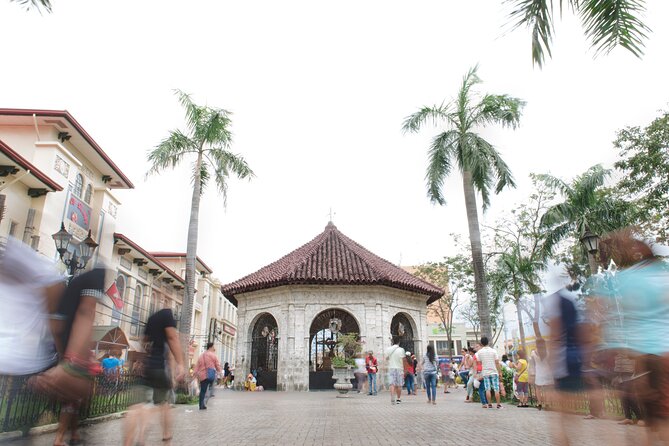
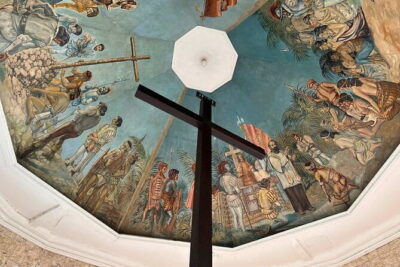
The tour begins at Magellan’s Cross, a site tied to the Portuguese and Spanish explorers Ferdinand Magellan ordered into place after arriving in Cebu on March 15, 1521. This is the kind of landmark that can look like just another cross until your guide frames why it matters.
Here’s what I find useful: even if you don’t go deep into Spanish-era details, this stop gives you a starting point for understanding how Cebu’s Christian history became public and symbolic. It’s also a good primer for the next stop, because the atmosphere shifts from broad colonial storytelling into a specific religious and community center.
Time is short, about 10 minutes. That’s enough for a look, a few photos, and a basic orientation. If you’re the type who wants hours at a single landmark, this will feel fast. But if you want Cebu’s key points laid out in a clean order, it works.
Admission is listed as free for this stop, so you’re not spending your limited time doing ticket logistics.
Basilica Minore del Santo Nino: where dress matters and the story is concrete
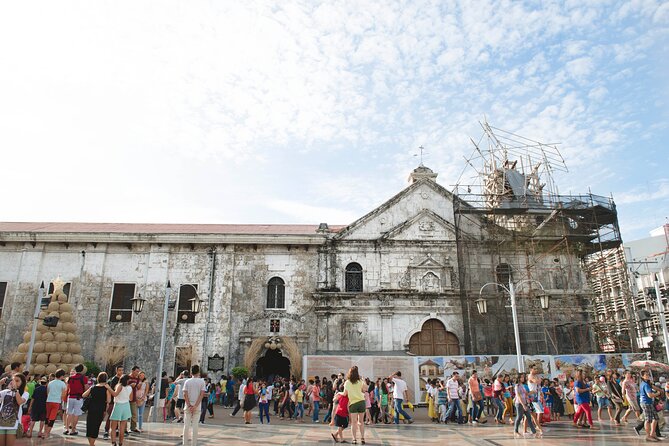
After the cross, you’ll head to Basilica Minore del Santo Nino. The big takeaway is that it’s described as the oldest Roman Catholic church in the country, built on the spot where the Santo Niño de Cebú image was found during Miguel López de Legazpi’s expedition.
This stop is only about 15 minutes, so you’re not here to do a slow, reflective hour. You’re here to understand the significance and see why this area keeps pulling in visitors. Also, the tour notes include a reminder about sleeveless shirts, so it’s smart to bring something that covers your shoulders or at least plan to comply with any basic church dress expectations.
Admission is listed as free. That helps the value feel straightforward, because you’re paying for guidance and transport, not for stacking paid entry fees.
What I like about this part of the route is that it gives you a cultural anchor. Many Cebu highlights feel like separate postcards, but Santo Niño brings them into one shared story line about faith, discovery, and community memory.
Other Cebu outings that kept coming up while we researched this one
Taoist Temple and the Chinese-Cebu story you can actually point to
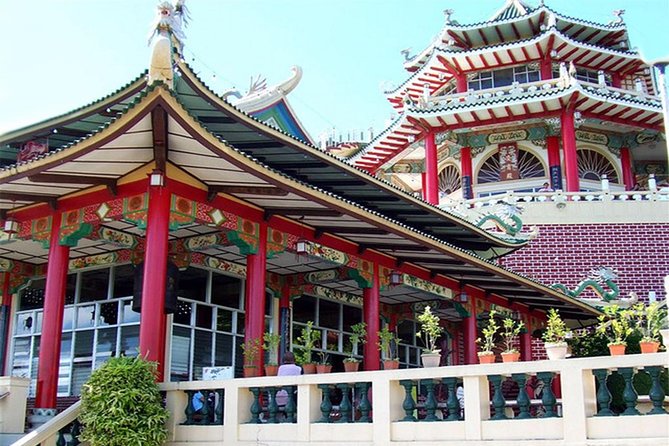
Next up is the Philippine Taoist Temple, located in the Beverly Hills Subdivision of Cebu City and built in 1972 by Cebu’s substantial Chinese community. The date and location turn what could feel like an optional curiosity stop into something more specific and meaningful.
This stop is about 15 minutes, with admission included. So you’re not just looking from outside, you’re meant to spend time inside and around the temple space.
For me, the value here is contrast. Cebu is often marketed through Spanish-era heritage, but the Chinese influence is very real and visible too. You’ll see that in the temple’s presence and the way the tour connects it to the Chinese community that helped shape the city.
If you’re cautious about cultural sites and prefer to understand them with context, this stop helps. It’s not just architecture and incense vibes. You get the background so it feels purposeful rather than random.
Yap Sandiego Ancestral House: a short visit with names that stick
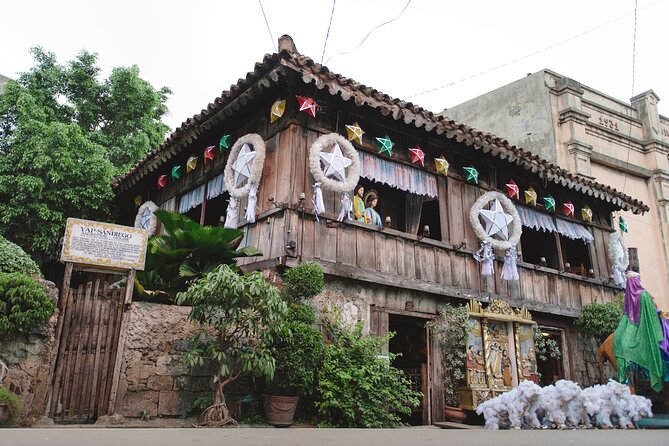
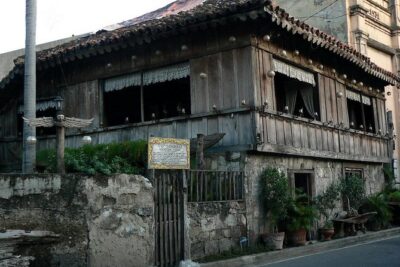
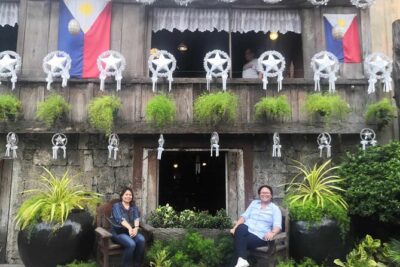
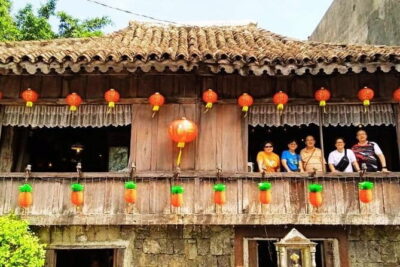
Then you’ll visit Yap-Sandiego Ancestral House, built sometime between 1675 and 1700. It was originally owned by Chinese merchant Don Juan Yap and his wife, Doña Maria Florido.
Again, the time is about 15 minutes, and admission is included. This is a quick window into the kind of house that made commerce families powerful in older Cebu. In a short visit, your best move is to focus on the story the place tells through its structure and details, not on trying to memorize every corner.
The names matter because they make the site feel human. Don Juan Yap and Doña Maria Florido turn the stop from a generic heritage house into a specific story about who lived there and why.
A consideration: ancestral houses can make some visitors want more time to walk slowly and observe. If that’s you, treat this as an introduction. You’ll likely want to return on your own later if you fall in love with the architecture and local history.
Colon Street and the Heritage of Cebu Monument: the urban landmarks that frame the city
Downtown Cebu has streets that act like living archives, and this route includes Cristóbal Colón Street, often called the oldest and shortest national road in the Philippines. It’s named after Cristóbal Colón, and getting the name and context helps you notice things you might otherwise speed past on a self-guided walk.
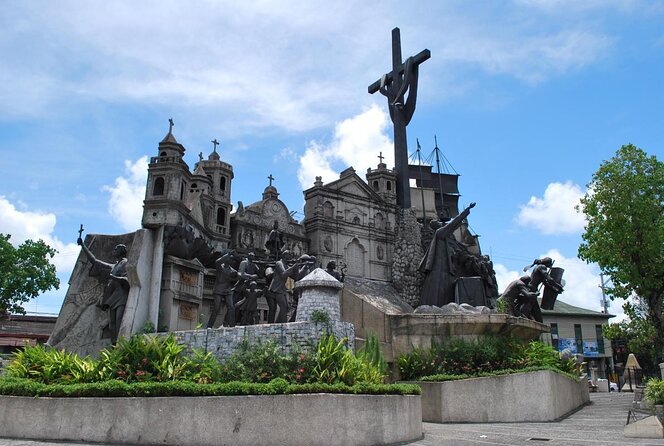
Right after that, you’ll see the Heritage of Cebu Monument, described as a tableau of sculptures made of concrete, bronze, brass, and steel, showing scenes and structures tied to Cebu’s history. This is one of those stops where you can spend five minutes and get a general idea, or spend ten and read the scenes carefully. Since this stop is around 10 minutes, aim for a quick scan, then choose one or two scenes to focus on.
Admission is listed as free here, which is a nice bonus. You’re not paying extra for a monument-style stop, and you can fit it into the tight route without guilt.
Fuente Osmeña Circle: a scenic break that helps you reset
The tour also includes a stop at Fuente Osmeña Circle, a rotunda park in uptown Cebu City with a fountain in the center. The circle is described as a focal landmark for the Queen City of the South.
This kind of stop is underrated in short tours. After churches, houses, and monuments, a public square gives your eyes a rest. It’s also a good moment for photos that don’t feel like they’re squeezed between walls or inside a doorway.
Since the tour is already compact, this “reset” can make the rest of the day feel easier. You leave with a sense of where you are in Cebu, because you’re ending at (or near) a landmark area and dropping at Ayala Center.
Price, value, and when $38 feels like a smart deal
At $38 per person for about three hours, the value comes from what’s included and how it’s paced. You get:
- Pickup and drop-off in Cebu City (with drop-off at Ayala Center Cebu)
- Air-conditioned transport
- All taxes, fees, and handling charges
- A tour coordinator
- Several key stops with free admission plus other stops where admission is listed as included
The price also makes sense because you’re paying for guidance in multiple places, not just transport between one paid attraction and another. You’re also benefiting from the fact that the group is limited to 12 travelers, which keeps the guide’s explanations relevant rather than turning into a megaphone parade.
Where the price might feel less perfect is if you’re already a confident DIY planner who knows Cebu City well and doesn’t need context. In that case, you could theoretically pay only for attractions. But if you’re here for your first trip, the “save time, reduce stress, learn the connections” part is worth real money.
One more clue about demand: this tour is commonly booked about 27 days in advance. That often indicates people find it useful as a first-day or mid-trip heritage sampler.
What to wear, what to bring, and how to make the most of short stops
Smart casual is the dress code, and comfortable walking shoes are recommended. With multiple stops, you’ll be doing short walks and standing for photos, so shoes matter more than you think.
You should also plan for basic church-appropriate clothing. The tour notes specifically mention sleeveless shirts, so if you’re wearing something that exposes your shoulders, consider bringing a light layer.
Bring:
- Water (food and drinks are not included)
- A small sun layer or cap if you burn easily
- Your phone with the mobile ticket, since a mobile ticket is part of the setup
Finally, treat each stop like a targeted viewing session. If you show up with one or two questions you want answered about Cebu, the short time becomes more satisfying, not less.
Should you book this Cebu City tour?
Book it if you want a first-pass understanding of Cebu City without wasting time. This is especially good for couples, solo travelers, and anyone who likes structure but still wants to keep the day flexible. The small group size helps, and the guide experience, including CHEN’s friendly, clear approach and mention of photo support, makes a big difference in a short format.
Skip it or add extras if you’re the type who wants deeper time in fewer places. Three hours won’t fit everything, and if your must-see list includes Fort San Pedro, you may need to plan that separately.
If your goal is simple and smart, see the landmarks that define Cebu City, learn what they mean, and then move on to your own plans, this tour makes a lot of sense.
FAQ
What’s the duration of the Cebu City tour?
The tour lasts about 3 hours.
How much does it cost, and what’s included?
It costs $38.00 per person and includes pickup, air-conditioned vehicle, taxes and fees, and a tour coordinator. Admission is listed as free or included for multiple stops.
Where does the tour start and where do you get dropped off?
It starts at SM City Cebu on Juan Luna Avenue at 8:00 am, and all guests are dropped off at Ayala Center Cebu.
How big is the group?
The maximum group size is 12 travelers.
Is admission included for the stops?
Admission is listed as free at some stops (like Magellan’s Cross and Santo Niño area) and included at others (like the Taoist Temple and Yap Sandiego Ancestral House).
What should I wear?
The dress code is smart casual, with comfortable walking shoes recommended. The tour notes also mention sleeveless shirts for the Basilica stop area.
Can I cancel for free?
Yes, free cancellation is available. You can cancel up to 24 hours in advance for a full refund. If you cancel less than 24 hours before the start time, the amount paid is not refunded.
More Tours in Cebu
- Cebu City: Bohol Countryside Tour with Loboc Cruise Lunch★ 4.5 · 488 reviews
- Private Cebu & Lapu-Lapu City Tour with Uphill Spots & Lunch at House of Lechon★ 4.5 · 168 reviews
- Bohol Countryside Day Tour From Cebu City | Lunch at Loboc River Cruise★ 4.5 · 157 reviews
- Oslob Whale Sharks and Moalboal Sardine Run, Sea Turtles Tour★ 4.5 · 98 reviews
More Tour Reviews in Cebu
- Cebu City: Bohol Countryside Tour with Loboc Cruise Lunch★ 4.5 · 488 reviews
- Canyoneering Experience in Kawasan Falls with Lunch★ 5.0 · 440 reviews
- Cebu: Oslob Whale Sharks, Tumalog Falls & Sardine Snorkeling★ 4.3 · 343 reviews
- Whale Shark & Tumalog Falls & Sumilon Sandbar & Pescador Island with Sardines★ 4.5 · 223 reviews
Cebu City and the Uphill Route
- Cebu City: Bohol Countryside Tour with Loboc Cruise Lunch★ 4.5 · 488 reviews
- Private Cebu & Lapu-Lapu City Tour with Uphill Spots & Lunch at House of Lechon★ 4.5 · 168 reviews
- Bohol Countryside Day Tour From Cebu City | Lunch at Loboc River Cruise★ 4.5 · 157 reviews
- The Original Cebu City Historical and Food Walking Tour★ 4.5 · 81 reviews
More of Cebu, reviewed
- Panoramic View of Cebu and Dinner with Night View
★ 4.5 · 3 reviews - Cebu Traditional Bamboo Cooking
★ 5.0 · 3 reviews - Island Hopping | Bantayan Island – Virgin Island
★ 4.0 · 3 reviews - Bluewater Sumilon Day Pass
★ 5.0 · 3 reviews - Oslob Whaleshark with Sumilon Island
★ 4.5 · 4 reviews
Cebu City Heritage and Uphill Tours, start to finish.
 ★ 4.7Cebu City: Whale Shark Swimming & Kawasan Falls CanyoneeringFrom $124665 reviews
 ★ 4.5Cebu City: Bohol Countryside Tour with Loboc Cruise LunchFrom $144488 reviews
 ★ 4.5Private Cebu & Lapu-Lapu City Tour with Uphill Spots & Lunch at House of LechonFrom $75168 reviews
 ★ 4.5Bohol Countryside Day Tour From Cebu City | Lunch at Loboc River CruiseFrom $145157 reviews
 ★ 4.6Cebu City: City and Mountain Highlights TourFrom $8785 reviews
 ★ 4.5The Original Cebu City Historical and Food Walking TourFrom $6981 reviews
 ★ 4.5Cebu: Exploring Cebu City’s rich history and Uphill TourFrom $7568 reviews
 ★ 4.0Cebu Group Tour: Best Cebu City TourFrom $7663 reviews
Where this one shows up