
REVIEW · CEBU
The Original Cebu City Historical and Food Walking Tour
Cebu at street level is where the stories live. This 4-hour Cebu City historical and food walking tour mixes major landmarks like the Santo Niño Basilica with hands-on local bites, so you get the city’s meaning, not just its photos.
I especially like the local-guide flow. You get an easy route through the historic core, plus plenty of time to ask questions and chat as you go, with guidance that helps you feel comfortable in busy places.
One thing to weigh is value and pacing. The tour is priced at $69.99 and runs about 4 hours, but how long it feels can vary depending on walking speed and whether you arrive on time for the included museum portion at Stop 1.
In This Review
- Key things to know before you go
- Meeting up at Ayala Terraces, then getting your bearings fast
- Heritage of Cebu Monument: where the big history is presented plainly
- Yap-Sandiego Ancestral House: Spanish and Chinese in one quiet structure
- Santo Niño Basilica and Magellan’s Cross: one religious story, two famous symbols
- Cebu Carbon Market: where street food culture shows its real face
- Cebu Metropolitan Cathedral: layered stories in one building
- The practical charm of this walk: your guide handles the hard parts
- Food tour value check: why $69.99 can feel fair, or not
- Who this tour suits best (and who should skip it)
- Timing and weather: what can change on the ground
- Should you book this Cebu food and history walk?
- FAQ
- What is the meeting point for the tour?
- What time does the tour begin?
- How long is the tour?
- How much does it cost?
- What does the ticket include?
- Where does the tour end?
- How many people are in a group?
- What happens if the weather is bad?
- Is the experience refundable if I cancel?
- Is there a minimum number of travelers?
Key things to know before you go
- Small group size (up to 20) keeps it social and manageable on narrow streets.
- Included entrances at major stops mean you are not hunting for tickets mid-walk.
- Santo Niño area cluster lets you cover multiple iconic Christian landmarks efficiently.
- Carbon Market is a highlight for real market energy and local food culture.
- Public transportation adds texture some groups start with a jeepney ride for that local feel.
- On-time matters Stop 1 includes a museum entrance, and being late can cut into that part of the plan.
Deeper into Cebu City and the hills above it
- Private Cebu & Lapu-Lapu City Tour with Uphill Spots & Lunch at House of Lechon★ 4.5 · 168 reviews
- Bohol Countryside Day Tour From Cebu City | Lunch at Loboc River Cruise★ 4.5 · 157 reviews
- The Original Cebu City Historical and Food Walking Tour★ 4.5 · 81 reviews
- Cebu Group Tour: Best Cebu City Tour★ 4.0 · 63 reviews
Meeting up at Ayala Terraces, then getting your bearings fast
You start in a central, easy-to-find area at Ayala Terraces (Biliran Rd area). The start time listed is 4:00 pm, which is smart for this kind of walk. Late afternoon light helps, and you get into the market mood as Cebu’s evening energy ramps up.
Because the route is mostly a walking loop through the historic district, the biggest win is mental energy. Instead of figuring out which spots are worth your time, you follow your guide like they know the shortcuts. That matters in Cebu City, where traffic, pedestrians, and tight sidewalks can make self-guided plans feel more stressful than they need to be.
You also get a small-group vibe. With a maximum of 20 people, you are not stuck in a long line with zero conversation time. Many people love the relaxed pace because it makes it easier to ask about food choices, cultural context, and what to try next.
Heritage of Cebu Monument: where the big history is presented plainly
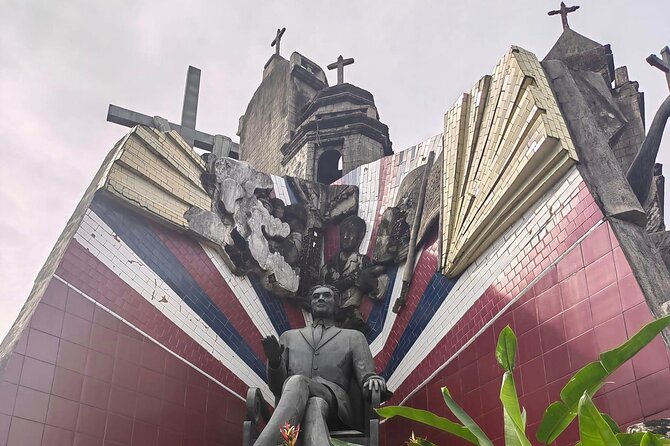
Stop 1 is the Heritage Of Cebu Monument, and it comes with a ticket that includes the associated museum component. The display connects Cebu’s role in Philippine history, including references to the Battle of Mactan and Sergio Osmeña’s inauguration as President. It is the kind of stop that helps you understand why the later landmarks matter so much.
This is also the kind of place where timing counts. Some tours place extra weight on the museum portion at this first stop, and if you show up late, you can miss more than you think. If you want the full experience here, I recommend building in extra buffer time so you are not rushing your own tour.
What I like about opening with this monument is that it gives you a storyline. You are not walking from one landmark to another randomly. You start with context, then you move into places that carry religious and colonial-era significance.
Yap-Sandiego Ancestral House: Spanish and Chinese in one quiet structure
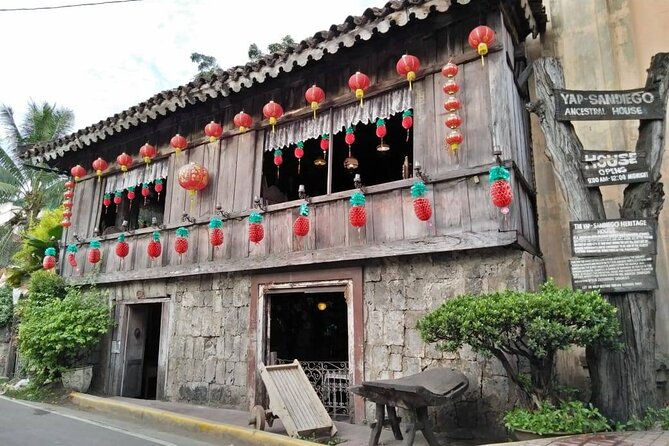
Next is Yap Sandiego Ancestral House, described as one of the oldest residential homes in the country, built around 1680. It uses wood and coral stone, and the architecture blends Spanish and Chinese influences. That mix is more than decoration. It tells you that Cebu has long been a meeting point of cultures, trade routes, and powerful families.
This stop is usually calm compared with markets and plazas. You can slow down and actually look at details, which is rare during the rush of a tour that includes food. The payoff is that you come away with a mental picture of Cebu before you hit the louder, more crowded areas.
A possible drawback: if you prefer your tour to be nonstop and food-heavy, this is a slower historical stop. It balances the pace, but it is not pure street food fun. Still, it sets up the next phase perfectly.
Santo Niño Basilica and Magellan’s Cross: one religious story, two famous symbols
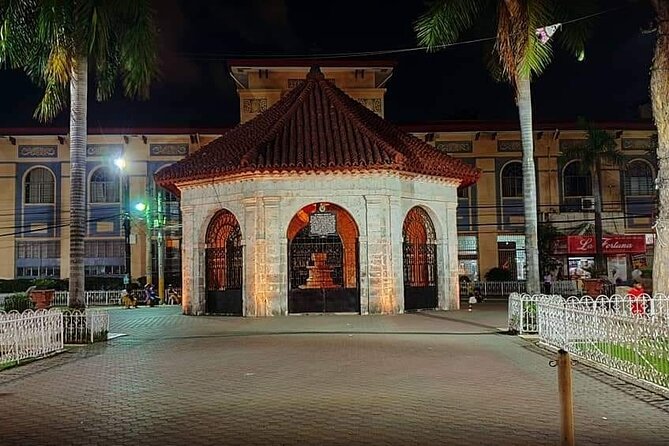
You then head into the Santo Niño Basilica area, including Basilica Minore del Sto. Nino de Cebu (Stop 3) and later Magellan’s Cross Pavilion (Stop 5). The basilica is commonly known as the Santo Niño Basilica and traces its founding to 1565. Magellan’s Cross Pavilion sits near Plaza Sugbo, by the basilica area.
Why cover both together? Because they help you see how colonial-era Christianity became part of Cebu’s identity. Even if you are not religious, these sites are historical anchors. You will notice that locals treat these places as living landmarks, not just “old stuff to photograph.”
Practical note: churches can get busy on certain days and times. If you hit peak crowds, you may not spend as long inside as you expect, depending on what the tour’s schedule allows. That said, having the guide helps you stay oriented, so the experience does not become a waiting game.
Still hungry? More Manila eating
Cebu Carbon Market: where street food culture shows its real face
Stop 4 is Cebu Carbon Market, a place with history in its name. Carbon comes from Spanish carbón, meaning coal, and the area was reportedly near a coal depot used for the old Cebu Railway in the 19th century. That small detail is useful because it frames the market as more than a food stop. It’s part of Cebu’s industrial-to-commercial shift over time.
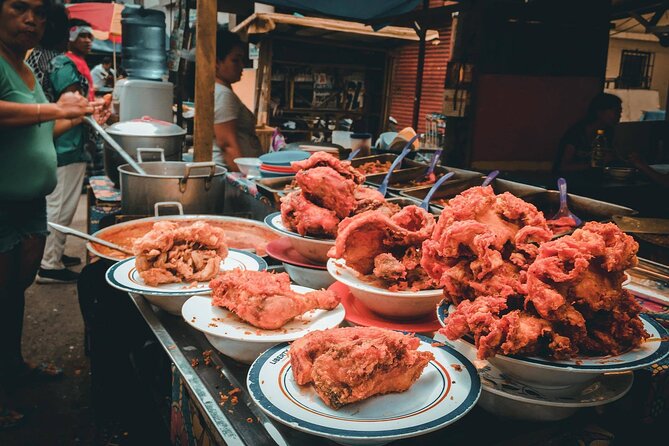
This is also where the tour’s food portion feels most real. The structure of a guided food walk is simple: you get specific places and specific dishes rather than wandering hungry and guessing. People love this stop especially because it is not “museum food.” It is the food you see locals eating and buying.
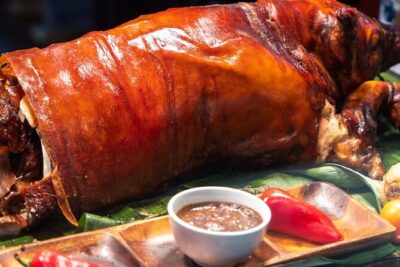
What you might try depends on availability, and tastes vary. But from what people talk about, common local picks can include items like tuslob buwa (a wet, sweet-savor snack associated with Cebu), lechon (roasted pork), and sometimes more adventurous choices like balut. Some groups also mention tasting and walking through market stalls where the atmosphere is half the experience.
Two tips to make Carbon Market easier:
- Eat with an open mind, but pace yourself. Even with “small tastes,” market food adds up fast.
- Ask your guide what is safe and what to expect in terms of texture and spiciness. If you are trying something new, that guidance helps you feel in control.
If you are vegetarian, this matters. The tour is built around local street food, and the dish list you get can be heavy on meat or seafood. Since the exact menu is not guaranteed in the details you have, I would ask the operator directly what options exist before you go.
Cebu Metropolitan Cathedral: layered stories in one building
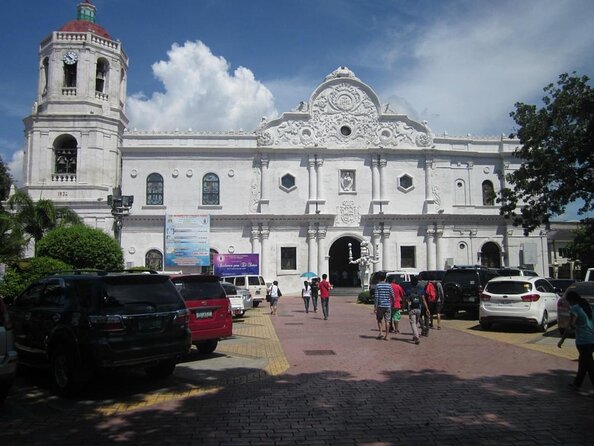
Stop 6 is the Cebu Metropolitan Cathedral, formally the Metropolitan Cathedral and Parish of Saint Vitalis and of the Immaculate Conception. The name is a mouthful, but the key point is what the building has survived. During World War II, much of the cathedral was destroyed by Allied bombardment, which adds weight to visiting a major religious site that has been rebuilt and reshaped over time.
This stop can feel different from the basilica and cross because the vibe is more “community landmark.” It is still iconic, but it is not just a symbol. It is a place that local life continues around.
If crowds limit how long you can stay inside, the guide’s job is to keep the stop valuable by explaining what you are seeing and why the architecture matters.
The practical charm of this walk: your guide handles the hard parts
The best part of this experience, based on repeated praise, is the guide interaction. People often mention guides like Kyle, Lor, Lorelie, Phillip, and Necian as standout, with a pattern of friendly conversation and English that makes it easy to understand both history and food.
This matters more than it sounds. In Cebu City, you can easily get stuck in one of two traps:
1) You spend time translating signage and figuring out routes.
2) You eat random food without context or safety checks.
A good guide solves both by telling you what you are looking at and why it matters, then steering you to places where you do not feel like you are guessing.
Also, some groups start with local transport like a jeepney ride to the first restaurant or between food stops. That small element can turn the walk into a more complete cultural experience. It also means you get breaks from walking, which matters when sidewalks and streets are busy.
Food tour value check: why $69.99 can feel fair, or not
Let’s talk price honestly. At $69.99 per person, this is not a “cheap snacks and photos” walk. One criticism you might see is that it feels overpriced if you expect a lot more food or more time at each stop.
Here’s the fair-value angle: the tour includes multiple admission tickets across major historic sites, and it pairs that with a guided street-food plan. Some people also love that it mixes big landmarks with smaller local details you might not choose alone, especially if you only have one evening in Cebu City.
So how do you decide if it is worth it for you?
- If you want a guided history plus local snacks package, the combination can feel like good use of your time.
- If you want a long food binge with lots of sit-down meals, you might feel shortchanged.
- If you are sensitive to pacing, remember that “about 4 hours” is a target, not a promise. How fast your group walks affects the final finish time.
My advice: if food variety and lots of tastes are your top priority, ask the operator what dishes are typically included. If history and cultural context are also high on your list, this tour format is a strong match.
Who this tour suits best (and who should skip it)
This tour is a good fit if:
- You are new to Cebu City and want to cover key sights efficiently.
- You like local food but would rather do it with a plan.
- You enjoy chatting with your guide and learning as you walk.
You might want a different option if:
- You only want food and not history. This is history-led, with food woven through.
- You hate surprises in food choices. The street-food approach means you may get dishes that are unfamiliar.
- You need a very strict dietary plan. The details you have do not specify vegetarian options.
For solo travelers, the structure can be comforting. Some people specifically say they felt safe moving through the city with the guide and that the stops were chosen thoughtfully.
Timing and weather: what can change on the ground
This experience requires good weather. If it is canceled due to poor weather, you should expect a different date or a full refund. That’s normal for walking tours, but it does mean you should keep your schedule flexible if possible.
Also, because your first stop includes an admission ticket and likely a museum component, showing up on time helps you get the full value. If you arrive late, you risk losing the part that is easiest to miss early on.
Should you book this Cebu food and history walk?
Book it if you want one evening that does two jobs well: you get major Cebu landmarks plus local street-food culture in a guided format that saves you planning time. The strongest part is the human side, with guides like Kyle, Lor, Phillip, and Necian getting consistent praise for friendliness, conversation, and food enthusiasm.
Skip or compare if you are ultra price-sensitive, want strictly vegetarian choices, or expect a longer, heavier food-focused event. The tour is about smart tasting and history context, not a full dinner parade.
If you fall in the first group, this is exactly the kind of tour that makes your first hours in Cebu City feel purposeful, not chaotic.
FAQ
What is the meeting point for the tour?
The tour starts at Ayala Terraces on Biliran Rd, Cebu City. The exact pin shown is at 8W94+H97.
What time does the tour begin?
The start time listed is 4:00 pm.
How long is the tour?
It runs about 4 hours.
How much does it cost?
The price is $69.99 per person.
What does the ticket include?
Admission tickets are included for the listed stops, including Heritage of Cebu Monument, Yap Sandiego Ancestral House, Santo Niño Basilica, Cebu Carbon Market, Magellan’s Cross Pavilion, and Cebu Metropolitan Cathedral.
Where does the tour end?
The tour ends at Freedom Park Carbon, Cebu City.
How many people are in a group?
The tour has a maximum of 20 travelers.
What happens if the weather is bad?
This experience requires good weather. If it is canceled due to poor weather, you will be offered a different date or a full refund.
Is the experience refundable if I cancel?
No. This experience is non-refundable and cannot be changed for any reason.
Is there a minimum number of travelers?
Yes. If the minimum number is not met and the tour is canceled for that reason, you will be offered a different date or a full refund.
More Tour Reviews in Cebu
- Cebu City: Bohol Countryside Tour with Loboc Cruise Lunch★ 4.5 · 488 reviews
- Canyoneering Experience in Kawasan Falls with Lunch★ 5.0 · 440 reviews
- Cebu: Oslob Whale Sharks, Tumalog Falls & Sardine Snorkeling★ 4.3 · 343 reviews
- Whale Shark & Tumalog Falls & Sumilon Sandbar & Pescador Island with Sardines★ 4.5 · 223 reviews
Manila by the Plate
- Private Cebu & Lapu-Lapu City Tour with Uphill Spots & Lunch at House of Lechon★ 4.5 · 168 reviews
- The Ultimate Cebu Food Tour: Local Tastes & Cultural Journey★ 4.5 · 10 reviews
Cebu City and the Uphill Route
- Cebu City: Bohol Countryside Tour with Loboc Cruise Lunch★ 4.5 · 488 reviews
- Private Cebu & Lapu-Lapu City Tour with Uphill Spots & Lunch at House of Lechon★ 4.5 · 168 reviews
- Bohol Countryside Day Tour From Cebu City | Lunch at Loboc River Cruise★ 4.5 · 157 reviews
- Cebu Group Tour: Best Cebu City Tour★ 4.0 · 63 reviews
More of Cebu, reviewed
- Panoramic View of Cebu and Dinner with Night View
★ 4.5 · 3 reviews - Cebu Traditional Bamboo Cooking
★ 5.0 · 3 reviews - Island Hopping | Bantayan Island – Virgin Island
★ 4.0 · 3 reviews - Bluewater Sumilon Day Pass
★ 5.0 · 3 reviews - Oslob Whaleshark with Sumilon Island
★ 4.5 · 4 reviews
Cebu City Heritage and Uphill Tours, start to finish.
 ★ 4.7Cebu City: Whale Shark Swimming & Kawasan Falls CanyoneeringFrom $124665 reviews
 ★ 4.5Cebu City: Bohol Countryside Tour with Loboc Cruise LunchFrom $144488 reviews
 ★ 4.5Private Cebu & Lapu-Lapu City Tour with Uphill Spots & Lunch at House of LechonFrom $75168 reviews
 ★ 4.5Bohol Countryside Day Tour From Cebu City | Lunch at Loboc River CruiseFrom $145157 reviews
 ★ 4.6Cebu City: City and Mountain Highlights TourFrom $8785 reviews
 ★ 4.5Cebu: Exploring Cebu City’s rich history and Uphill TourFrom $7568 reviews
 ★ 4.5Cebu Highlands: Half-Day Escape with Optional LunchFrom $5263 reviews
 ★ 4.0Cebu Group Tour: Best Cebu City TourFrom $7663 reviews