
REVIEW · CEBU
Cebu City Tour
Cebu history fits neatly into three hours. This Cebu City tour is interesting because it braids together religion and trade connections across the city, from a Chinese-built Taoist temple to Cebu’s oldest Roman Catholic church. I like the hotel pickup and the fact that you travel by private vehicle, so you spend less time figuring out taxis and more time watching the sights and hearing the stories.
One possible drawback: it is a short, concentrated route, so if you want a long list of stops, $38 may feel pricey for what you see in total.
In This Review
- Key things that make this Cebu City tour worth your time
- A fast, focused Cebu City look at faith and old trade
- Price, pickup, and how the 3-hour schedule really works
- Taoist Temple in Beverly Hills Subdivision, built by Cebu’s Chinese community
- Heritage of Cebu Monument, the concrete-bronze story wall
- Yap-Sandiego Ancestral House, Don Juan Yap and the merchant era
- Magellan’s Cross, the 1521 marker you can spot in minutes
- Santo Niño Basilica, oldest Roman Catholic church and dress notes
- Guides matter: DoT upgrades and why commentary gets remembered
- Who this Cebu City tour is best for, and who should skip it
- Should you book this Cebu City tour?
- FAQ
- How long is the Cebu City tour?
- What is the price per person?
- Does the tour include hotel pickup and drop-off?
- Is transportation included?
- Are food and drinks included?
- Are admission tickets required for the stops?
- Is this tour private?
- Can I cancel for a full refund?
Key things that make this Cebu City tour worth your time
- Hotel pickup plus private transfer means less stress, especially when traffic gets messy
- Santo Niño Basilica and Magellan’s Cross are major Cebu landmarks in a tight schedule
- Chinese and Spanish heritage in one loop, from the Taoist Temple to the oldest Catholic church
- Yap-Sandiego Ancestral House connects you to Cebu’s merchant era (built 1675 to 1700)
- Every stop lists free admission, so you pay once and then just enjoy
- DoT guide upgrade can change the experience, based on the strong guide commentary people loved
Deeper into Cebu City and the hills above it
- Private Cebu & Lapu-Lapu City Tour with Uphill Spots & Lunch at House of Lechon★ 4.5 · 168 reviews
- Bohol Countryside Day Tour From Cebu City | Lunch at Loboc River Cruise★ 4.5 · 157 reviews
- The Original Cebu City Historical and Food Walking Tour★ 4.5 · 81 reviews
- Cebu Group Tour: Best Cebu City Tour★ 4.0 · 63 reviews
A fast, focused Cebu City look at faith and old trade
This isn’t a slow “wander until you feel it” kind of tour. It is a practical route that hits the big names and the key backstory, all while you’re tucked into a private ride. You’re basically getting the highlight reel of Cebu’s identity, how different communities shaped the city, and why a few sites matter so much.
What I like most is the way the tour jumps between belief systems and eras without turning into a lecture. You start with a Taoist temple built by Cebu’s Chinese community, then you move to Catholic icons tied to early European arrival, and you finish at a site tied to the search for the Santo Niño image.
That mix makes the city feel less like a list and more like a living timeline you can actually follow.
Price, pickup, and how the 3-hour schedule really works
At $38 per person for about 3 hours, you are paying for three things: a guided explanation, door-to-door convenience, and private transport. The places you visit are listed as free admission in the itinerary, so your money goes mostly to interpretation and logistics, not ticket fees.
The pickup and drop-off is the big practical win. Cebu traffic can be unpredictable, and the tour is designed to keep you moving so you still get into all stops. One review highlighted how even before a holiday weekend, the timing stayed on track, with a driver helping you jump out and back in.
You should also know what “private tour” means here: it is your group only, not a big shared bus. That usually helps the pace feel easier, and it can make questions feel more natural.
And yes, the schedule is tight. You will have short visits at each stop, so treat it as a “get oriented fast” tour. If you want lingering photo time and extra museum stops, you might be happier pairing this with a second activity later in the day.
Taoist Temple in Beverly Hills Subdivision, built by Cebu’s Chinese community
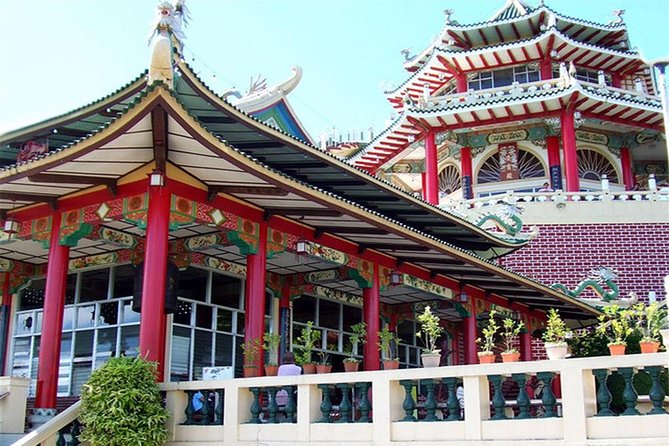
Your first stop is a Taoist temple in the Beverly Hills Subdivision of Cebu City. The itinerary notes it was built in 1972 by Cebu’s Chinese community, and it is a great way to start because it sets the tone: Cebu’s story is not only Spanish-era, it is also shaped by immigrant communities that built institutions and traditions of their own.
This stop is short, about 15 minutes, with free admission listed. That’s enough time to notice the details and understand the role of the temple without turning it into a long detour.
Practical tip: since it is a temple setting, keep your demeanor respectful. Comfortable shoes help too, because you may need to navigate around the temple grounds at a walking pace.
Heritage of Cebu Monument, the concrete-bronze story wall
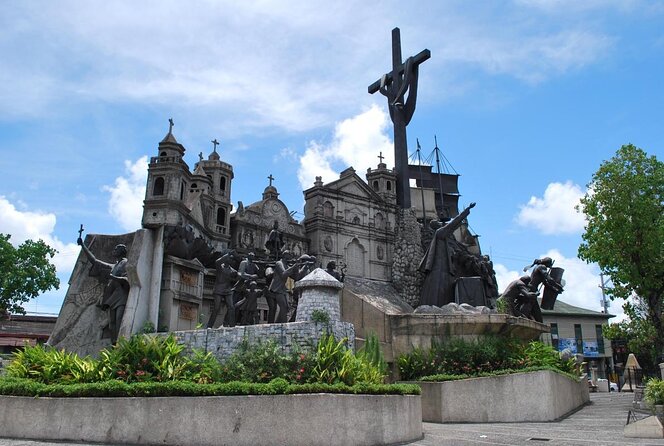
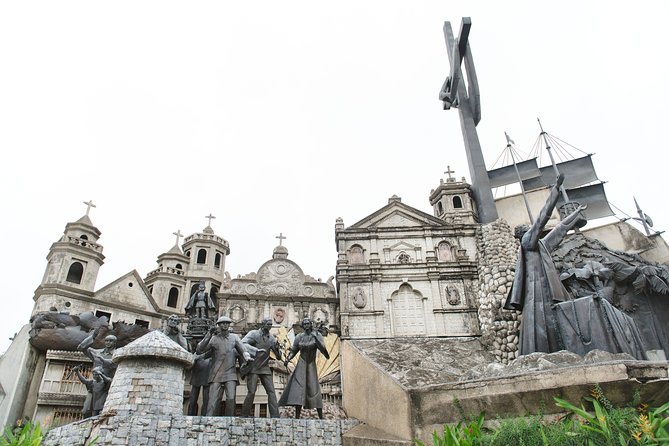
From there you move to the Heritage of Cebu Monument, a tableau built from concrete, bronze, brass, and steel. The key point here is what the monument is trying to do: show scenes related to events and structures tied to Cebu’s history.
The stop is about 5 minutes, free admission listed, so don’t expect a full interpretive center. Instead, use it as a quick orientation moment. I like it because it gives you a “map in sculpture form” before you go into the older house and the early cross and basilica sites.
If you’re the type who hates feeling rushed, give yourself permission to just read a few elements and move on. The tour’s value is how it connects these stops into a single story arc.
Other Cebu outings that kept coming up while we researched this one
Yap-Sandiego Ancestral House, Don Juan Yap and the merchant era
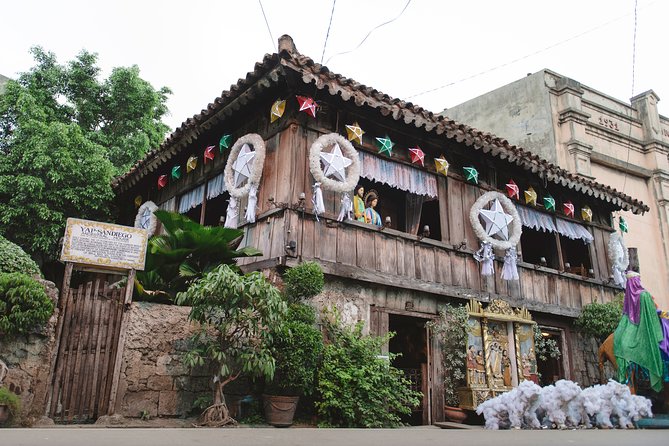
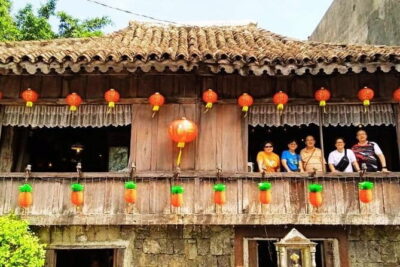
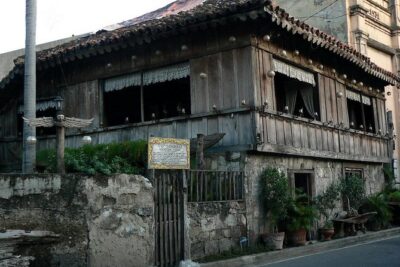
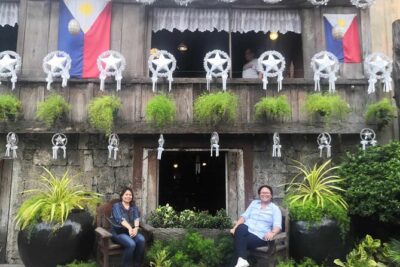
The Yap-Sandiego Ancestral House is one of the best uses of time on this route. The itinerary places its construction between 1675 and 1700, and it was originally owned by a Chinese merchant named Don Juan Yap and his wife, Dona Maria Florido.
This stop matters because it anchors Cebu’s history in daily life, trade, and the kind of wealth that came from commerce. A photo of a church is impressive, but a house like this helps you picture what influence looked like in real space.
You get about 15 minutes here with free admission listed. That is enough time to appreciate the scale and imagine the social world inside, without feeling like you need an entire afternoon.
If you’re curious about how Chinese merchant families fit into Cebu over centuries, this is the stop that pays off. It gives the tour a human edge, not just a monument edge.
Magellan’s Cross, the 1521 marker you can spot in minutes
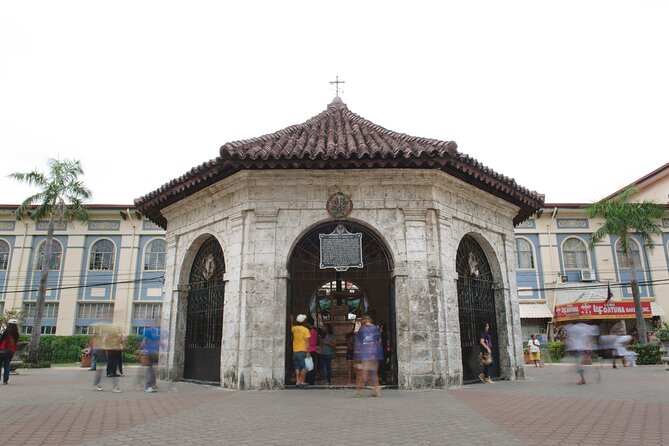
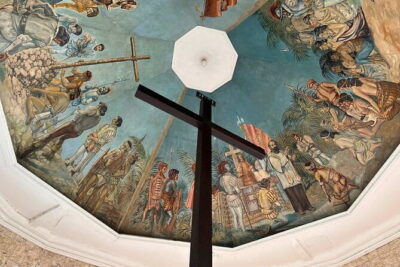
Next up is Magellan’s Cross, with the itinerary connecting it to March 15, 1521, when Ferdinand Magellan arrived in Cebu. It describes the cross as a Christian cross planted by Portuguese and Spanish explorers as ordered by Magellan.
This part is brief, about 5 minutes, free admission listed. Think of it as a quick, meaningful pin drop. It is not the length of time that makes it important, it is the symbolic weight, and the fact that you can pair it in your mind with what comes next at Santo Niño Basilica.
Practical note: if you are sensitive to sun or heat, this is one of the moments where you might want to keep water handy, even though food and drinks are not included on the tour.
Santo Niño Basilica, oldest Roman Catholic church and dress notes
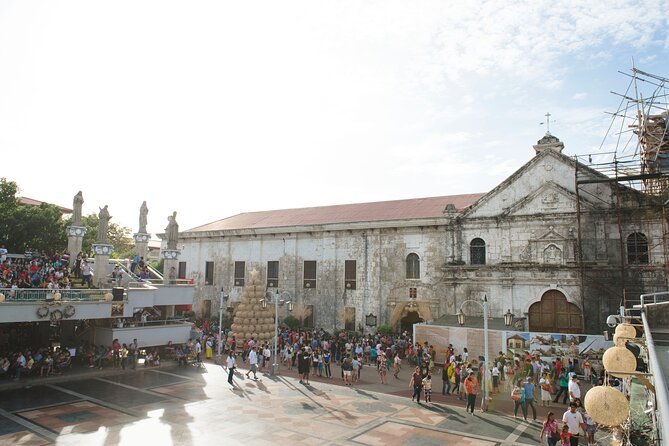
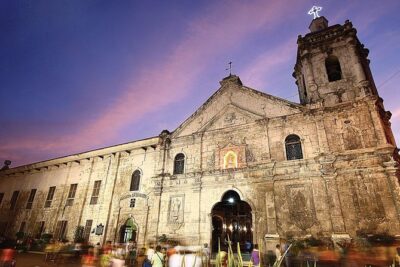
The final major stop is the Basilica Minore del Sto. Nino de Cebu. The itinerary identifies it as the oldest Roman Catholic church in the Philippines and says it is built on the spot where the image of the Santo Nino de Cebu was found during Miguel Lopez de Legazpi’s expedition.
You get about 15 minutes here, and admission is listed as free. This is the site that often turns a “tour” into an experience, because it’s tied to a specific discovery story and the long spread of Catholic devotion in the region.
Also, pay attention to the clothing note in the itinerary. It mentions an issue with sleeveless shirts, so if you’re traveling in summer heat, bring something light you can wear over your shoulders. That small prep avoids awkwardness when you arrive.
Guides matter: DoT upgrades and why commentary gets remembered
The itinerary includes a coordinator, and it also offers an upgrade to a Department of Tourism certified guide. That upgrade is more than a logo. The reviews you’ll find for this route consistently point to guide commentary as the difference between simply seeing places and actually understanding them.
Names that come up include Vernie and Angelica. Other guides listed in feedback include Chen and Josh. Regardless of which name you see on the day, the repeated theme is clear: the best tours are the ones where someone helps you connect the dots between sites.
You will likely get enough explanation at each stop to understand why the Taoist temple and the Catholic basilica both matter, even if they represent very different communities and time periods. And you’ll walk away with a tighter sense of how Cebu’s early European touchpoint connects to the later religious tradition.
If you want the most value from this tour, I suggest treating the DoT certified option as a “serious learning” add-on, not a luxury. In a short 3-hour window, better explanation is the highest return.
Who this Cebu City tour is best for, and who should skip it
This is a solid choice if you want an efficient overview of Cebu City with minimal hassle. It works well for:
- First-time visitors who want the core landmarks without spending your day planning routes
- People with limited time between ferries, tours, or flights
- Travelers who like history but do not want a full-day museum crawl
- Anyone who wants a guided mix of Catholic and Chinese heritage sites
It may not be the best fit if you expect a long list of stops. One downside that shows up is a sense that there simply are not many sights in the time available, which can make some people feel the price is high. That’s a fair expectation check.
If your idea of value is “more minutes at more places,” you might pair this with other activities rather than treating it as your only city outing.
Should you book this Cebu City tour?
Book it if you want a tidy, guided loop through Cebu’s most important religious and historic touchpoints, with hotel pickup and private transport that keeps you comfortable. At $38, the value is strongest when you use the guide time well, especially if you choose the Department of Tourism certified guide upgrade.
Skip it or reconsider the upgrade if you hate short stops and you only feel satisfied after long visits. This is a highlight route, not a marathon.
If you are trying to get your bearings fast and understand why Cebu’s landmarks mean what they mean, this tour is a practical way to do it, without burning your day in transit.
FAQ
How long is the Cebu City tour?
The tour lasts about 3 hours.
What is the price per person?
The price is $38.00 per person.
Does the tour include hotel pickup and drop-off?
Yes. Hotel pickup and drop-off are included.
Is transportation included?
Yes. You get round-trip private transfer and transport by private vehicle.
Are food and drinks included?
No. Food and drinks are not included.
Are admission tickets required for the stops?
Admission is listed as free for the stops in the itinerary.
Is this tour private?
Yes. It is a private tour or activity, with only your group participating.
Can I cancel for a full refund?
Yes. You can cancel for a full refund up to 24 hours in advance of the experience start time.
More Tours in Cebu
- Cebu City: Bohol Countryside Tour with Loboc Cruise Lunch★ 4.5 · 488 reviews
- Private Cebu & Lapu-Lapu City Tour with Uphill Spots & Lunch at House of Lechon★ 4.5 · 168 reviews
- Bohol Countryside Day Tour From Cebu City | Lunch at Loboc River Cruise★ 4.5 · 157 reviews
- Oslob Whale Sharks and Moalboal Sardine Run, Sea Turtles Tour★ 4.5 · 98 reviews
More Tour Reviews in Cebu
- Cebu City: Bohol Countryside Tour with Loboc Cruise Lunch★ 4.5 · 488 reviews
- Canyoneering Experience in Kawasan Falls with Lunch★ 5.0 · 440 reviews
- Cebu: Oslob Whale Sharks, Tumalog Falls & Sardine Snorkeling★ 4.3 · 343 reviews
- Whale Shark & Tumalog Falls & Sumilon Sandbar & Pescador Island with Sardines★ 4.5 · 223 reviews
Cebu City and the Uphill Route
- Cebu City: Bohol Countryside Tour with Loboc Cruise Lunch★ 4.5 · 488 reviews
- Private Cebu & Lapu-Lapu City Tour with Uphill Spots & Lunch at House of Lechon★ 4.5 · 168 reviews
- Bohol Countryside Day Tour From Cebu City | Lunch at Loboc River Cruise★ 4.5 · 157 reviews
- The Original Cebu City Historical and Food Walking Tour★ 4.5 · 81 reviews
More of Cebu, reviewed
- Panoramic View of Cebu and Dinner with Night View
★ 4.5 · 3 reviews - Cebu Traditional Bamboo Cooking
★ 5.0 · 3 reviews - Island Hopping | Bantayan Island – Virgin Island
★ 4.0 · 3 reviews - Bluewater Sumilon Day Pass
★ 5.0 · 3 reviews - Oslob Whaleshark with Sumilon Island
★ 4.5 · 4 reviews
Cebu City Heritage and Uphill Tours, start to finish.
 ★ 4.7Cebu City: Whale Shark Swimming & Kawasan Falls CanyoneeringFrom $124665 reviews
 ★ 4.5Cebu City: Bohol Countryside Tour with Loboc Cruise LunchFrom $144488 reviews
 ★ 4.5Private Cebu & Lapu-Lapu City Tour with Uphill Spots & Lunch at House of LechonFrom $75168 reviews
 ★ 4.5Bohol Countryside Day Tour From Cebu City | Lunch at Loboc River CruiseFrom $145157 reviews
 ★ 4.6Cebu City: City and Mountain Highlights TourFrom $8785 reviews
 ★ 4.5The Original Cebu City Historical and Food Walking TourFrom $6981 reviews
 ★ 4.5Cebu: Exploring Cebu City’s rich history and Uphill TourFrom $7568 reviews
 ★ 4.5Cebu Highlands: Half-Day Escape with Optional LunchFrom $5263 reviews
Where this one shows up