
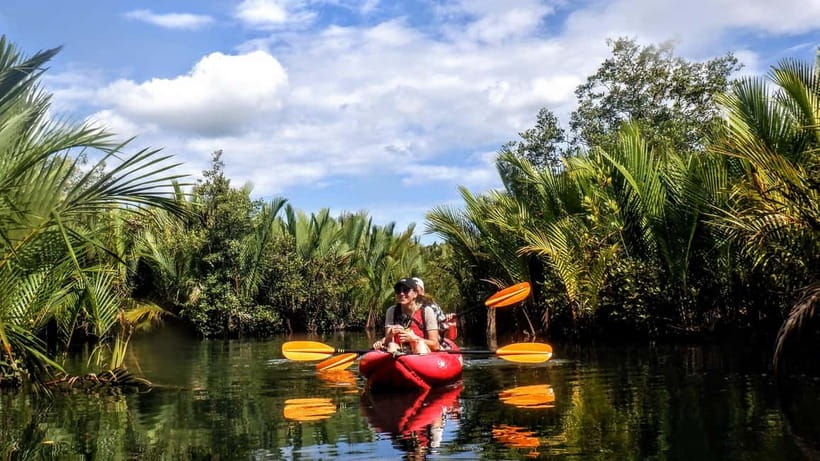
REVIEW · BOHOL
From Tagbilaran City/Panglao Island: Bohol Mangrove Kayaking
Mangrove kayak trips are often loud and crowded. This one feels calm and real, with a quiet paddle through the Abatan River mangrove corridors and practical eco lessons from local guides. I especially like the small-group setup, because you are not squeezed in for the perfect photo and then rushed along, and the guides like Vince and Jeremy are known for staying unhurried and sharing useful details. One thing to consider: it is not for non-swimmers or kids under 6, because you are in the water for up to 2 hours.
You also steer your own kayak, so you are not a passenger. The route focuses on low-impact kayaking, with no engine and no megaphone style guiding, which makes it easier to pay attention to what is actually happening in the mangroves.
If you want an easy win in Bohol that is different from beaches and resorts, this can be a strong choice. Still, bring realistic expectations: it is nature time, not a party or shopping stop, and you will want insect repellent and sunscreen.
In This Review
- Key points before you go
- Entering the Abatan River Mangrove Tunnels Trail
- Getting there from Panglao or Tagbilaran, and why timing matters
- The 5-hour flow: briefing, kayaking, and a snack break
- On the water: steering through narrow mangrove corridors
- What you actually learn: mangroves, birds, and local river life
- Food, gear, and comfort details that matter on a kayak day
- Price and value: why $64 can make sense
- Who should book this mangrove kayaking day
- Conservation focus: what “sustainable” means here
- Should you book the Abatan River mangrove kayaking?
- FAQ
- FAQ
- How long is the Bohol Mangrove Kayaking experience?
- How much time do I spend kayaking on the water?
- Is transport included from Panglao or Tagbilaran?
- Do I need to know how to kayak before I go?
- What language will the guide speak?
- What should I bring for the tour?
- Is the tour suitable for children or non-swimmers?
- What is included in the price?
Key points before you go
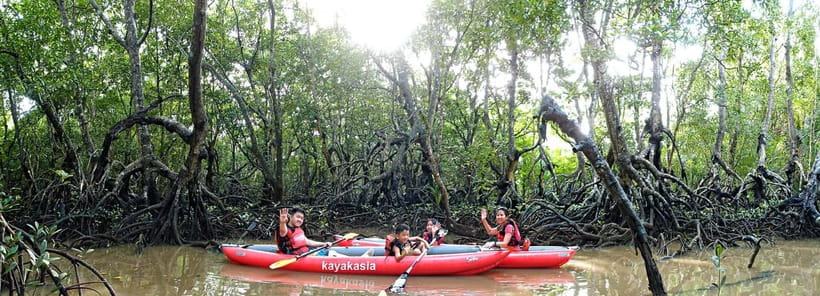
- Real low-impact kayaking through mangrove tunnels, with no motor
- Local guides who explain the river ecosystem in English or Tagalog
- Small groups and limited slots, so it stays quiet on the water
- Up to 2 hours on the water, plus briefing and snack time
- Conservation-focused route, including mangroves used to protect coasts and fish nurseries
- Food and water included, with lockers, wash room, and changing rooms available
The rest of what we have written on Bohol
- From Tagbilaran City/Panglao Island: Bohol Mangrove Kayaking★ 5.0 · 7 reviews
Entering the Abatan River Mangrove Tunnels Trail
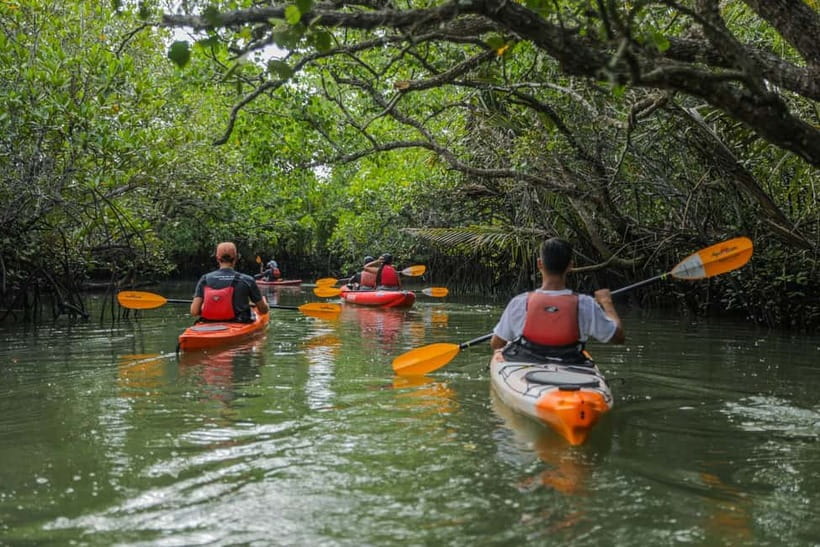
This trip takes you onto the Abatan River, where mangroves form a maze of narrow corridors and sheltered waterways. The tone is intentionally simple: you paddle, your guide points things out, and the river does most of the talking.
What makes it interesting is that it is not built like a “line up here, pose there” tour. The mangrove tunnels feel like a living system, with shifting channels and quiet stretches where birds overhead are the main soundtrack. It is also run as a conservation-focused experience, not a theme-park production.
The tour is led by Kayakasia Philippines, and the philosophy shows. You get a basic lesson and safety briefing first, then you head out to steer yourself through the tunnels. That hands-on element matters because you notice more when you control your pace.
Getting there from Panglao or Tagbilaran, and why timing matters
Logistics in Bohol can make or break the day. This one includes round-trip transport from resorts in Panglao or Tagbilaran City, which is a big deal if you do not want to wrestle with a driver schedule.
Travel time depends on where you start. From Panglao (and also Loboc), plan on about one hour to reach the river station area. From Tagbilaran City, it is much shorter, around 15 minutes.
The schedule is built around that travel time. You will pick up, travel to the river, get briefed and equipped, then do your main time on the water before returning. If you are thinking about booking, choose the pickup time that keeps you from rushing breakfast or burning the whole day with transport.
The 5-hour flow: briefing, kayaking, and a snack break
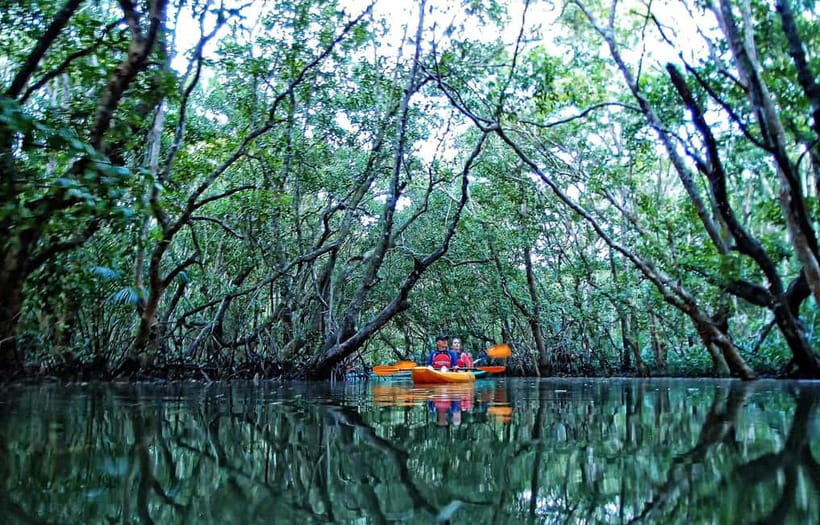
The total duration is 5 hours, and the kayaking time on the water is capped at 2 hours maximum. That cap is there for safety and for keeping the experience low impact.
Your day starts with pickup, then you head toward the river station by van. Once there, you get kayak lessons and safety instructions, plus a comprehensive safety briefing. This is also where you learn how to handle your paddle and kayak setup, so beginners are not thrown into the deep end.
Then you move into the Abatan River portion, where you get guided time on the water with scenic views and wildlife viewing. You will not be sprinting from one spot to another. The pacing is set up so the mangrove corridors can do their job, letting you slow down and notice the birds and plant structure.
There is also a break for local snacks during the overall plan, which is helpful if you end up working up an appetite from all that steady paddling.
On the water: steering through narrow mangrove corridors
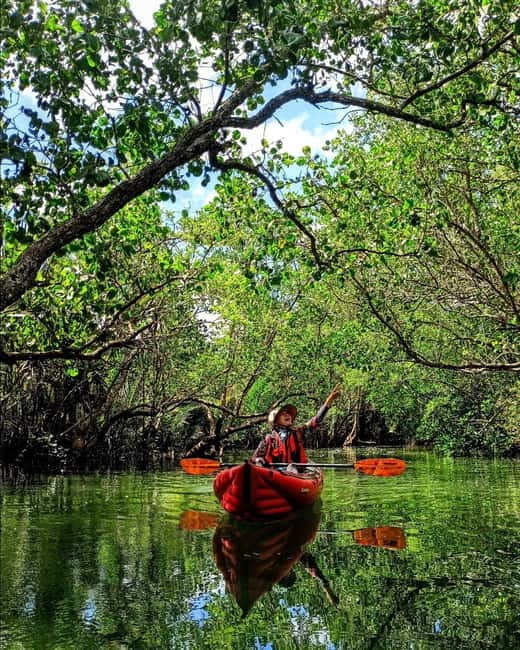
This is not a ride-along. You paddle your own kayak through the mangrove tunnels trail, and the guide stays focused on what you can see, not on talking over noise.
A key detail is that the route is no motor. That matters because the water stays quiet and the soundscape stays natural. You are more likely to spot birds, and you feel less like you are touring an attraction and more like you are moving through an ecosystem.
The trail is described as a network of winding mangrove corridors. Some sections function like tunnels, narrow and shifting, while other areas open into broader parts of the river. In those open parts, you get more cultural and community context from the guide.
Because you are paddling, your experience depends a bit on your comfort and stamina. If you can swim and feel steady in water, you will likely find it relaxing. If you are hesitant in general, the lesson and early guidance are there to help you get your bearings fast, and you should be honest with yourself about your ability.
What you actually learn: mangroves, birds, and local river life
Mangroves are not just scenic. They are doing serious work for the coastline, the water, and the wildlife.
Here, the guides talk about the mangrove ecosystem and why this specific protected area matters. The mangroves in the corridor are listed as 32 species, including an endangered species called Camptostemon philippinense. That is not just trivia. The reason your guide brings it up is to explain the role mangroves play in preventing coastal erosion, protecting fish nurseries, and storing carbon.
You also learn more practical river observations. The guides point out plants and birds, and you may hear about crab holes in the mud. That kind of detail helps you see the mangrove area as habitat, not scenery.
The guide style also seems to be a strong point. Vince is noted for being informative, taking many pictures, and never rushing people. Jeremy is noted for having a great background in the environment. Even from those two examples, you get a clear idea of what you are paying for: interpretation that is easy to follow and paced to your comfort.
And because the experience is linked to the local river community, you get a sense of how people relate to the river system. The tour also connects the ecosystem to storms and resilience, with context about how typhoons used to devastate the area and how mangroves are helping the landscape recover.
Food, gear, and comfort details that matter on a kayak day
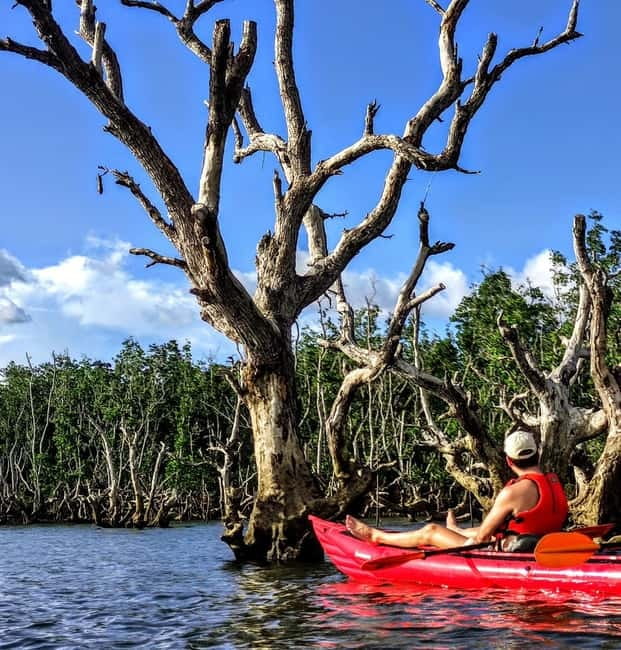
For a 5-hour outdoor activity, the included basics make a difference. You get kayak gear and equipment, plus kayak lessons and safety instructions. You also get lockers, wash room and changing rooms, and water refills.
There is food and drinks between and after kayaking. The recurring positive note is that the meal or food after the paddle is both tasty and a solid portion. One account highlights the food as really good and enough quantity, and another says the lunch was delicious and worth the stop.
That part can be underrated when you are comparing tours. If you paddle for hours, you want something more than a snack bar after. Here, you get that in the plan.
For what to bring, keep it simple and practical:
- Swimwear (you will likely get wet)
- Comfortable clothes for changing
- Sunscreen and insect repellent
- Camera (there will be chances for photos)
- Water
- A towel-like item can help, though it is not listed, so check what you prefer
Also watch the non-negotiables. This activity is not suitable for people with mobility impairments, and it is not for non-swimmers. Under 6 is also a hard stop.
Price and value: why $64 can make sense
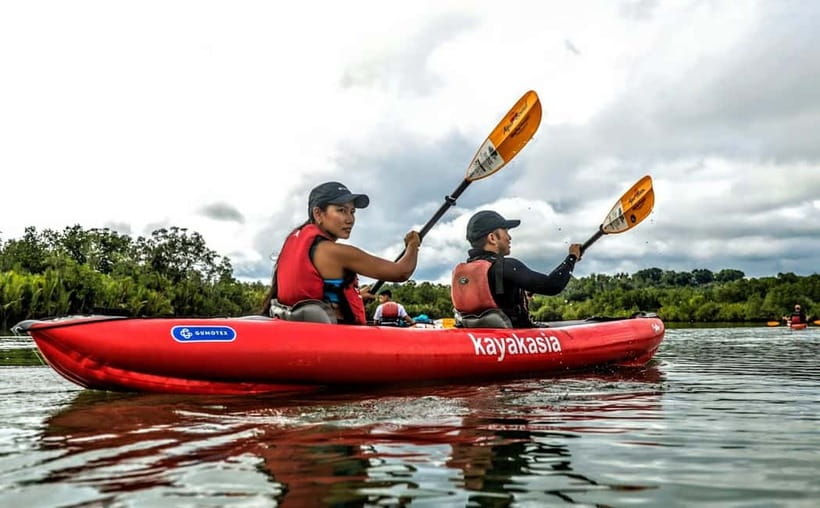
At $64 per person for a 5-hour experience, the price is not the cheapest option in Bohol. But this is not a short, generic activity, and it includes real value.
You are paying for:
- Round-trip transport from Panglao or Tagbilaran
- Kayak gear and equipment
- Safety briefing and kayak lessons
- A guided paddle on the Abatan River
- River usage and community fees
- Food and drinks, plus water refills
- Locker and wash room access
Most importantly, you are paying for conservation-focused access with limited slots. The experience is described as having extremely limited runs with small groups, and that is not just to sell the tour. It helps keep the ecosystem calmer and makes the day feel more personal.
If you are the type of traveler who hates being herded and prefers nature that feels protected, this pricing can feel fair. If you are only looking for a quick activity with minimal cost, you might find cheaper options, but you would likely lose the “quiet and no noise” vibe that is clearly central here.
Who should book this mangrove kayaking day
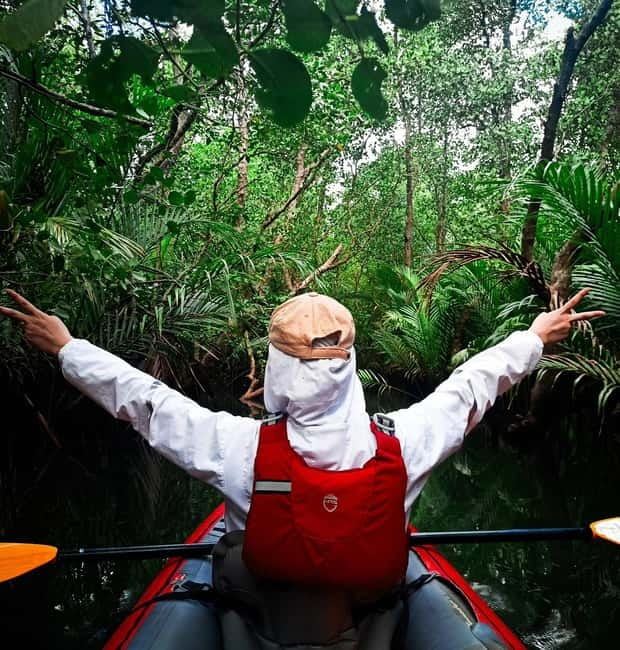
This trip is best for travelers who:
- Want a calm, nature-first experience rather than a crowded stop
- Enjoy learning, and like guides who explain what you see
- Can swim and are comfortable with being in the water
- Prefer smaller groups and limited slots
- Are okay with a guided pace that does not rush you
It is also a good fit for beginners. There is kayak lessons and safety instruction before you go, and the activity is built to be doable for people who are still learning.
If you are bringing kids, keep the age rule in mind. Children under 6 are not suitable, and you should also factor in the ability to handle the water time.
If mobility is an issue, do not assume you can adapt on the fly. People with mobility impairments are listed as not suitable, so choose a different Bohol activity that matches accessibility.
Conservation focus: what “sustainable” means here
The tour is described as part of an active conservation corridor and tied to protecting the mangrove ecosystem. It also emphasizes that it is not set up as fake eco-tourism, which usually means fewer crowds, fewer distractions, and more time actually spent in nature.
Mangroves do real work: they help protect coasts, support fish nurseries, and store carbon. When a kayak route includes river usage and community fees, it is aiming to direct money toward maintaining the area and supporting locals who live with the river.
The “limited slots” piece matters because it reduces pressure on wildlife and habitat. The guide also keeps the experience low-key, with no engine and no megaphone style shouting, so you are less likely to disrupt what the ecosystem is doing.
That is the practical meaning of sustainability here. It is not a slogan you ignore. It shows up in how the day is run.
Should you book the Abatan River mangrove kayaking?
Book this if you want a quiet, guided kayak experience through mangrove tunnels in Bohol, with small groups, real eco interpretation, and a good meal at the end. The combination of limited slots, no motor paddling, and guides who take their time is the strongest argument for the trip.
Skip it if you are a non-swimmer, need accessibility accommodations not mentioned here, or you are traveling with kids under 6. Also skip it if you want a fast, high-energy outing. This is nature time, paced for calm.
If you are staying in Panglao, it is worth the drive. If you are based in Tagbilaran City, it is even easier to fit in without wasting your whole day on transport.
Take your sunscreen and insect repellent seriously, and plan to enjoy the slower parts. When you do, the mangrove tunnels can feel like Bohol’s real veins, not just another stop on the island circuit.
FAQ
FAQ
How long is the Bohol Mangrove Kayaking experience?
The total duration is 5 hours.
How much time do I spend kayaking on the water?
The maximum time on the water is 2 hours.
Is transport included from Panglao or Tagbilaran?
Yes. The price includes 2-way transport from resorts in Panglao Island or Tagbilaran City.
Do I need to know how to kayak before I go?
No. Kayak lessons and safety instructions are included before the tour, and the activity is suitable for beginners.
What language will the guide speak?
The live tour guide speaks English and Tagalog.
What should I bring for the tour?
Bring swimwear, a camera, sunscreen, water, comfortable clothes, and insect repellent.
Is the tour suitable for children or non-swimmers?
No. It is not suitable for children under 6, non-swimmers, or people with mobility impairments.
What is included in the price?
You get kayak gear and equipment, kayak lessons and safety instructions, a guided kayak tour, river usage and community fees, food and drinks in between and after kayaking, locker use, wash room and changing rooms, and water refills.
Rivers After Dark
- Private Firefly Watching Night Cruise on Bohol Abatan River★ 4.0 · 15 reviews
Still in Bohol? Keep Going
- Private Firefly Watching Night Cruise on Bohol Abatan River★ 4.0 · 15 reviews
More of Cortes Bohol, reviewed
- From Tagbilaran City/Panglao Island: Bohol Mangrove Kayaking
★ 5.0 · 7 reviews
Panglao and Balicasag Island Tours, start to finish.
 ★ 4.6Bohol: Pamilacan Island Dolphin/Turtle Watching Tour & LunchFrom $7096 reviews
 ★ 4.9Panglao: Dao, Forests, and Tarsier Sanctuary Tour with LunchFrom $14443 reviews
 ★ 3.2Bohol Dolphin Watching, Balicasag, and Virgin Island TourFrom $5129 reviews
 ★ 4.6From Bohol & Panglao Island: Full-Day Bohol TourFrom $12329 reviews
 ★ 4.9Panglao: Napaling Reef and Sardines Freediving ExperienceFrom $5316 reviews
 ★ 3.9Bohol: Private Balicasag Tour with extra snorkeling timeFrom $11015 reviews
 ★ 4.7Panglao: Snorkeling at NapalingReef with Sardines ExperienceFrom $3914 reviews
 ★ 4.5Panglao: Private Cave Pool, Beach & Scenic Day TourFrom $2813 reviews