
REVIEW · PHILIPPINES
indigenous Forest experience Manila 2023
Aetas and a bamboo lunch, what a mix. This full-day Subic Bay visit focuses on living culture in the Binictican Hills, with time on the Pamulaklakin Forest Trail and a guided community experience. I love how the day is built around practical learning, like plant medicine and how people use the forest for daily life. One thing to plan for: it is still a day trip that includes a walking tour, so you will want comfortable shoes and stamina for the trail time.
The best part is the human side, not a scripted show. I like that the group stays small, max 15, so you can ask questions and actually get answers, like we heard from guides Eddie and Ricky during the jungle walk and demo segments. A possible drawback is timing, because it runs on a 6:30 am start and takes most of the day (about 10 to 12 hours), so it is not for slow mornings or late-night plans.
If you want a nature and culture day that feels personal and hands-on, this is a strong choice. You will ride in an air-conditioned vehicle, get free transfers from select Manila areas, and spend real time learning inside a rainforest area that is known for being less developed. Just keep expectations grounded: this is a forest-and-people experience, not a theme park, so weather matters and the pacing is tied to the trail and the community schedule.
In This Review
- Key highlights to know before you go
- Subic Bay and the Aeta connection, not just a hike
- The value of leaving Manila early (and doing it comfortably)
- Pamulaklakin Forest Trail: what the 3-hour walk actually feels like
- Learning medicinal plants and jungle survival skills
- A bamboo lunch that actually connects to the culture
- Comfort, group size, and why the day stays personal
- Price and value: is $160 worth a full-day culture and rainforest experience?
- Who this tour is best for, and who should skip it
- Tips to make the 6:30 am start and trail time easier
- Should you book the indigenous forest day with Yolo Travel Philippines?
- FAQ
- What time does the tour start?
- How long is the tour?
- How much does it cost?
- How many people are in the group?
- What is the main location you visit?
- Is the lunch included?
- What is included for the trail time?
- Is pickup available from Manila?
- What if weather is poor?
- Can I cancel for a full refund?
Key highlights to know before you go
- Pamulaklakin Forest Trail time built into the day, with admission included and about 3 hours on the trail
- Bamboo-prepared lunch, including the kind of bamboo food experience that locals use day-to-day
- Small group size (max 15), so you are not lost in a crowd when questions come up
- Medicinal plants and survival skills shown during the guided walk and community discussion
- Guide Eddie and Ricky referenced in reviews, noted for plant spotting and patient explanations
Still weighing up the options? These Manila trips came out well when we reviewed them.
- Intramuros, Manila: Historical Bamboo Bike Tour★ 4.8 · 583 reviews
- Experience Intramuros with Bamboo Bicycle – Ecotours★ 5.0 · 508 reviews
- Manila: Intramuros, Chinatown, and Old Manila Half-Day Tour★ 4.8 · 475 reviews
- Manila: Old & New 4-Hour City Tour★ 4.5 · 458 reviews
Subic Bay and the Aeta connection, not just a hike
This tour gives you a straightforward way to experience indigenous culture alongside real rainforest nature. You are heading from Manila to Subic Bay Olangapo, to an Aeta community area in the Binictican Hills. The big idea is that you are not just passing through trees. You are learning how the Aeta people use their surroundings in everyday life, with guided interpretation and demonstrations that make the forest feel like a working home, not just scenery.
I especially like that the trail stop centers on Pamulaklakin in a rainforest area described as among the few remaining untouched spots in the Philippines. That matters because it changes how the day feels. Instead of checking boxes, you start noticing details, like how guides point out specific plants with medicinal value and explain their uses.
The other big theme is warmth. The Aeta people are described as warm and friendly in the tour description and in firsthand accounts. That does not mean it is effortless or staged. You still get a walking component and an active day, but the tone is more like exploring with people who want to share what they know.
The value of leaving Manila early (and doing it comfortably)
Starting at 6:30 am is early, no sugarcoating. But it also gives you daylight for the trail and time to settle into the day without feeling rushed. The tour runs about 10 to 12 hours total, so you are getting a full day out of it, not a quick half-day loop.
You also have the advantage of an air-conditioned vehicle, plus free transfers from select areas in Manila. That is a practical win if you are trying to avoid the stress of figuring out transportation at the crack of dawn. And because the group is kept to a maximum of 15, you are less likely to feel like you are stuck in a moving bus crowd for the whole day.
One detail that affects how you should plan your day: it is sold with a mobile ticket, and confirmation is provided at booking unless you book within 8 hours of travel. If you are booking close to departure, assume you may need to wait for confirmation based on availability.
Pamulaklakin Forest Trail: what the 3-hour walk actually feels like
The day’s anchor is the Pamulaklakin Forest Trail stop. You get about 3 hours there, and the admission ticket is included. The setting is Binictican Hills in Subic Bay, tied directly to the Aeta community area. This is not described as a paved walkway. In plain terms, you should expect a real forest walk.
Reviews mention a walking tour, and they also imply that the pace can be active, so treat those 3 hours as time on your feet, not a slow stroll. I would plan for uneven ground and plan your footwear like it is a trail day. If you show up in slick shoes, you will feel it.
Now, the trail is not just about moving through greenery. This is where the guides do the job you actually came for: they point out plants with medicinal uses and connect what you see to daily life. One review highlights guides Eddie and Ricky as very involved, answering questions, and making it fun while you learn.
Here is how to get the most from the trail time. Slow down and look when the guide points. If they mention medicinal plants, do not just nod. Ask what part is used and how it is applied. You will learn faster if you treat the walk like a guided conversation instead of a photo sprint.
Learning medicinal plants and jungle survival skills
This tour explicitly includes demonstrations of jungle survival skills. It also focuses on how the Aeta people use the forest around them for everyday tasks. That combination is what makes this different from a basic nature tour.
One of the most praised aspects in the accounts is the plant-spotting and medicinal education. When Eddie and Ricky lead, they are described as pointing out many plants with medicinal value and not hesitating to answer questions. That is a big deal, because medicinal plant knowledge is the kind of topic that can go from interesting to vague in a hurry if the guide is not prepared.
So, what should you expect? You will likely get explanations tied to specific plants you can see in the area. You might also get demonstrations that translate survival in the jungle into something understandable for visitors. The key is that it is framed as life knowledge, not as a performance for tourists.
A practical consideration: because this is a forest experience, what you get can be weather-dependent. The tour states it requires good weather. If the forecast turns, the schedule can change, and your guide may adapt the day so you still see important parts of the experience. One account mentions a typhoon changing the plan and the guides helping with patience, leading the group to scenes they had not seen.

A bamboo lunch that actually connects to the culture
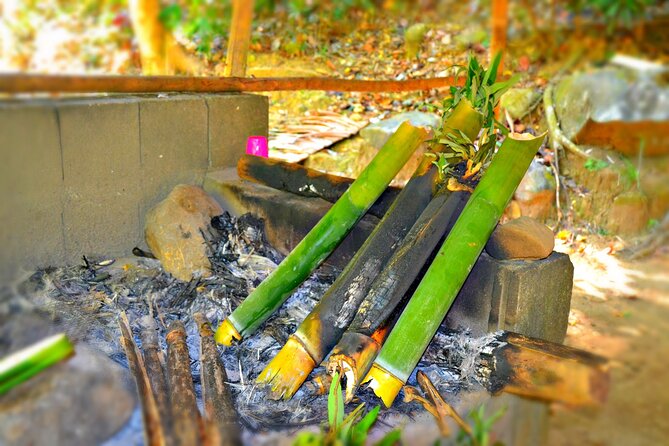
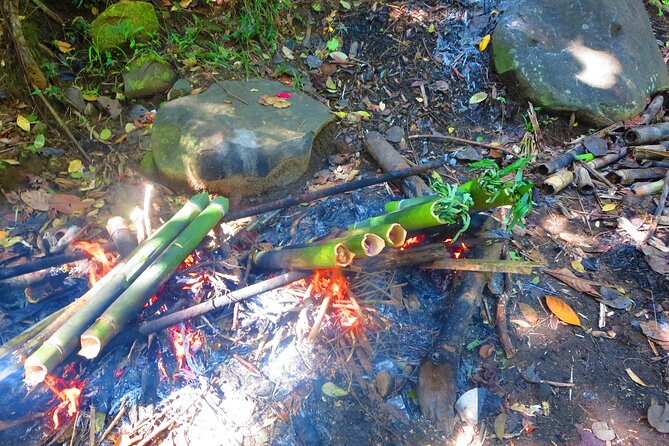
Lunch is one of the easiest parts of the day to love. The tour highlights a traditionally prepared lunch, and the description specifically calls out food prepared inside bamboo. Reviews back this up, with one person noting bamboo lunches as delicious.
This is not just about taste. Bamboo-prepared food is a cultural detail. It links the forest materials to daily cooking methods. Even if you do not think about cooking technology, you will feel the difference between food prepared in a more traditional way and a standard meal served at a restaurant.
One reviewer also mentioned getting cups made on the spot from bamboo as souvenirs. That detail matters because it turns lunch into a small hands-on moment instead of a sit-and-skip break. If you see a chance to make or receive something bamboo related, take it. It is the kind of memory that feels tied to the day, not something you bought afterward.
The best approach to lunch time is simple. Eat like you might need energy for more walking afterward. And be curious. Ask how the bamboo method works and why it is used. Guides tend to enjoy questions that show you are paying attention.
Comfort, group size, and why the day stays personal
The tour keeps the group small, maximum 15 travelers. That is a major quality lever on any cultural trip. With a big group, questions get lost and guides have to focus on logistics. Here, the experience is described as more personal because of the group size, and the reviews support that.
You can hear that in the way guides were described as highly involved and patient, especially when the day changed due to typhoon. When plans shift, a small group helps. It gives the guide room to explain what is happening and to reorganize the day without losing everyone.
You also get comfort through the air-conditioned vehicle for the transfers. That does not make the day lazy, but it does help you start the forest portion with less fatigue. Since it is a long day (10 to 12 hours), that comfort adds up.
Price and value: is $160 worth a full-day culture and rainforest experience?
At $160 per person, this is not a budget half-day snack tour. But it also includes several things that are usually extra on similar day trips: transportation from Manila via transfers from select areas, a guided visit to the Aeta community area, and admission for the Pamulaklakin trail segment. The lunch is also part of the experience, with bamboo preparation.
To judge value, look at what you are buying. You are paying for access to a living community experience, guided interpretation about plants and survival, and time in a rainforest trail area. Those are harder to replicate on your own without local contacts.
Is it expensive? It can be, depending on your travel style. But if you want a structured day that combines culture, guided learning, and a real trail, I think it lands in a reasonable zone. The small group cap of 15 is a strong part of the value equation, because it protects the personal attention that reviews clearly praise.
Who this tour is best for, and who should skip it
This tour suits you if you like nature plus culture in the same day. If you enjoy learning from guides who point out medicinal plants and explain survival skills, you will likely have a great time. It also fits travelers who want more than passive sightseeing, since the day includes guided interaction and walking.
It may not suit you if you want minimal walking or a very relaxed schedule. Reviews warn you to be prepared for the walking tour, and the start time is early. You should also skip it if you do not tolerate weather changes well, since it requires good weather and can be adjusted due to conditions.
It is a good fit for couples, small friend groups, and solo travelers who like guided context. The max group size also helps if you want to ask questions without feeling rushed.
Tips to make the 6:30 am start and trail time easier
Because this is an early departure and a real forest walk, you will feel the basics more than usual. Here is how I would prep if you are going:
- Wear comfortable walking shoes with grip, since you are on the trail for about 3 hours
- Bring light layers, forests can feel cooler than cities early in the morning
- Use sun protection and stay hydrated, especially since the day runs to around 10 to 12 hours
- Have a phone-ready map strategy, but remember you are going with guidance, not self navigation
- Keep your questions ready for plant and medicinal topics, guides like Eddie and Ricky are eager to explain
If you are sensitive to humidity, plan your clothes accordingly. The air-conditioned vehicle helps, but you still spend time outdoors.
Should you book the indigenous forest day with Yolo Travel Philippines?
If your ideal day is learning in context, this is a solid booking. You get a small-group experience in Subic Bay Olongapo with guided trail time on Pamulaklakin, practical lessons about medicinal plants and survival skills, and lunch prepared using bamboo. Those are the kinds of details that make a day trip feel worth it later, not just while you are there.
Here is when I would hesitate. If you want a low-energy day, or if you cannot do early mornings, the schedule may feel too intense. Also remember the tour requires good weather, so build flexibility into your broader trip plan.
If you are happy with a trail day that includes culture and hands-on learning, book it.
FAQ
What time does the tour start?
The start time is 6:30 am.
How long is the tour?
It runs about 10 to 12 hours.
How much does it cost?
The price is $160.00 per person.
How many people are in the group?
The tour has a maximum of 15 travelers.
What is the main location you visit?
You visit the Aeta community area in the Binictican Hills of Subic Bay Olongapo, including the Pamulaklakin Forest Trail.
Is the lunch included?
Yes. The tour includes a traditionally prepared lunch, including bamboo-prepared food.
What is included for the trail time?
Pamulaklakin Forest Trail admission is included, and it is listed as about 3 hours.
Is pickup available from Manila?
Yes, pickup or transfers are offered from select areas of Manila, and you travel in an air-conditioned vehicle.
What if weather is poor?
The experience requires good weather. If it is canceled due to poor weather, you will be offered a different date or a full refund.
Can I cancel for a full refund?
You can cancel up to 24 hours in advance of the experience’s start time for a full refund.
More Tour Reviews in Manila
- Intramuros, Manila: Historical Bamboo Bike Tour★ 4.8 · 583 reviews
- Experience Intramuros with Bamboo Bicycle – Ecotours★ 5.0 · 508 reviews
- Manila: Intramuros, Chinatown, and Old Manila Half-Day Tour★ 4.8 · 475 reviews
- Manila: Old & New 4-Hour City Tour★ 4.5 · 458 reviews
More of Manila, reviewed
- Private Departure Airport Transfer in Manila Bay and Makati Area
★ 5.0 · 3 reviews - Embark on a 7-Day Banaue-Sagada Adventure of a Lifetime
★ 5.0 · 3 reviews - From Manila: Philippines Private Tour Guide
★ 4.1 · 3 reviews - Unforgettable Manila Fishing Village Day Excursion 2024
★ 5.0 · 4 reviews - Tagaytay + Hidden Valley Springs: A Scenic Escape w/ Transfers
★ 4.0 · 4 reviews