
REVIEW · HISTORICAL TOURS
Full-Day Historical Heritage Guided Tour of Tacloban and Palo
Leyte’s past hits you fast. This full-day guided route ties together World War II landmarks and Super Typhoon Haiyan stories, so the history feels personal, not museum-distant. I especially like the stop at the Leyte Landing Memorial linked to Gen. Douglas MacArthur’s campaign in Leyte Gulf.
The second big win is the way the guide brings it all together with Haiyan recovery stories and local Waraynons culture, including the M/V Eva Jocelyn shrine. One possible drawback: the schedule is packed with short site visits, so if you want slow, linger-at-every-wall time, you may feel a bit rushed.
In This Review
- Key Highlights You’ll Actually Notice
- Sto. Nino Shrine and Heritage Museum: Marcos-Era Art and a Smart First Stop
- Leyte Landing Memorial: MacArthur’s Campaign, Told in Plain Terms
- Palo Cathedral: When a Church Became a Hospital in WWII
- M/V Eva Jocelyn Shrine: Haiyan’s Impact, Not Just a Story
- Tacloban City Hall: A Hilltop View That Grounds the Story
- Leyte Provincial Capitol Building: WWII-Era Governance in One Photo
- San Juanico Bridge and Madonna of Japan: Two Icons, One Theme
- Sto. Nino Church in Tacloban: A Survivor of Storms and Earthquakes
- Price and Logistics: Why $51 Can Still Feel Like Good Value
- Who Should Book This Tacloban and Palo Heritage Route
- Should You Book This Tour of Tacloban and Palo?
- FAQ
- What time does the Tacloban and Palo tour start?
- How long is the full-day tour?
- How much does the tour cost?
- Is lunch included?
- Are pickup and transportation included?
- Are admission tickets included?
- Is the tour private, and are service animals allowed?
- What if the weather is bad or I need to cancel?
Key Highlights You’ll Actually Notice
- MacArthur’s landing site in Leyte Gulf, with a clear WWII storyline for your photos and your questions
- Palo Cathedral’s WWII hospital chapter, a sobering look at what buildings became during fighting
- M/V Eva Jocelyn shrine, a Haiyan memory made physical (and hard to forget)
- Waraynons recovery context, where the story moves from tragedy to survival and rebuilding
- Scenic civic stops, including Tacloban City Hall and the Leyte Provincial Capitol views over Cancabato Bay
Still weighing up the options? These Visayas trips came out well when we reviewed them.
- Siquijor Land Tour★ 4.5 · 12 reviews
- Full-Day Historical Heritage Guided Tour of Tacloban and Palo★ 5.0 · 11 reviews
Sto. Nino Shrine and Heritage Museum: Marcos-Era Art and a Smart First Stop
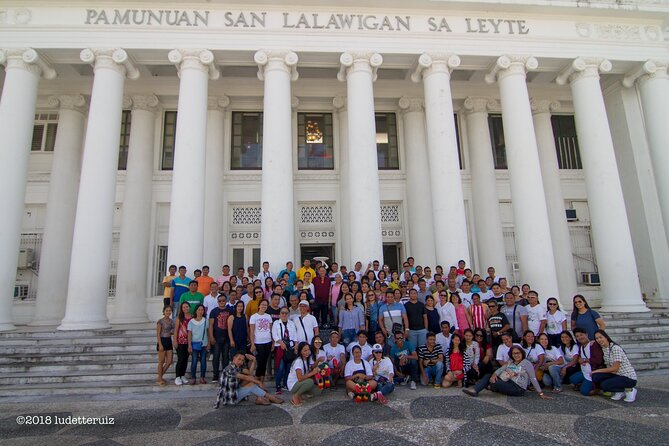
You start at Sto. Nino Shrine and Heritage Museum, and it sets the tone for the whole day. This is where you’ll see art collections that were gifted to the Marcos family during the late Pres. Ferdinand Marcos, Sr. era. Even if you know little about Philippine political history, this stop helps you understand that place matters in Leyte, not just events. People lived through different eras of power, and those eras still show up in what gets collected, displayed, and remembered.
The museum portion is about 30 minutes, so it’s not a long academic detour. It’s more like a quick orientation: you get context, then you move on to the WWII and Haiyan sites where the emotional stakes rise fast.
Practical tip: bring a little patience for photo angles. Shrine and museum grounds can have steady foot traffic, and you’ll want to hold your best shots for the moments when you’re facing open space.
Leyte Landing Memorial: MacArthur’s Campaign, Told in Plain Terms
Next is Leyte Landing Memorial, a park built to commemorate Gen. Douglas MacArthur’s historic landing in Leyte Gulf. It’s a short stop, around 15 minutes, but the story is easy to follow. You’re not just looking at a monument. You’re looking at the geographic “why” behind one of the biggest turning points in the Philippines during WWII.
This is the kind of stop where a good guide makes the difference. The tour aims to connect the dots between the landing, the wider campaign to liberate the Philippines, and the lived reality that followed. You also get a feel for why Tacloban and Leyte became such a strategic place, not just a scenic one.
If you’re the type who likes knowing what to point at during photos, this stop is beginner-friendly. Tell yourself: you’re building a mental map. By the time you reach the Haiyan shrines later, your brain will already be ready for the cause-and-effect story.
Palo Cathedral: When a Church Became a Hospital in WWII
In Palo, you’ll visit the Metropolitan Cathedral of Our Lord’s Transfiguration, known locally as the Palo Cathedral. This stop is also brief, about 15 minutes, but it carries real weight. During World War II, the cathedral was converted into a hospital for wounded Allied Forces soldiers.
That detail changes how you see the building. You stop thinking only about architecture and start thinking about what the community had to do when the war arrived. It’s one of those moments where history becomes less abstract because the building itself tells the story.
Practical consideration: because this is a religious site, be mindful of respectful behavior and timing. If there’s any activity going on, you may need to adjust where you stand for photos.
M/V Eva Jocelyn Shrine: Haiyan’s Impact, Not Just a Story
The tour then turns sharply toward Super Typhoon Haiyan. You’ll visit the M/V Eva Jocelyn Shrine, connected to one of the ships that ran aground during the storm on Nov. 8, 2013.
Here’s the part that stays with you: M/V Eva Jocelyn was pushed into the middle of a street by the water surge. It’s a grim reminder that Haiyan wasn’t only wind and rain. It was force big enough to move ships, smash routines, and permanently change streets.
This stop is about 15 minutes, but it matters because it anchors the day’s disaster story in a specific object. Then the guide brings in the Waraynons angle: the focus isn’t only on what was lost. It’s also on the struggle after the tragedy and how people recovered.
One strong bonus from the tour reviews: your guide, often identified as kuya Jeff, tends to connect WWII and Haiyan history so you feel the timeline, not separate chapters. You’re learning how the same region copes across different kinds of danger.
Tacloban City Hall: A Hilltop View That Grounds the Story
After the heavier sites, you get a calmer, more civic stop at Tacloban City Hall, the seat of government for Tacloban. The building sits on top of a hill, and that location is part of the point. You’ll likely have a chance to look out toward Cancabato Bay, which helps break up the day while giving you real geography.
This is where you can reset your mental camera. You went from shrine to cathedral to ship memory. Here you’re back to everyday life, the place where decisions are made long after the war and long after the storm.
Stop time is about 15 minutes, so treat it like a quick breather and photo break. Wear shoes you’re comfortable walking in. Even small hills can add up over a 6 to 7 hour day.
Leyte Provincial Capitol Building: WWII-Era Governance in One Photo
Next up is the Leyte Provincial Capitol Building in Tacloban City. This one is clearly about more than looks. It was the seat of government of Leyte until 2019, and it also served as the seat of the Philippine Commonwealth government starting Oct. 23, 1944 (continuing through a period that includes Feb. 25, as shown in the tour description).
Why does this matter to you, as a visitor? Because it shows how quickly institutions had to shift during WWII. When you understand that a building changed roles under pressure, you understand why other buildings became hospitals or why the landing sites became battle pivot points.
Again, the stop is short, around 15 minutes. So if you want the best learning payoff, listen closely to the guide’s framing and then take one or two careful photos rather than rushing every angle.
San Juanico Bridge and Madonna of Japan: Two Icons, One Theme
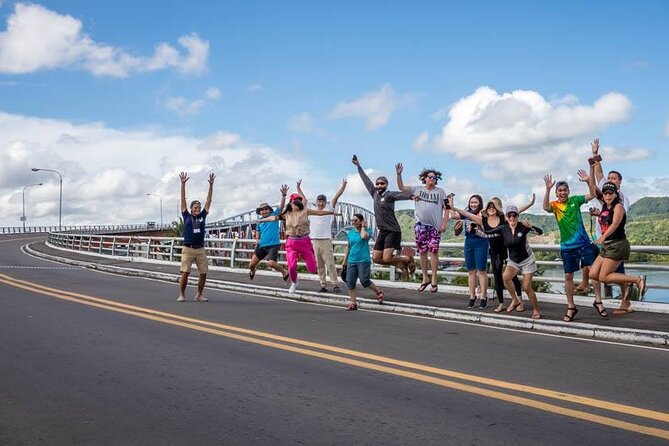
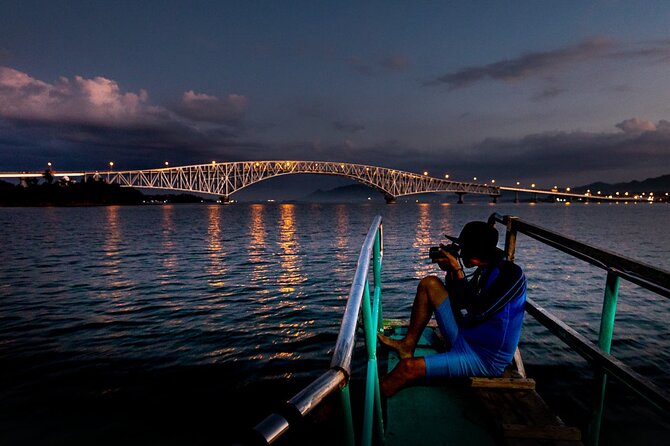
San Juanico Bridge is next. The tour highlights it as once the longest bridge in the Philippines, stretching 2.16 kilometers across seawater. It’s an iconic Leyte and Samar link, and even in a short visit, it gives you a clear landmark.
Bridges do two things for a history tour. First, they connect places physically. Second, they help you understand why certain locations mattered. Today’s crossing points can still point back to earlier strategic thinking.
After that, you’ll visit Madonna of Japan, a peace monument built as a symbol of peace between Filipinos and Japanese people. The monument was erected 33 years after WWII to remember brave soldiers who fought and died in battle.
This pairing works because it slows your brain down. San Juanico Bridge is about connection and movement. Madonna of Japan is about reconciliation and memory. Together, they remind you that the story does not end at the battle. It moves into how people live with the past.
Sto. Nino Church in Tacloban: A Survivor of Storms and Earthquakes
You finish with Sto. Nino Church, another historical landmark in Tacloban. This church has battled and sustained a few typhoons and earthquakes. Even after Super Typhoon Haiyan caused partial damage, the church reportedly provided cover.
That last detail is one reason this stop lands well at the end of the day. You’re not leaving only with war relics and storm reminders. You’re leaving with a place that kept serving a community when conditions turned dangerous.
Stop time is about 15 minutes. Use it for one final check-in: what parts of the day stuck with you, and why? For many people, it’s the combination of WWII shifts and Haiyan survival, with the Waraynons recovery thread tying it together.
Price and Logistics: Why $51 Can Still Feel Like Good Value
This tour costs $51 per person and runs about 6 to 7 hours, including travel time between stops. That timeframe matters. You get multiple stops without a full-day crawl into one or two sights. It’s built for visitors who want a focused overview with guidance.
What you get that supports the price:
- Air-conditioned vehicle for the day
- Lunch included, which is a big deal in heat
- Mobile ticket for smoother check-in
- Pickup offered, so you do not have to solve transport alone
- A private tour, meaning you ride and stop as a group with your own itinerary pacing
Admission-wise, the tour includes the admission ticket at the Sto. Nino Shrine and Heritage Museum stop. The other listed stops are marked as free admission. So you’re not paying extra at multiple sites.
What you should plan for:
- Comfortable walking shoes and sun protection, because you’ll be out at multiple viewpoints and churches.
- A slightly scripted day, since the stop durations are short and the route is packed.
Also note: the tour requires good weather. If it gets canceled for poor weather, you’ll be offered a different date or a full refund.
Who Should Book This Tacloban and Palo Heritage Route
This tour fits best if you want history with a human voice. It’s not only WWII facts. It’s also the aftermath of Super Typhoon Haiyan, told with local culture context through the Waraynons lens. If you’re the kind of traveler who asks why a building, a bridge, or a church matters, you’ll get a lot out of the guide’s storytelling.
You’ll also like it if you prefer a guided order to your day. The route moves between Tacloban and Palo with clear anchors: landing memorial, cathedral hospital history, Haiyan ship memorial, then civic and iconic landmarks.
Good to know if you’re planning for your group:
- Service animals are allowed.
- Most travelers can participate.
- It’s near public transportation, which can help if you need options beyond pickup.
Should You Book This Tour of Tacloban and Palo?
Yes, if you want a single-day plan that connects WWII and Haiyan in a way that actually makes sense geographically and emotionally. I’d book it for first-time visitors to Tacloban who want more than photo stops and want the region’s recovery story explained in plain language.
Skip it, or at least lower expectations, if you’re a slow-travel type who needs long museum time at each stop. This route is designed for steady movement and quick learning moments. It’s a strong overview, not a deep study seminar.
If you do book it, make your biggest request before you start: ask the guide to help you keep the timeline straight. With a guide like kuya Jeff, that’s usually where the day turns from sightseeing into understanding.
FAQ
What time does the Tacloban and Palo tour start?
The tour start time is 8:30 am.
How long is the full-day tour?
It runs about 6 to 7 hours, including travel time between attractions.
How much does the tour cost?
The price is $51.00 per person.
Is lunch included?
Yes. Lunch is included.
Are pickup and transportation included?
Pickup is offered, and the tour includes an air-conditioned vehicle.
Are admission tickets included?
Admission ticket for Sto. Nino Shrine and Heritage Museum is included. The other listed stops are marked free admission.
Is the tour private, and are service animals allowed?
Yes, it is private, with only your group participating. Service animals are allowed.
What if the weather is bad or I need to cancel?
The tour requires good weather. If it is canceled due to poor weather, you will be offered a different date or a full refund. You can cancel up to 24 hours in advance for a full refund.
More Tours in Visayas
- Siquijor Land Tour★ 4.5 · 12 reviews
- BOHOL ATV Tour★ 4.0 · 9 reviews
More Tour Reviews in Visayas
- Siquijor Land Tour★ 4.5 · 12 reviews
- BOHOL ATV Tour★ 4.0 · 9 reviews
More of Visayas, reviewed
- Full-Day Historical Heritage Guided Tour of Tacloban and Palo
★ 5.0 · 11 reviews - Siquijor Land Tour
★ 4.5 · 12 reviews
Historical Tours, start to finish.
 ★ 4.8Intramuros, Manila: Historical Bamboo Bike TourFrom $27583 reviews
 ★ 4.5The Original Cebu City Historical and Food Walking TourFrom $6981 reviews
 ★ 5.0Explore Intramuros: Introduction to Philippine HistoryFrom $5580 reviews
 ★ 5.0Experience Manila’s Heritage: Intramuros & More in Half a Day!From $7576 reviews
 ★ 4.5Cebu: Exploring Cebu City’s rich history and Uphill TourFrom $7568 reviews
 ★ 4.9Cebu City: Historical Street and Food TourFrom $9031 reviews
 ★ 4.2CEBU: Cebu City Heritage and Uphill Guided TourFrom $6131 reviews
 ★ 4.9Half-Day Heritage Tour: Manila’s Historic GemsFrom $7229 reviews
Where this one shows up