
REVIEW · MANILA
Explore Intramuros: Introduction to Philippine History
Intramuros has a way of teaching fast, without lectures. This small-group introduction to Philippine history strings together Spanish Manila, the Catholic heart of the city, and the World War II story in just a half-day. You get an easy meeting spot at San Agustin Church, plus guided time at key sites and backstreet context that you would not stitch together on your own.
I love that the tour is built for value and convenience: all entrance fees are handled, bottled water is included, and you are not scrambling to pay at each stop. I also like that it ends at Fort Santiago, so you are naturally positioned for the rest of your day inside Intramuros. One drawback to consider is the pace: with multiple major stops packed into about 3 hours, if you want to linger deep inside every building, you might feel a little rushed.
In This Review
- Key things to know before you go
- A half-day Intramuros plan that still feels complete
- Meeting at San Agustin Church: your simple launch point
- Stop 2: Museo San Agustin and the Spanish galleon trade
- Casa Manila: seeing the lifestyle behind the walls
- WW2 memory stops: Memorare Manila Monument and Manila Cathedral
- Fort Santiago: the Spanish fort and the independence story
- Price and value: what $55 actually covers
- Group size, guides, and why the pace matters
- Logistics that help you enjoy, not just survive
- Who this tour fits best
- How to get the most out of your 3 hours
- Should you book Explore Intramuros: Introduction to Philippine History?
- FAQ
- Where do I meet the guide for this tour?
- How long is the tour, and where does it end?
- What is included in the $55 price?
- Do I need to pay admission fees during the tour?
- What is the maximum group size?
- What if the weather is poor?
- Is free cancellation available?
Key things to know before you go
- San Agustin Church as the starting point makes orientation simple in Intramuros
- Admissions are taken care of so you skip the on-the-spot ticket hassle
- Museum + recreated home cover both global trade and everyday life in old Manila
- WW2 landmarks are part of the story, not tacked on at the end
- Small group size (max 15) keeps questions easy and walking manageable
- You get the rest of the day free, which is great for exploring on your own
Other walks inside the old walls
- Intramuros, Manila: Historical Bamboo Bike Tour★ 4.8 · 583 reviews
- Manila: Intramuros, Chinatown, and Old Manila Half-Day Tour★ 4.8 · 475 reviews
- Manila: Guided Sunset Bamboo Bike Tour in Intramuros★ 4.8 · 119 reviews
- Viva Old Manila: Intramuros Walking Tour★ 4.9 · 104 reviews
A half-day Intramuros plan that still feels complete
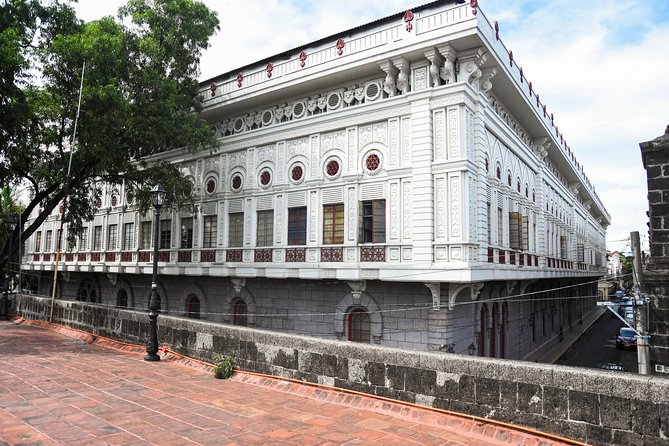
If Manila feels like a lot on day one, this tour is a smart fix. You spend roughly three hours getting your bearings in Intramuros, then the rest of your time is yours. That mix matters. A guided crash course helps you understand what you are looking at, and the free time afterward lets you wander without feeling lost or stuck.
This is also a walking tour in a compact area. You will move between major landmarks and a few quieter streets, which is exactly where Intramuros tells its story best. The tour limits the group to 15 people maximum, so you usually do not get that herd-like feeling that can happen on bigger city tours.
At $55 per person, the price is easiest to justify because you are not paying separate entry tickets on the day. You also get an English-speaking guide and bottled water. In other words, you are paying for translation, context, and saved time, not just for “someone to point at buildings.”
Meeting at San Agustin Church: your simple launch point
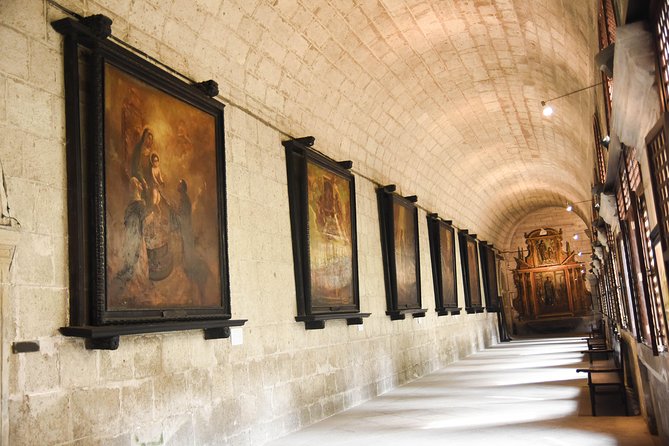
The meeting point is San Agustin Church (Immaculate Conception Parish) on General Luna St in Intramuros. That is good logistics. You are starting at one of the most famous anchors in the walled city, so you are not hunting down a random corner or juggling complicated local directions.
From the moment you start, you are dealing with history on multiple levels. San Agustin Church is described as the oldest stone church in the country, and it is also the only survivor of the bombing of Manila during World War II. That combination is powerful. The building is old, but it also survived the modern catastrophe that reshaped the city.
Timing here is short, about 10 minutes, which is intentional. The guide uses that quick hit to frame what you are about to see. You get the big story first, then later you can connect it to the museum, the recreated home, and Fort Santiago.
Practical consideration: this is a popular site. If you prefer slow, quiet sightseeing, you might want to come back later after your tour so you can spend extra time without the group pace.
Stop 2: Museo San Agustin and the Spanish galleon trade
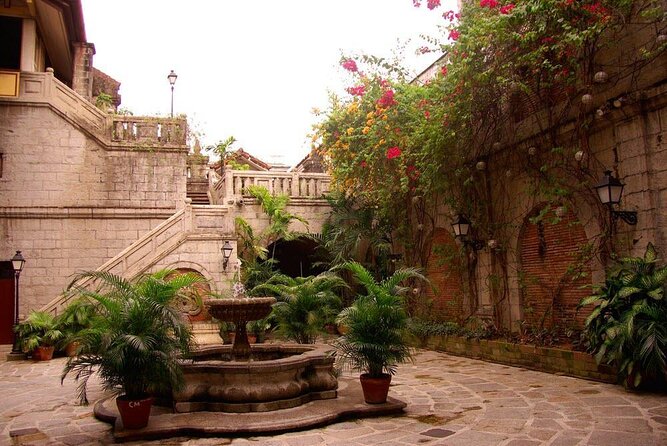
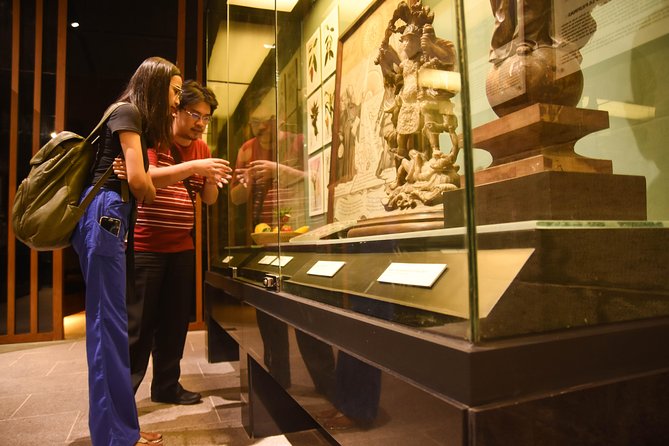
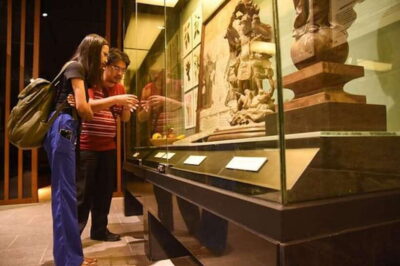
Next door is the Museo San Agustin, and this is where Intramuros stops being only about buildings and starts becoming a whole system. You will spend about 30 minutes here, learning about the Spanish Galleon Trade and how that trade reached around the world.
That matters because it connects Manila to something global. You see Intramuros, but you also understand why it mattered to Spain. The museum also covers the Catholic Church, including artifacts through the centuries. Even if you are not a museum person, the guide’s job is to translate what you are seeing into a simple narrative: who brought what, why it happened, and how the city changed because of it.
One small drawback: museum time is limited. Thirty minutes goes fast, so you may not get to read every label. If you are the type who loves detailed placards, keep your expectations realistic, then use your free time afterward to revisit what caught your eye.
Casa Manila: seeing the lifestyle behind the walls
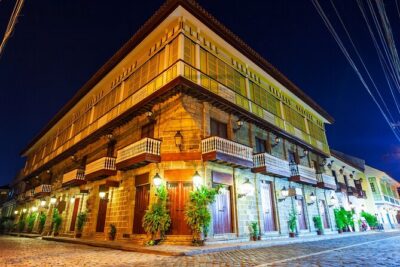
Then you step into Casa Manila, a turn-of-the-19th-century home recreation. Your stop here runs about 30 minutes, and it is designed to show you what the upper crust’s life looked like in old Manila.
This is a smart inclusion because it balances the big political and war narratives with daily life. You start to notice how status worked. Where people lived, what spaces were used for, and how “home” functioned as a social statement.
What I like about this stop is that it gives your brain something concrete to hold onto. After museums and monuments, a recreated home feels human and immediate. You can picture the city not just as a fort or a church, but as a place where people lived, argued, studied, and slept.
The only catch is the same as before: you have limited time. Casa Manila is a highlight, but it is not a long deep-dive. If you enjoy architecture and interior details, you will probably want extra time later.
Other Manila outings that kept coming up while we researched this one
WW2 memory stops: Memorare Manila Monument and Manila Cathedral
You then go to the Memorare Manila Monument, about 10 minutes. This monument is meant to remember the innocent casualties of World War II, and your guide ties in a bit more about the Philippines role in the second great war.
This stop is short, but it is also one of the most emotionally direct parts of the tour. It keeps the story from becoming purely about old empires and old stone. You are shown that the city also carried the cost of modern conflict.
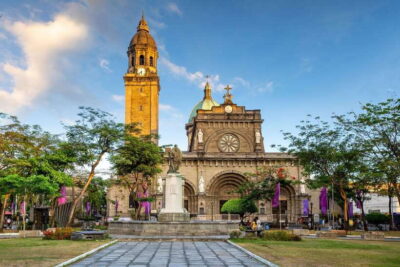
After that, you visit the Manila Cathedral, the seat of the Catholic Church in the Philippines, also about 10 minutes. Even if you are not religious, cathedrals are where you see how power, culture, and community gather in one place. Here, it is all part of the larger thread that started at San Agustin: religion was not just a faith story, it was part of the city’s structure.
Balance note: short stops can feel a little “hit-and-go,” especially if you like to sit and absorb. Still, given the 3-hour time frame, the schedule is trying to give you coverage rather than a single-site obsession.
Fort Santiago: the Spanish fort and the independence story
Your final stop is Fort Santiago, about 30 minutes. This is the old Spanish military stronghold in Intramuros, and it is where the tour’s independence theme comes to the front. Your guide explains the Spanish military presence and the movement for independence from Spain, including mention of one of the Philippine heroes tied to the story.
This is a great ending point for two reasons. First, forts naturally help you understand strategy, borders, and control. Second, the tour ends inside Fort Santiago, meaning you are dropped at a logical last stop rather than being walked out somewhere random.
If you like history that feels physical, Fort Santiago is where that happens. You are not just hearing timelines, you are looking at structures built for defense. You can see why an occupation mattered and why breaking away was hard.
Potential drawback: if Fort Santiago is the main reason you booked, you may wish you had a bit more time. Thirty minutes is enough to get the overview, but not enough to satisfy a deep-history traveler who wants every corner explained slowly.
Price and value: what $55 actually covers
Let’s talk value in plain terms. At $55 per person, this tour is not trying to be the cheapest thing in Manila. It’s built as a “pay once, show up, learn fast” experience.
Here is what you get for that price:
- English-speaking guide for the full guided portion
- Bottled water
- All entrance fees covered, so you are not paying at each site
- A small group of up to 15 people
- A guided route that covers major Intramuros anchors from church to fort, plus the museum and a recreated home
The “admission fees handled” part is big. Paying ticket-by-ticket can waste time and make you feel out of rhythm. With this setup, you can stay in tour mode and keep moving.
The second value factor is time control. You get about half a day of organized history, and then you keep the rest of your day free. That is useful because Intramuros is easy to overcommit to, then regret. This tour helps you avoid that by giving you structure early.
Group size, guides, and why the pace matters
The tour caps at 15 travelers, which generally keeps it conversational. It also makes it easier for the guide to answer questions without the tour falling behind.
The names that come up for this experience include Jian, Patrick, and Jerome. Across the same tour format, the common thread is that the guides are praised for being funny, helpful, and clear with history and culture. That matters because Intramuros can be confusing if you only rely on signs. A good guide turns architecture and dates into cause and effect.
Still, pace is the one thing you should calibrate. One person experienced a faster flow and felt stops were not fully finished. That does not mean the tour is always rushed. It means the schedule is designed to fit multiple major sites into a tight 3-hour window. If you are someone who needs extra time in museums or wants to ask a lot of questions for longer answers, tell your guide early that you would love slightly more time at your top 1 or 2 stops.
Logistics that help you enjoy, not just survive
Because this is in Intramuros, you will spend time walking on uneven surfaces and through busy areas near major landmarks. You do not get private transportation, so you are relying on being dropped at the right places inside the walled city.
Two details help:
- You start at San Agustin Church, which is easy to find and recognized by most locals and maps.
- You finish at Fort Santiago, keeping you centered for continued exploring.
Also, the tour requires good weather. Manila weather can turn quickly, and this tour format is weather-dependent. If you are visiting in rainy season, keep your schedule flexible and plan other activities nearby that you can swap in if needed.
Who this tour fits best
This tour is a strong match if you:
- Want a first-time orientation to Intramuros
- Prefer guided context more than reading every sign
- Want to connect Spanish colonial influence with the World War II story in one route
- Like a mix of big landmarks and human-scale stops like a recreated home
It is also a good fit for solo travelers. The pace is structured, but the group size is small enough that you can still ask questions. If you are traveling with older teens or young adults, it can work well too because the stops cover trade, religion, home life, war memory, and independence themes.
How to get the most out of your 3 hours
You will enjoy this tour more if you come with one simple mindset: take notes in your head, not on paper. Your guide is covering a lot of ground in limited time.
Here are a few practical ways to make it click:
- Pick your favorite stop before you start, then listen for the details that connect it to the rest of the tour.
- Ask at least one question that goes beyond the building, like how the trade or war shaped daily life in Manila.
- Use the free time afterward to revisit the stop that made you stop and think. The tour gives you the framework, but your second look gives you the satisfaction.
If heat is an issue for you, remember this is still a walking day in a compact area. Bottled water is included, but you should bring sensible sun protection and take breaks when your guide offers them.
Should you book Explore Intramuros: Introduction to Philippine History?
If you want a fast, guided grasp of Intramuros that does not drain your whole day, I think this is a smart booking. The biggest reasons are simple: admissions are handled, the group stays small, and the route covers the story from Spanish influence through wartime memory to the independence thread at Fort Santiago.
I would hesitate only if you strongly prefer long stays in one museum or one church, or if you know you need extra time for photography and slow reading. This tour is designed for coverage and clarity, not marathon sightseeing.
One last clue: the experience holds a 4.9 rating from 80 reviews with 96% recommended. That kind of consistency usually means the guide-led format really works, especially for first-time visitors who want the whole picture without the guesswork.
FAQ
Where do I meet the guide for this tour?
You start at San Agustin Church on General Luna St, Intramuros, Manila.
How long is the tour, and where does it end?
The tour lasts about 3 hours and ends at Fort Santiago inside Intramuros.
What is included in the $55 price?
The price includes an English-speaking guide, bottled water, and all entrance fees.
Do I need to pay admission fees during the tour?
No. Entrance fees are taken care of, so you do not pay on the spot.
What is the maximum group size?
This tour has a maximum of 15 travelers.
What if the weather is poor?
This experience requires good weather. If it gets canceled due to poor weather, you will be offered a different date or a full refund.
Is free cancellation available?
Yes. You can cancel for free up to 24 hours in advance for a full refund. If you cancel less than 24 hours before the start time, the amount paid is not refunded.
More Historical Tours in Manila
- Intramuros, Manila: Historical Bamboo Bike Tour★ 4.8 · 583 reviews
- Experience Manila’s Heritage: Intramuros & More in Half a Day!★ 5.0 · 76 reviews
- Half-Day Heritage Tour: Manila’s Historic Gems★ 4.9 · 29 reviews
- Tagaytay, Taal Volcano & Heritage Town: A Journey of Discovery★ 5.0 · 29 reviews
More Tour Reviews in Manila
- Intramuros, Manila: Historical Bamboo Bike Tour★ 4.8 · 583 reviews
- Experience Intramuros with Bamboo Bicycle – Ecotours★ 5.0 · 508 reviews
- Manila: Intramuros, Chinatown, and Old Manila Half-Day Tour★ 4.8 · 475 reviews
- Manila: Old & New 4-Hour City Tour★ 4.5 · 458 reviews
Inside the Old Walls
- Intramuros, Manila: Historical Bamboo Bike Tour★ 4.8 · 583 reviews
- Experience Intramuros with Bamboo Bicycle – Ecotours★ 5.0 · 508 reviews
- Manila: Intramuros, Chinatown, and Old Manila Half-Day Tour★ 4.8 · 475 reviews
- Manila: Guided Sunset Bamboo Bike Tour in Intramuros★ 4.8 · 119 reviews
More of Manila, reviewed
- Private Departure Airport Transfer in Manila Bay and Makati Area
★ 5.0 · 3 reviews - Embark on a 7-Day Banaue-Sagada Adventure of a Lifetime
★ 5.0 · 3 reviews - From Manila: Philippines Private Tour Guide
★ 4.1 · 3 reviews - Unforgettable Manila Fishing Village Day Excursion 2024
★ 5.0 · 4 reviews - Tagaytay + Hidden Valley Springs: A Scenic Escape w/ Transfers
★ 4.0 · 4 reviews
Intramuros and Old Manila Walking Tours, start to finish.
 ★ 4.8Intramuros, Manila: Historical Bamboo Bike TourFrom $27583 reviews
 ★ 5.0Experience Intramuros with Bamboo Bicycle – EcotoursFrom $39508 reviews
 ★ 4.8Manila: Intramuros, Chinatown, and Old Manila Half-Day TourFrom $68475 reviews
 ★ 4.5Manila Old and New: Sightseeing Tour Including Intramuros and Fort SantiagoFrom $103377 reviews
 ★ 4.8Manila: Guided Sunset Bamboo Bike Tour in IntramurosFrom $40119 reviews
 ★ 4.9Viva Old Manila: Intramuros Walking TourFrom $27104 reviews
 ★ 5.0Manila’s Walled City: Intramuros Walking TourFrom $3582 reviews
 ★ 5.0Experience Manila’s Heritage: Intramuros & More in Half a Day!From $7576 reviews
Where this one shows up