
REVIEW · MANILA
Makati: Hands on Manila Cooking Class
Filipino snack food turns into a real lesson. In the heart of Makati, this small-group class lets you cook your way through a Filipino meryenda with a friendly instructor, plus plenty of cultural context while you work the stove.
My favorite part was learning step-by-step from Chyl, who keeps the pace clear and calm even when questions fly. Second, I love that you are not just watching, you are actively making the full spread, from a filling noodle dish to savory spring rolls and a sweet finish, using fresh ingredients.
One thing to factor in: the class runs in an outdoor courtyard, so rain can mean some rearranging if the space is not fully covered. If weather is unpredictable during your dates, plan for that with comfortable clothes you do not mind getting a little warm or messy.
In This Review
- Key highlights you will actually notice
- A Makati cooking class in a real courtyard
- Meet Chyl, and get Filipino food context while you cook
- The “meryenda” menu: three Filipino snack favorites in two hours
- Getting hands-on: prep, cooking, and learning by doing
- Noodles, seasoning, and stir-fry style confidence
- Lumpia spring rolls: rolling technique and crunchy payoff
- Turon or fried banana treats, the sweet ending you will remember
- Food quantity: go in hungry and plan leftovers
- Price in context: $60 for tools, ingredients, and real instruction
- Logistics that keep the afternoon smooth
- Who should book, and who might skip
- Should you book this Makati hands-on cooking class?
- FAQ
- Where is the meeting point for the cooking class?
- How long is the cooking class?
- How much does it cost?
- What dishes do you make during the class?
- What is included in the price?
- What should I bring?
- What language is the instructor?
- Is pickup and drop-off included?
- Is it wheelchair accessible, and is it suitable for children?
- Can I cancel, and how flexible is booking?
Key highlights you will actually notice
- Small group, up to 4 participants, so the teaching stays personal and you are not lost in a crowd
- Chyl’s mix of cooking plus Filipino food stories, including how everyday snacks fit family life
- Hands-on “make the whole meryenda” format, not a quick tasting tour
- Fresh, portioned ingredients and clean equipment, including induction-style cooking gear mentioned by multiple guests
- Three signature snack dishes, commonly pancit, lumpia, and turon or fried banana wraps
Still hungry? More Manila eating
- Makati: Hands on Manila Cooking Class★ 5.0 · 49 reviews
- Makati Street Food Tour Experience★ 5.0 · 20 reviews
A Makati cooking class in a real courtyard
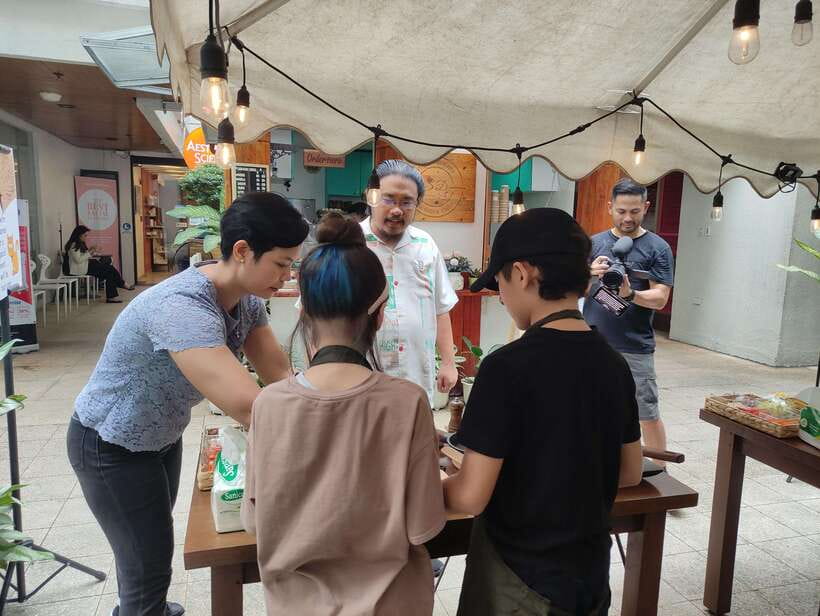
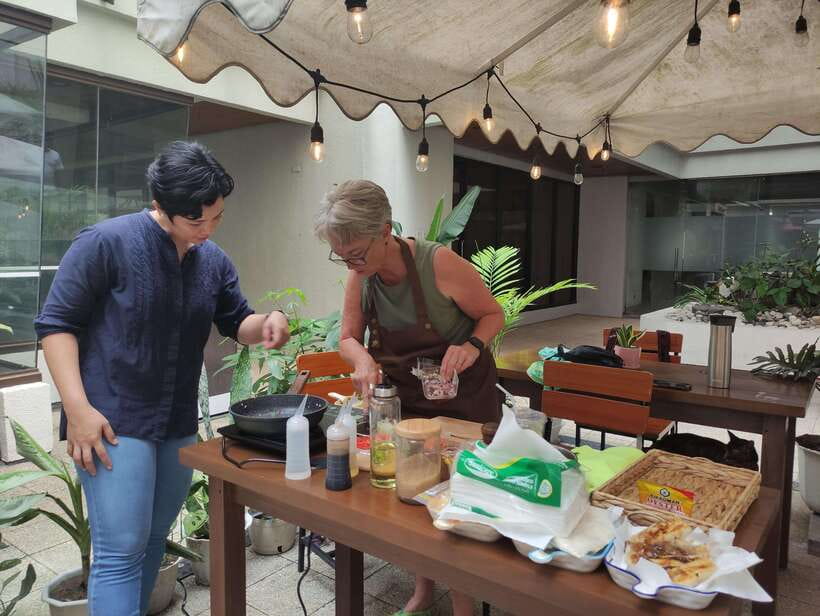
This experience is set in the heart of Makati, Philippines, in an outdoor courtyard area in front of a coffee kiosk. That alone changes the vibe. You get the feeling of Filipino home cooking without the sterile studio look, and the setting makes it easy to relax and just start cooking.
The “where do I meet?” part is refreshingly simple, you look for your instructor in the outdoor courtyard in front of the coffee kiosk. If you are using Grab to get around, you will want a little buffer time. Makati traffic can be a wild card, and one late guest still managed to cook the full two hours with patient flexibility.
Because it is outdoors, you are also more aware of what kind of afternoon you are having. When the weather is good, the class feels breezy and comfortable. When the weather turns, expect the team to shift things around so you can keep cooking.
Meet Chyl, and get Filipino food context while you cook
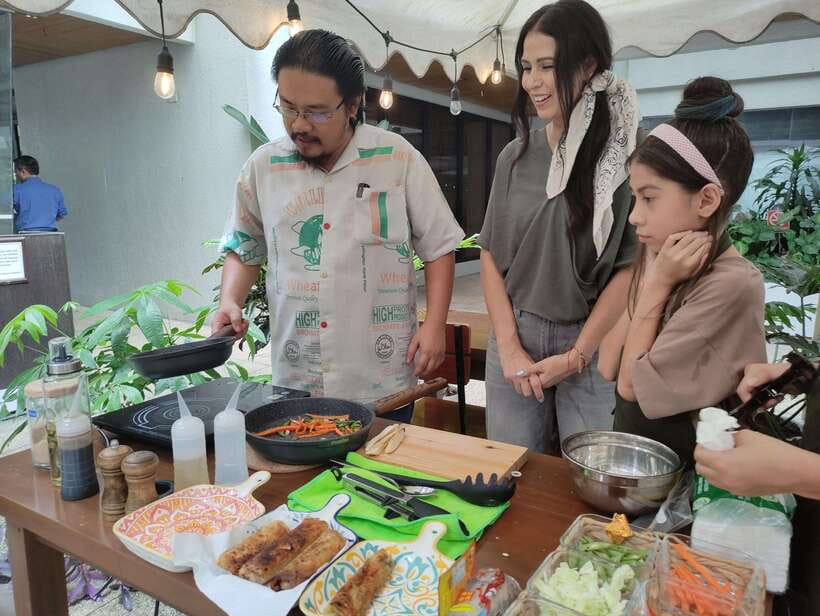
The instructor is English-speaking, and the tone is practical, friendly, and calm. Chyl shows up as the kind of teacher who explains in plain language, then gives you room to take the lead. Even if you consider yourself a beginner, you get guidance that helps you move from ingredient prep to actual cooking without guessing.
What I found extra valuable is the cultural storytelling stitched into the cooking. People talk about Filipino food like it is just flavor, but Chyl frames it as something tied to daily life, family, and local tradition. You hear how Filipino celebrations and home routines shape what ends up on the table, and why these snacks are beloved across the country.
This is also why the class can feel good for solo travelers. When you are cooking, you naturally ask questions. With a small group, those answers do not feel canned. The conversation can turn personal fast, including childhood memories tied to the dishes.
The “meryenda” menu: three Filipino snack favorites in two hours
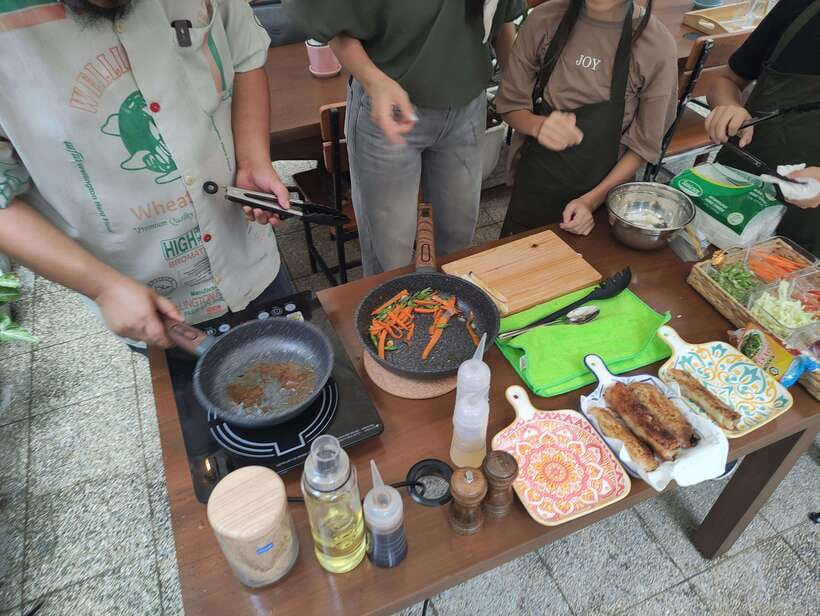
The structure is built around making a full snack meal, a meryenda, in about two hours. You start with a noodle dish that fills you up, then you move to savory crunch, usually spring rolls, and you finish with a sweet treat like turon or fried banana wraps.
From the information and what guests have described, the class frequently includes:
- A noodle dish, often pancit-type flavors (savory, comforting, and perfect for learning seasoning balance)
- Lumpia-style spring rolls, including rolling technique and frying readiness
- Turon or banana-based sweet wraps, the fried, caramel-ish style snack that seals the deal
Do not worry if this sounds like a lot. The pace is organized, and you are not alone at the stove. You are guided through what to do next, and you usually get enough hands-on time to feel confident repeating the steps later.
Also, the portion size is real. More than one guest has said it feels like more than “just snacks,” like a meal or even multiple meals worth of food.
Getting hands-on: prep, cooking, and learning by doing
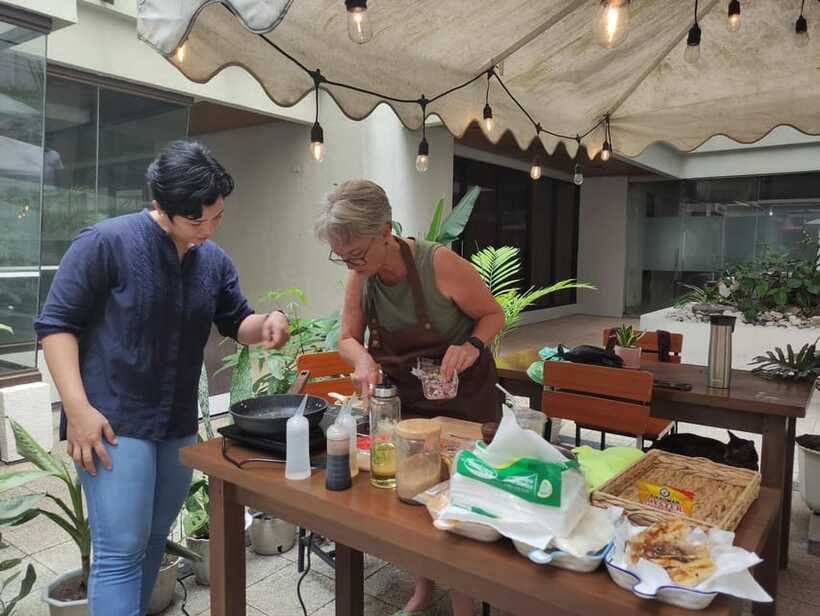
The class includes use of cooking equipment and all ingredients. You sit down and work with what is already set out for your group, so you are not standing around while someone gathers supplies. Multiple guests have noted induction-style cooking gear and clean, ready-to-use pans, which matters more than you think when you are focused on learning new steps.
Here is how the hands-on part typically feels:
- Ingredient prep first, where you learn what matters, like how to handle fillings, seasonings, and rolling components. This is where you stop treating the dish like a mystery.
- Cooking next, where timing and heat control become your new superpower. For stir-fry and noodle steps, you learn how to keep things savory and not soggy. For spring rolls, you learn how to stay on track so your wrappers and fillings come out right.
- Assembly and final touches, so your dish looks like it belongs in a Filipino home snack spread, not just like a project.
Because it is a small group, you can ask questions mid-process. That is a big deal. Cooking classes that feel one-way can be frustrating. Here, you are working right next to the instructor’s guidance.
Where else Makati goes after dark





Noodles, seasoning, and stir-fry style confidence
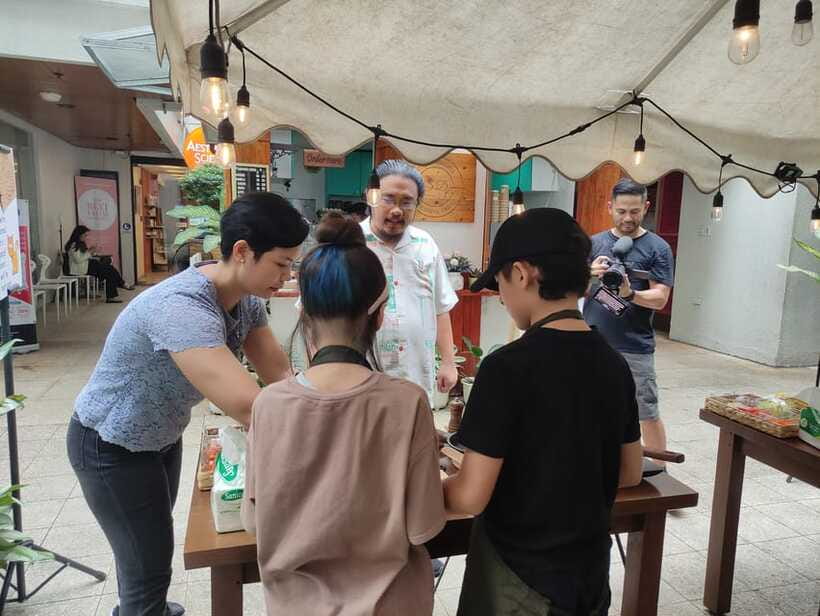
The noodle dish is where you learn the “why” behind Filipino flavor. Guests often describe the class as beginner-friendly but still satisfying for experienced cooks. That is usually because the key skill is seasoning balance, not fancy technique.
When you cook a pancit-style noodle dish, the lesson is typically:
- Keep components moving and well-seasoned
- Understand how sauces and seasonings cling without turning watery
- Get the timing right so noodles are cooked, but not limp
Even if you have cooked before, this part helps because Filipino noodle snacks can feel different from what you might expect. You get a chance to build your own confidence using local ingredient logic.
And yes, this dish is also the one that makes you feel like, okay, I can actually feed myself after this.
Lumpia spring rolls: rolling technique and crunchy payoff
Spring rolls are the part people love for a reason. The outside needs to be crisp, but the inside needs to be flavorful and not undercooked. The class format gives you a chance to practice the rolling stage with guidance, which is where many home cooks usually struggle.
You will learn:
- How much filling to use so your rolls hold together
- How to roll so the wrapper seals correctly
- How to plan for frying so you do not end up with soggy or uneven results
Multiple guests specifically called out lumpia and praised how well they turned out. Another nice touch is that you are not just eating after the cooking, you are comparing your finished roll with others and seeing the small differences that happen when different people make the same dish.
That is how you learn for real: by seeing what “works” in multiple hands.
Turon or fried banana treats, the sweet ending you will remember
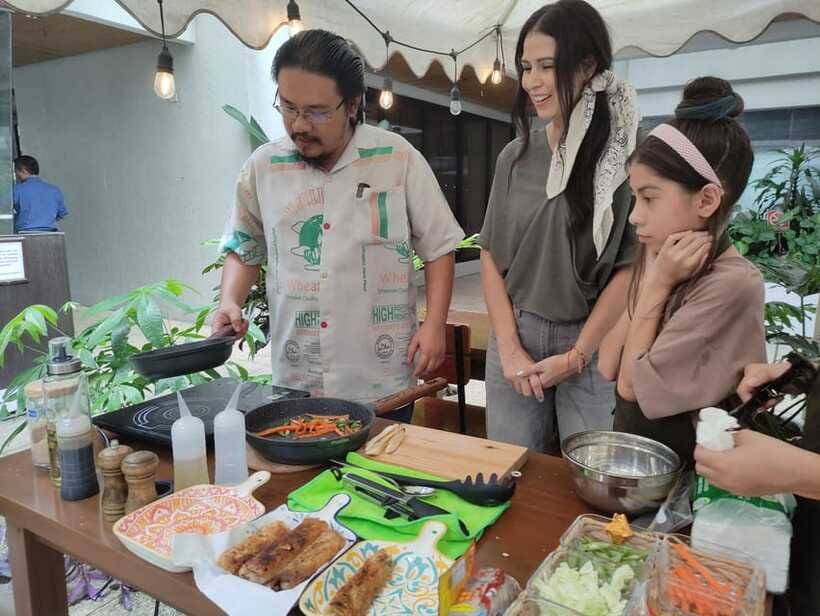
The dessert section is not an afterthought. It is part of the same two-hour push, and guests repeatedly highlight turon-style sweet wraps or fried banana wraps as unforgettable.
What makes the sweet step fun is that you learn how to build a dessert that is meant to be eaten by hand, crispy outside and sweet inside. It is also a great lesson in how Filipino snack culture values texture. You end up with something crunchy, warm, and not overly delicate.
Expect to work on assembling the sweet rolls and then getting the frying or cooking process right. The instructor explains what to watch for, and you get to see that the end result can vary slightly based on how each person handles the wrapping and cooking.
If you like snacks, this is the moment you realize why Filipino street-food style treats are such a big deal.
Food quantity: go in hungry and plan leftovers
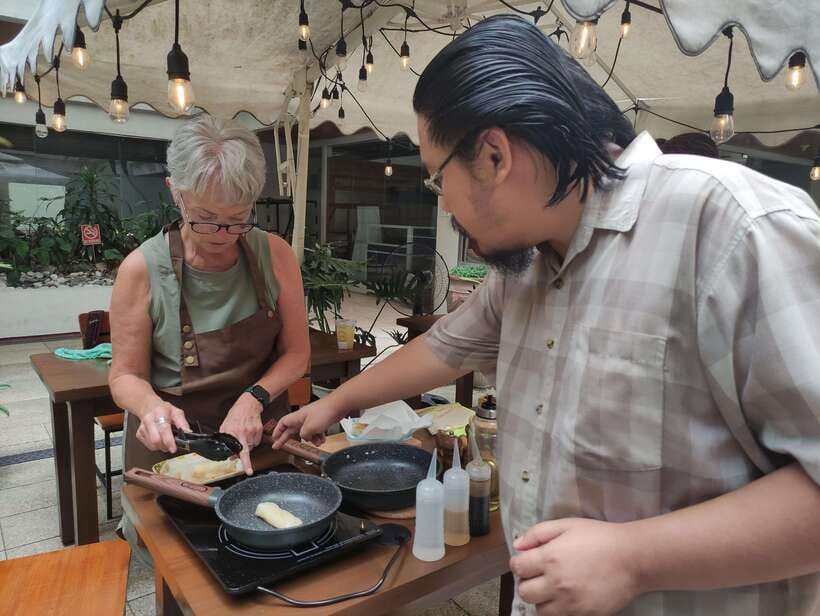
This is a “you will eat a lot” class. Several guests describe the dishes as heavy snack portions that can cover a major meal or two. One person even mentioned leftovers for dinner and breakfast.
So my advice is simple:
- Eat lightly before you go, or you might feel stuffed halfway through
- If you love food, bring an appetite, not just curiosity
- Consider taking a little food home if the portioning allows it, since you are making a real amount
Also, you get a non-alcoholic drink included. It is small, but it helps you settle in and keep your energy up while you cook.
Price in context: $60 for tools, ingredients, and real instruction
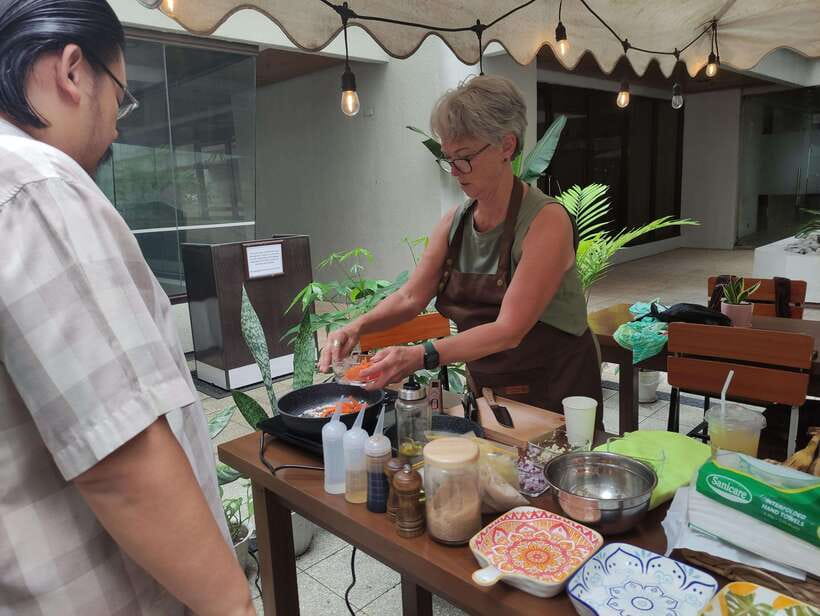
At $60 per person for two hours, this class competes well with other cooking experiences because you are getting the full package. You get cooking equipment, all ingredients, and a non-alcoholic drink. You also get English instruction from a local guide, Chyl, with that story-driven context woven in.
If you compare it to paying for the ingredients separately and hoping a recipe teaches you the technique, this starts to look like good value. You are not just collecting a recipe. You are learning how to execute it, and you leave with food in hand.
Is it a bargain? Not exactly. One guest felt it was a bit high and suggested a price cut would help. Still, the consistent five-star feedback on organization, cleanliness, and how much food you make suggests most people feel it earns its cost.
To me, the value equation is strongest if you want both the cooking skill and the cultural side, not just a “taste and take photos” experience.
Logistics that keep the afternoon smooth
This is a short, two-hour experience, and timing matters. There is no hotel pickup and drop-off, so you will need to make your own way to the meeting point.
The practical tip is to download the Grab app, the local ride service. Use it to get as close to your meeting courtyard as possible, then follow signs and the coffee kiosk landmark. If you are delayed, the instructor has shown flexibility as long as you communicate and still plan to use the full class time.
What to bring is also straightforward:
- Comfortable clothes, since you are cooking and working actively
If you are worried about weather, remember this is outdoors. In rain, the team may need to rearrange, which can be annoying but still workable.
Who should book, and who might skip
This class is family-friendly and designed to be approachable, but it has some boundaries.
It is not suitable for children under 9, and it is not suitable for visually impaired people. The experience is wheelchair accessible, and it runs as a small group limited to 4 participants, which supports easier interaction and attention.
Best matches:
- You want hands-on cooking, not a lecture or a tasting-only stop
- You enjoy learning how local snacks are built and why people love them
- You like food with a story, and you want recipes you can reproduce at home
If you hate heat, frying smells, or being active for two hours, you might want to think twice. But if you are game, this is the kind of class that makes you leave Manila not just with photos, but with skills.
Should you book this Makati hands-on cooking class?
Book it if you want a compact afternoon in Makati where you leave with more than recipes. You leave with technique, confidence, and a full Filipino snack spread you helped make. Chyl’s teaching style gets repeated praise for a reason, clear steps, calm energy, and real food culture context while you cook.
Think twice if weather is a major concern for you, since the courtyard setting can get affected by rain. Also, if you do not want to cook at all and prefer eating only, this may be more work than you want.
If you are the type who likes learning by doing, this is a strong choice.
FAQ
Where is the meeting point for the cooking class?
Meet your instructor in the outdoor courtyard in front of the coffee kiosk.
How long is the cooking class?
The experience lasts 2 hours.
How much does it cost?
The price is $60 per person.
What dishes do you make during the class?
You prepare a Filipino meryenda snack set, which includes a filling noodle dish, savory spring rolls, and a sweet treat.
What is included in the price?
You get use of cooking equipment, food ingredients, and a non-alcoholic drink.
What should I bring?
Wear comfortable clothes for hands-on cooking.
What language is the instructor?
The instructor speaks English.
Is pickup and drop-off included?
No, hotel pickup and drop-off are not included.
Is it wheelchair accessible, and is it suitable for children?
It is wheelchair accessible. It is not suitable for children under 9, and it is not suitable for visually impaired people.
Can I cancel, and how flexible is booking?
You can cancel up to 24 hours in advance for a full refund. You can also reserve now and pay later.
More Tour Reviews in Makati
- Makati Nightlife: VIP Access to Clubs, Rooftops & Go-Go Bars★ 4.9 · 278 reviews
- Makati Rooftop and Hidden Bars Experience★ 4.9 · 30 reviews
- Makati Rooftop Barhopping with Local Guide★ 4.8 · 26 reviews
- Makati Street Food Tour Experience★ 5.0 · 20 reviews
Makati After Dark
- Makati Nightlife: VIP Access to Clubs, Rooftops & Go-Go Bars★ 4.9 · 278 reviews
- Makati Rooftop and Hidden Bars Experience★ 4.9 · 30 reviews
- Makati Rooftop Barhopping with Local Guide★ 4.8 · 26 reviews
- Makati Street Food Tour Experience★ 5.0 · 20 reviews
Manila by the Plate
- Makati Street Food Tour Experience★ 5.0 · 20 reviews
- Makati Street food Tour, End with a Rooftop City View★ 4.7 · 9 reviews
More of Makati, reviewed
- Makati Bar Crawl – Hidden Bar, Speakeasy and Pub
★ 5.0 · 6 reviews - Makati Street food Tour, End with a Rooftop City View
★ 4.7 · 9 reviews - Manila Ultimate Nightlife Pub Crawl
★ 4.9 · 10 reviews - ⭐ Makati Bar Hopping and Pub Crawl Tour with Venus ⭐
★ 4.9 · 10 reviews - Manila Old & New City Private Tour
★ 4.5 · 16 reviews
Manila Food and Chinatown Tours, start to finish.
 ★ 4.8Manila: Intramuros, Chinatown, and Old Manila Half-Day TourFrom $68475 reviews
 ★ 5.0Manila Food Tour: Introduction to Philippine Street FoodFrom $60417 reviews
 ★ 4.5Private Cebu & Lapu-Lapu City Tour with Uphill Spots & Lunch at House of LechonFrom $75168 reviews
 ★ 5.0Manila Food Tour: Explore World’s Oldest ChinatownFrom $60158 reviews
 ★ 4.8Manila: Street Food and Drinks Walking Tour with TastingsFrom $68114 reviews
 ★ 4.5The Original Cebu City Historical and Food Walking TourFrom $6981 reviews
 ★ 5.0Manila Filipino Cooking Class: Meryenda FavoritesFrom $6080 reviews
 ★ 4.7Manila: Sightseeing and Food Walking Tour with TastingsFrom $5868 reviews