
REVIEW · MANILA
Manila Food Tour: Explore World’s Oldest Chinatown
A Chinatown food tour can sound like a long line of bites, but this one is built like a guided walk through real Manila. I especially like the small-group size and the way you get 8 sweet and savory stops without it turning into a rushed food sprint. One thing to consider: it is not suitable for vegans, so plan around that if you eat plant-based.
I also like the smart structure: you meet at Binondo Church, start eating quickly, and finish with a classic bakery sweet. Guides such as Nel and Jian (among others you may see like Chloe, Jenelle, and Rian) are repeatedly praised for keeping the pace comfortable and adding context so the food makes sense, not just tastes good.
In This Review
- Key Things You’ll Like Here
- Meeting at Binondo Church, Then Getting Fed Right Away
- The Small Group (Max 10) Advantage in a Busy Food Neighborhood
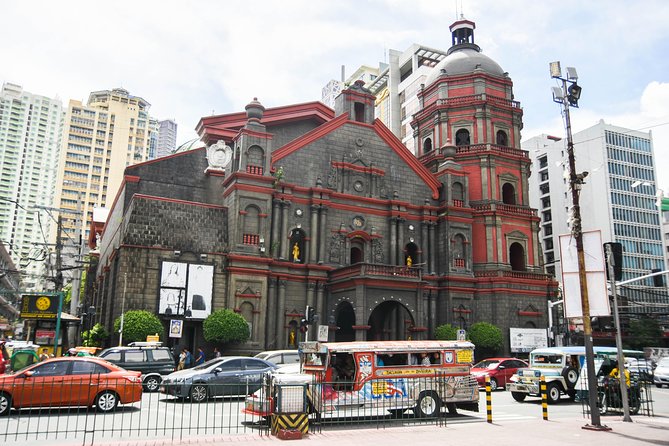
- Stop One: Binondo Church, a Landmark Before the Bites
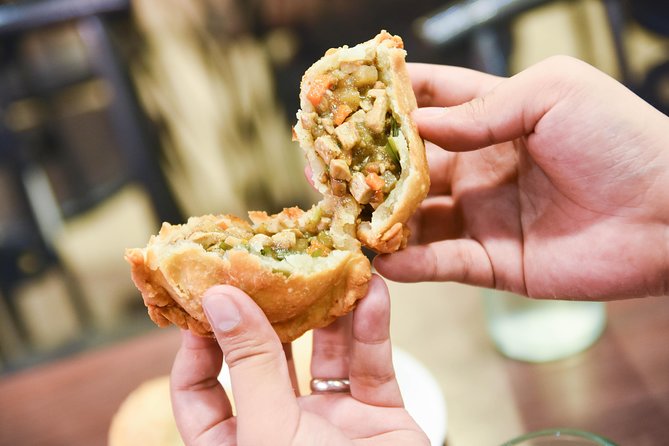
- Carvajal Street Bites: Lumpia and Kuchay Ah Pie
- Dumplings as an Event: Handmade Craft in Chinatown
- Mami for Comfort Food Proof
- Classic Dim Sum: When the Tour Hits Its Peak
- Hopia Finish at a Historic Bakery
- What You Actually Get for $60 Per Person
- Drinks, Dietary Limits, and the Realistic Food Volume
- Who This Tour Suits Best (and Who Might Want a Different Plan)
- Should You Book This Binondo Food Tour?
- FAQ
- How long is the Manila Food Tour?
- What is the price per person?
- Where do I meet the guide?
- What time does the tour end?
- How many food items are included?
- Are drinks included?
- Is this tour suitable for vegans?
- How large is the group?
- Is transportation included?
- What if the weather is bad, or I need to cancel?
Key Things You’ll Like Here
- Small group focus (max 10 in the small-group format), so you can actually ask questions and move as a unit
- 8 different snacks that mix classics like lumpia and dumplings with comfort foods like mami and dim sum
- Real local planning that helps you get through crowds and into popular spots
- A walk with purpose starting at Binondo Church and moving through the Binondo food lanes
- A strong sweet finish with hopia from a historic bakery
Still hungry? More Manila eating
- Manila: Intramuros, Chinatown, and Old Manila Half-Day Tour★ 4.8 · 475 reviews
- Manila Food Tour: Introduction to Philippine Street Food★ 5.0 · 417 reviews
- Manila Food Tour: Explore World’s Oldest Chinatown★ 5.0 · 158 reviews
- Manila: Street Food and Drinks Walking Tour with Tastings★ 4.8 · 114 reviews
Meeting at Binondo Church, Then Getting Fed Right Away
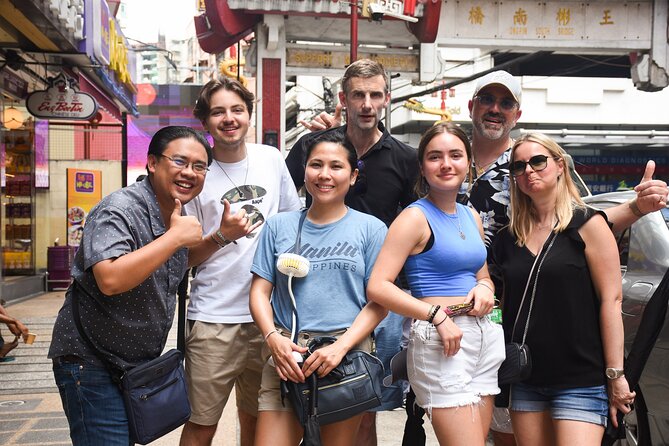
This tour starts at Minor Basilica and National Shrine of Saint Lorenzo Ruiz (Binondo Church), at 1006 Plaza Lorenzo Ruiz. That matters because Binondo can feel like a maze if you are on your own. The church is a solid landmark, and it gives the walk a start point that feels anchored, not random.
What I like right away is that the tour does not waste time. You head into the food lanes quickly, and you are not stuck in a long intro before you eat. Expect that first wave of tasting to include things like fresh lumpia and Kuchay Ah Pie. Lumpia is the kind of street-food classic that tastes like home even when you are far from home. Kuchay Ah Pie is more specific, and that is the point of a Chinatown food tour: you want the dishes you might not find listed on a generic menu.
Practical tip: wear shoes you can walk in for a solid couple of hours. Binondo is not a place you want to do in stiff sandals.
The Small Group (Max 10) Advantage in a Busy Food Neighborhood
The tour is designed for a group size that stays human. You’ll see it described as a small group with a maximum of 10 for the booking format, and the overall maximum is listed as 15 travelers. Either way, you are not herded into a giant wave.
Why you should care: food tours live or die on pace and spacing. In a crowded neighborhood, a small group helps your guide get the group seated at popular places and keeps you from waiting forever in long lines by yourselves. Many people specifically call out that the walking pace is good and that the stops feel planned.
If you are the type who likes to ask, this is a good match. You can actually get answers without the tour feeling like an audio guide with legs.
Also, bring a curious mindset. The best part is not just eating, it is understanding what makes these dishes Filipino-Chinese and not purely one thing or the other.
Stop One: Binondo Church, a Landmark Before the Bites
Even though this is a food tour, starting at Binondo Church is a smart move. It sets context for the neighborhood you are about to walk through. Binondo is known for its long Chinatown identity, and the church gives you an easy reference point to orient yourself as the street life turns louder and busier.
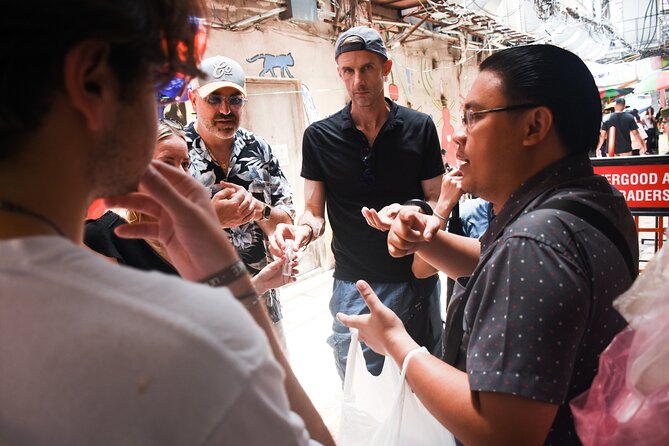
Expect a quick orientation from your guide before the tasting starts. Think of it as your walking reset, the place where you get the rhythm of the tour: where you are going next, how the group will move, and what kind of flavors you will hit.
Drawback to consider: if you hate any pre-food talking, this might feel like one small pause. But it is usually brief, and it helps the next stops land better because you know you are not just sampling, you are moving through a real area with meaning.
Carvajal Street Bites: Lumpia and Kuchay Ah Pie
One of the first tasting zones is around Carvajal Street, where the aroma of frying and baking is part of the experience. You will likely start with lumpia, typically served as a fresh, crispy snack that is best eaten right after it is prepared.
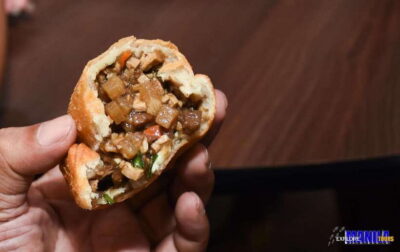
Then comes Kuchay Ah Pie. This one stands out because it is less of a global “known item” and more of a neighborhood specialty. That is what you want from a tour like this: you get familiar flavors plus Filipino-Chinese dishes that feel local.
What to watch for: because there are multiple stops with multiple bites, you do not need to pace yourself like you are at a restaurant. You will feel full fast if you try to “save room” for later. If you are doing a morning tour, a strong tip from repeat visitors is to skip breakfast. You will enjoy the experience more when your stomach can actually handle the full run.
Other Manila outings that kept coming up while we researched this one
Dumplings as an Event: Handmade Craft in Chinatown
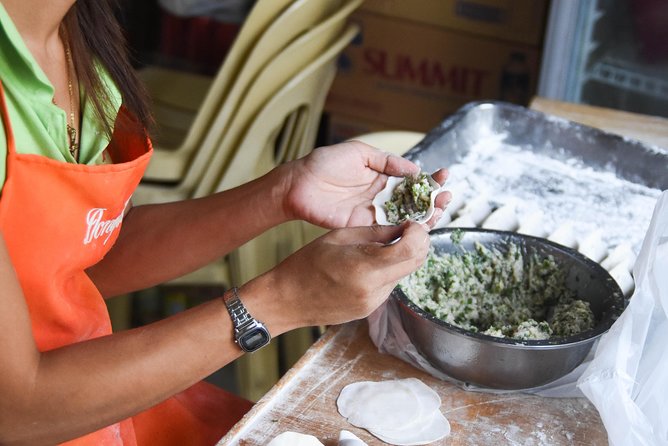
As you head deeper into Binondo, the tour shifts from snack mode into something you can taste as craftsmanship. The dumpling stop is described as handmade dumplings, which is exactly the kind of detail that separates this from a generic tasting tour.
Expect a place where dumplings arrive quickly and look a bit different from what you might get in a chain restaurant. These are the kinds of dumplings where the wrapper matters, where the filling is seasoned in a way that feels intentional, not mass produced.
One of the best practical things here is that dumplings often mean a line. People mention that dumplings come out quickly despite queues because the shopkeepers know the guide and the group. That is a big value point. You are not just eating, you are getting access to a smoother experience in a crowded area.
If you are a picky eater, you still might be fine. Dumplings tend to be straightforward as a food category, even when the fillings vary.
Mami for Comfort Food Proof
Then the tour brings you to Mami, a beloved noodle soup in Filipino comfort-food culture. This is where the tour feels like more than a snack crawl. Mami tends to feel warm, filling, and satisfying, and it is a nice balance against the fried and baked items earlier.
Expect a bowl experience that helps you slow down a bit, chew, and settle. This is also a good point in the tour to pay attention to your guide’s explanation of why Mami fits into Filipino food culture, not just Chinese-food history.
Possible drawback: if you go in expecting only “small bites,” the soup stop can feel bigger than you imagined. That is not bad, but it can shift how you experience the later dim sum and dessert stop.
Classic Dim Sum: When the Tour Hits Its Peak
After Mami, the next stop is a destination for dim sum, described as classic and authentic. Dim sum on a Chinatown food tour is usually the moment people understand why they paid for a guide instead of just wandering and picking random dishes.
Expect dumpling and bite-sized items served in a way that makes sense for group sampling. This part of the tour is often the most memorable for first-timers because it feels like a concentrated showcase of technique, texture, and seasoning.
Practical tip: take small bites at this stage. It is tempting to go full steam because everything looks good. But you still have dessert coming, and you want to taste it, not just survive it.
Also, if you are sensitive to lots of different textures in one day, dim sum includes variety. Go slowly. That is the difference between enjoying a food tour and spending the rest of the afternoon on a food coma.
Hopia Finish at a Historic Bakery
The last stop is a sweet one: a historic bakery known for hopia. Hopia is a Chinese-Filipino pastry that shows up again and again in Binondo, and this tour ends the walk by giving you multiple flavors in flaky pastry form.
Expect to try several varieties, each with its own filling style. The tour’s structure works here: the flaky pastry is a contrast to the earlier dumplings and soup. It also gives your taste buds a clean finish.
If you are thinking about bringing something home, this is the easiest stage to do it. A sweet pastry is the kind of food that travels better than hot soup.
One more practical point: plan something light after the tour. Most people end up full, and the tour ends back at the meeting point around the afternoon time window, leaving you the rest of the day free, but not necessarily hungry.
What You Actually Get for $60 Per Person
Price is $60.00 per person, for a tour that runs about 3 hours. On its face, that might feel “high” compared to self-guided walking. But the value is in two places: you get 8 different food items, plus drinks, plus planning.
The included items are:
- snacks: 8 different food items (sweet and savory)
- soda/pop soft drinks, tea, and water
- bottled water
What is not included:
- private transportation
That is a key point for value-minded travelers. If you would otherwise spend money on taxis every stop because you do not know where to go, a guided walk can actually balance out the cost.
Also, the max group size matters. When you are with a small group, the “how do we get into the places?” part is handled. You are paying for smooth movement, not just food.
Drinks, Dietary Limits, and the Realistic Food Volume
This tour includes non-alcoholic drinks like soda/pop, tea, and water. That helps you pace yourself between heavier items.
Diet notes: it is listed as not suitable for vegans. That is clear and important. If you eat vegetarian but include eggs or dairy, you might still be okay, but the tour data only guarantees it is not vegan. If you have allergies, you should consider confirming details with the operator ahead of time, because Chinatown food can include ingredients you do not expect.
And then there is the sheer amount of food. Multiple guides and many guests emphasize you come hungry. Expect to leave satisfied, not just lightly fed.
Who This Tour Suits Best (and Who Might Want a Different Plan)
I think this tour fits best if you want:
- a guided walk in Binondo that saves you from guesswork
- multiple Filipino-Chinese classics in one outing
- context so the food tells a story, not just a menu list
- a pace that stays manageable for most people
It is also great for couples and solo travelers who want company. Repeat comments highlight that even when people are local Filipinos, they still enjoy the “better version” effect. In other words, you are not only eating novelty, you are tasting skilled local execution.
Who might skip it:
- anyone who needs vegan-only food
- anyone who hates walking and wants zero street time
- anyone on a very strict diet plan, since the foods are set as a tasting menu across multiple stops
Tip for the best experience: wear comfortable shoes, go with an appetite, and keep your schedule flexible after. Your afternoon will be free, but your body might be in recovery mode.
Should You Book This Binondo Food Tour?
If you like eating your way through a neighborhood, this is an easy yes. The small group, the 8-item tasting, and the fact that the tour flows from a landmark start point to dumplings, noodle comfort, dim sum, and a hopia bakery finish makes it feel complete in about three hours.
Book it if you want a practical, guided way to experience Manila’s oldest Chinatown without spending your day asking where to go next. Skip it if vegan eating is non-negotiable, or if you hate the idea of eating several different items in one sitting.
If you want a high hit-rate tour with strong guide energy, this one is a solid pick.
FAQ
How long is the Manila Food Tour?
It runs for about 3 hours.
What is the price per person?
The price is $60.00 per person.
Where do I meet the guide?
The meeting point is at Minor Basilica and National Shrine of Saint Lorenzo Ruiz (Binondo Church), 1006 Plaza Lorenzo Ruiz, Binondo, Metro Manila.
What time does the tour end?
The tour ends back at the meeting point.
How many food items are included?
The tour includes snacks of 8 different food items, covering sweet and savory options.
Are drinks included?
Yes. Soda/pop soft drinks, tea, and water are included, along with bottled water.
Is this tour suitable for vegans?
No, the tour is not suitable for vegans.
How large is the group?
The small group format is max 10, and the activity maximum is listed as 15 travelers.
Is transportation included?
No, private transportation is not included.
What if the weather is bad, or I need to cancel?
The experience requires good weather. It can be canceled due to poor weather, with an offer of a different date or a full refund. Cancellation is free up to 24 hours in advance for a full refund. If you cancel less than 24 hours before the start time, the amount paid is not refunded.
More Tours in Manila
- Intramuros, Manila: Historical Bamboo Bike Tour★ 4.8 · 583 reviews
- Manila: Intramuros, Chinatown, and Old Manila Half-Day Tour★ 4.8 · 475 reviews
- Manila: Old & New 4-Hour City Tour★ 4.5 · 458 reviews
- Manila Food Tour: Introduction to Philippine Street Food★ 5.0 · 417 reviews
More Tour Reviews in Manila
- Intramuros, Manila: Historical Bamboo Bike Tour★ 4.8 · 583 reviews
- Experience Intramuros with Bamboo Bicycle – Ecotours★ 5.0 · 508 reviews
- Manila: Intramuros, Chinatown, and Old Manila Half-Day Tour★ 4.8 · 475 reviews
- Manila: Old & New 4-Hour City Tour★ 4.5 · 458 reviews
Manila by the Plate
- Manila: Intramuros, Chinatown, and Old Manila Half-Day Tour★ 4.8 · 475 reviews
- Manila Food Tour: Introduction to Philippine Street Food★ 5.0 · 417 reviews
- Manila: Street Food and Drinks Walking Tour with Tastings★ 4.8 · 114 reviews
- Manila: Sightseeing and Food Walking Tour with Tastings★ 4.7 · 68 reviews
More of Manila, reviewed
- Private Departure Airport Transfer in Manila Bay and Makati Area
★ 5.0 · 3 reviews - Embark on a 7-Day Banaue-Sagada Adventure of a Lifetime
★ 5.0 · 3 reviews - From Manila: Philippines Private Tour Guide
★ 4.1 · 3 reviews - Unforgettable Manila Fishing Village Day Excursion 2024
★ 5.0 · 4 reviews - Tagaytay + Hidden Valley Springs: A Scenic Escape w/ Transfers
★ 4.0 · 4 reviews
Manila Food and Chinatown Tours, start to finish.
 ★ 4.8Manila: Intramuros, Chinatown, and Old Manila Half-Day TourFrom $68475 reviews
 ★ 5.0Manila Food Tour: Introduction to Philippine Street FoodFrom $60417 reviews
 ★ 4.5Private Cebu & Lapu-Lapu City Tour with Uphill Spots & Lunch at House of LechonFrom $75168 reviews
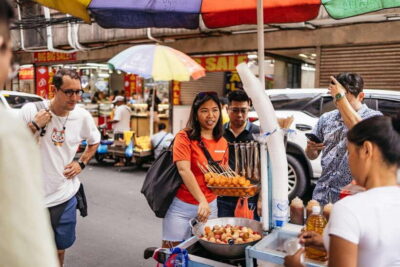 ★ 4.8Manila: Street Food and Drinks Walking Tour with TastingsFrom $68114 reviews
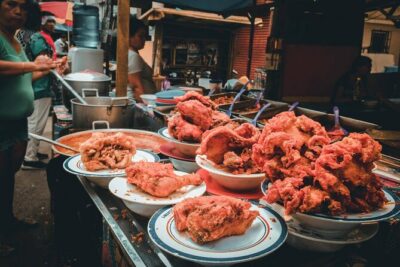 ★ 4.5The Original Cebu City Historical and Food Walking TourFrom $6981 reviews
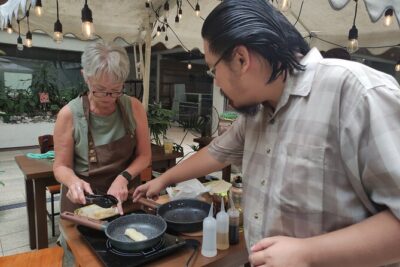 ★ 5.0Manila Filipino Cooking Class: Meryenda FavoritesFrom $6080 reviews
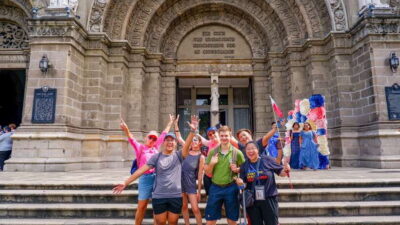 ★ 4.7Manila: Sightseeing and Food Walking Tour with TastingsFrom $5868 reviews
 ★ 5.0Manila: Guided Night Market ExperienceFrom $6854 reviews
Where this one shows up