
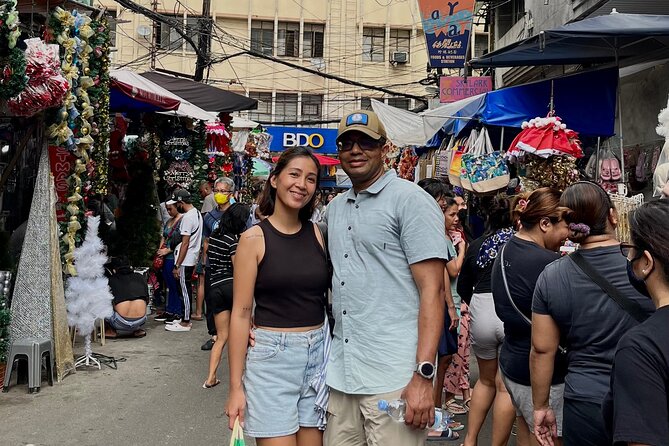
REVIEW · MANILA
Manila Hidden Gems with local guide
Manila feels intensely local in two hours. This Tondo-area walk with guide Mari pairs real neighborhood lanes with an iconic jeepney ride, plus a close look at everyday life around the Chinatown side streets and the old neighborhood fabric. One watch-out: you’ll explore street food options, but food tasting is not included, so plan extra money if you want to sample.
What I really liked is how the tour reads like a guided day off, not a checklist. You also get time at a traditional open wet market, where you can browse housewares, clothes, and produce with a sense of what locals actually buy and carry home. It’s also best in good weather since the day is mostly spent outdoors on foot.
In This Review
- Key things that make this Manila local-guide walk worth it
- Tondo by day, from Binondo’s 1919 Grand Cafe to Chinatown lanes
- Jeepney and tricycle rides: local transport as a real-world lesson
- Old Chinatown alleys and street-food options you choose on your own
- 1595-era structures and why walking helps you understand Manila’s scale
- Wet market shopping for housewares, clothes, fruits, and everyday bargaining
- Oldest apartments and open-air daily life: respectful viewing is the whole point
- Coffee and cuisine time when food tasting is not included
- Price, group size, and what makes the $55 value work
- Who should book this Tondo-area walk (and who should skip it)
- Should you book this Manila local-guide walk?
- FAQ
- How long is the Manila Tondo neighborhood tour?
- What is the price per person?
- Where does the tour start?
- Is food tasting included?
- What transportation is included during the tour?
- How many people are in a group?
- Do I need a printed ticket?
- What if the weather is bad or I need to cancel?
Key things that make this Manila local-guide walk worth it
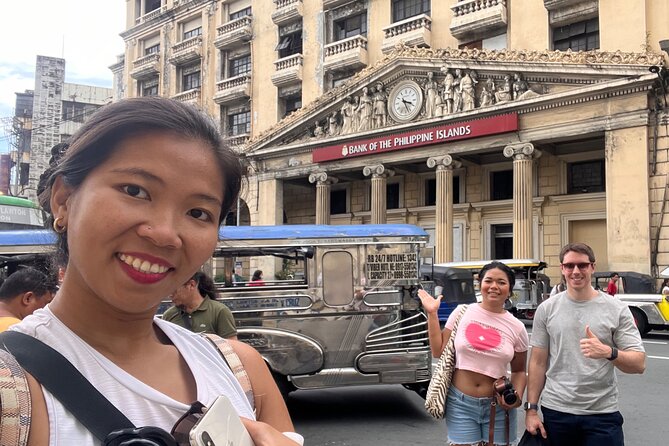
- Jeepney and tricycle rides that show how people actually move around town
- Chinatown alley time that feels quieter and more practical than the main tourist strips
- Street-food focus with options you can choose to try on your own
- Old structures tied to the neighborhood’s long timeline, including references to 1595
- Wet market shopping for everyday items like clothes, fruits, and household goods
- Small group size with a maximum of 10 people
More ways to take Manila in a day
- Manila Old and New: Sightseeing Tour Including Intramuros and Fort Santiago★ 4.5 · 377 reviews
- Manila Super Saver: Manila Sightseeing plus Tagaytay Tour with Taal Volcano★ 4.0 · 75 reviews
- The Hidden Gems of Manila Guided Tour★ 5.0 · 42 reviews
- Manila: Intramuros, Chinatown, and Old Manila Half-Day Tour★ 5.0 · 37 reviews
Tondo by day, from Binondo’s 1919 Grand Cafe to Chinatown lanes
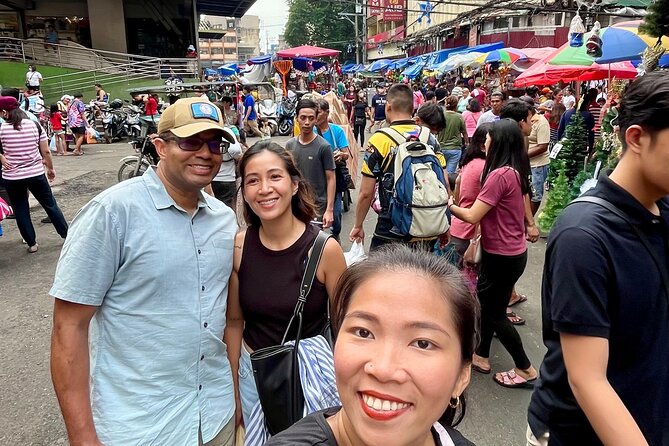
The meeting point is easy to find, right at 1919 Grand Cafe on Juan Luna Street in Binondo. I like that it’s a familiar starting spot in an area many visitors already use, which makes the first 10 minutes low-stress. From there, the walk begins with a shift in mood: you move out of the “what to see” zone and into the “how people live” zone.
This tour is built for street-level observation. You’ll spend time walking through side streets and back alleys, not just pausing at photo stops. That makes it a great choice if you want Manila that feels day-to-day, where laundry hangs, shop fronts open, and you get a sense of routines you wouldn’t get from a bus tour.
Also, the pacing is designed for a short visit. You’re looking at roughly 2 hours, so you’re not committing to a full half day. The payoff is that you still see enough variety to understand Tondo and its surrounding Manila neighborhoods as more than a name on a map.
Jeepney and tricycle rides: local transport as a real-world lesson
One of the biggest values here is that you don’t just hear about Manila’s local transport. You actually use it. The tour includes local transport with a jeepney and can also involve a tricycle ride, so you see how these modes work in practice during a short outing.
Why I think this matters: in Manila, transport is how neighborhoods connect. A jeepney route and a tricycle shortcut are part of the daily math locals do to get to work, school, and markets. Even when you stay on the vehicle for a short span, you’re borrowing a slice of local logistics rather than touring like you’re in a museum.
The guides keep things simple and human. In the reviews, people highlight the feeling of being looked after with no safety drama, and that’s exactly what you want when you’re unfamiliar with traffic patterns. If you’re comfortable moving through a busy city on foot, this transport portion will feel like one of the most memorable parts.
Old Chinatown alleys and street-food options you choose on your own
The tour’s street-food focus is practical. You’ll get to explore different types of street food, and you’ll see how vendors set up, how people order, and what’s being served nearby. The key detail: food tasting is not included, so you should go in with two minds working at once. You’ll enjoy the sights and the food culture, then decide what, if anything, you want to buy.
That structure can be a plus for you. Some tours load you with samples and you end up stuffed before the real walk starts. Here, you control it. If you’re adventurous, you can try a few bites. If you’re cautious or picky, you can focus on watching and keep your spending under control.
Also, Chinatown alley time isn’t presented like a grand performance. It’s closer to a “walk with someone who knows the shortcuts and the rhythm.” The best part is that you see the menu of the neighborhood, not just a single landmark.
If you’re going to spend money on snacks, I’d set aside a bit. Street food is part of the story, and the tour is built to help you recognize what’s worth trying.
1595-era structures and why walking helps you understand Manila’s scale
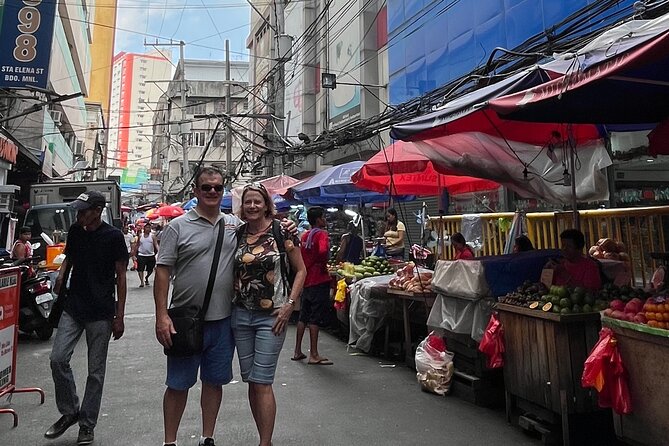
You’ll encounter the neighborhood’s older built environment as you walk. The tour specifically references exploring oldest buildings and structures connected with 1595, and you’ll see how those older spaces sit inside a living city.
Even without turning this into a classroom lesson, this kind of stop helps you understand scale. Manila is layered. New businesses and modern street life sit beside older bones, and seeing them in sequence on foot gives you a better sense of time than any single photo.
Here’s what to watch for when the tour mentions older structures: context. Don’t rush the photos. Take a moment to look at how buildings face the street, how entrances work, and how daily movement flows around older blocks. That’s where the “this is a real neighborhood” feeling comes from.
One small drawback to consider is that walking through older areas often means uneven sidewalks and tighter corridors. The tour is short, and most people can participate, but if you have mobility limits, this is something to weigh.
Other Luzon outings that kept coming up while we researched this one

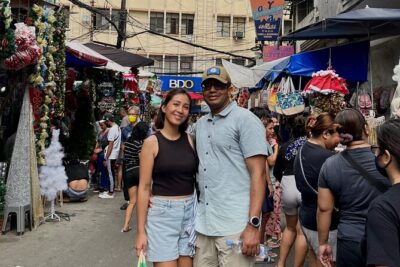
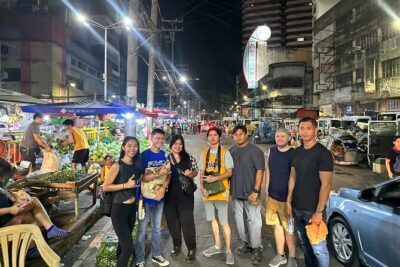
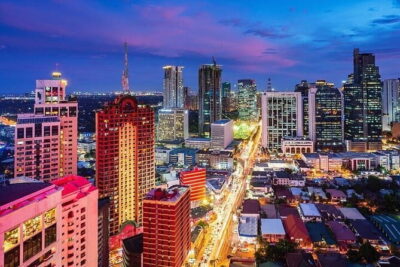
Wet market shopping for housewares, clothes, fruits, and everyday bargaining
One of the most useful parts of the tour is the time at a traditional open wet market. This is the place where you can see what locals actually buy in a single trip: housewares, clothes, fruits, and other everyday needs. The tour frames it as shopping space with items you can find at prices that feel cheap and reasonable.
I love markets like this because they teach you how locals build a grocery list, not just how tourists hunt for souvenirs. Here, browsing makes sense. You can point, ask questions, and notice differences in sizes, materials, and fresh produce options.
If you’re a shopper, this stop is also where you can get the most practical value. Housewares and clothing are often more interesting than typical tourist trinkets because they reflect real daily life. Even if you don’t plan to buy much, it’s worth going just to see what a busy market looks like when it’s supporting regular households.
One thing to know: the tour doesn’t include food tasting, and it doesn’t claim you’ll be buying anything. It’s a guided look plus shopping time, so you get flexibility.
Oldest apartments and open-air daily life: respectful viewing is the whole point
The tour includes an exploration of some of the town’s oldest apartments and hidden residential areas where daily routines can look very different from what you’re used to. Information you should keep in mind includes the possibility of seeing residents doing parts of daily life in open-air spaces, such as bathing and dining.
This is where your mindset matters more than anything. You’re not there to stare. You’re there to learn what makes the neighborhood tick. A good guide helps with that, and in reviews, people specifically mention feeling welcomed and having no safety issues while moving through areas most visitors don’t see.
If you prefer your travel photos to be mostly street scenes rather than residential close-ups, you can still enjoy this section by focusing on architecture, layout, and everyday objects. The point is understanding. You’ll likely come away with a clearer picture of why Manila neighborhoods feel so personal.
Also, because this is an active walking experience, you’ll want to keep your eyes up but your behavior low key. Friendly curiosity goes a long way in neighborhoods like this, and the guide’s presence helps you move through respectfully.
Coffee and cuisine time when food tasting is not included
The tour plan includes local coffee and cuisine as part of the experience, and reviews back up that the day is about real everyday flavors and conversation. But again, food tasting is not included, so treat this as an opportunity, not a guarantee of a free meal.
This setup can be a good fit if you like choosing what you eat. If you’re sensitive to spice, try one coffee or one small bite and see how it goes. If you love trying everything, you’ll probably spend a bit more here, but you’ll be making choices that match your tastes.
What I appreciate is that local coffee in Manila is more than a drink. It’s a social rhythm. When you’re with a local guide in a neighborhood setting, coffee time can help you understand how people unwind between market runs, street jobs, and home life.
Plan for the possibility that you’ll want to spend extra. The tour does include bottled water and a welcome drink, which helps keep you comfortable during the walk, but you’ll likely still pay separately if you want multiple food stops.
Price, group size, and what makes the $55 value work
At $55 per person for about 2 hours, this tour is priced like a small, guided neighborhood experience, not a long-haul excursion. The value comes from what’s included versus what isn’t.
Included perks:
- Bottled water plus a welcome drink
- Jeepney/tricycle transport, so you’re not paying out of pocket for the vehicle part
- A photo-shot, which is nice because street tours often leave you with fewer usable images
- A mobile ticket, which keeps things simple
Not included:
- Food tasting, which is the one category that can change your final spend
Add in the group limit: the tour is capped at a maximum of 10 travelers. That matters for a short walk. Smaller groups mean you can keep moving without feeling rushed, and the guide can help you navigate side streets without losing people.
Timing note: this is often booked around 26 days in advance on average, so if you want a specific day, don’t wait until the last week. Short tours like this fill up fast, especially when the experience is the kind you cannot easily DIY without knowing which streets to trust and how to read the scene.
Who should book this Tondo-area walk (and who should skip it)
This is a strong pick if you want:
- A short, guided cultural walk focused on everyday Manila, not only famous sights
- The chance to ride a jeepney and see how neighborhoods feel in motion
- A guided look at Chinatown side alleys and a traditional wet market
- A local guide experience with real neighborhood knowledge, including time in areas many visitors skip
It might be less ideal if you:
- Only want classic tourist landmarks and curated stops
- Expect a fully included food crawl, since tasting is not part of the price
- Have difficulty with outdoor walking and uneven streets, since it’s a neighborhood stroll
The reviews also lean heavily toward comfort and friendliness. People mention the guide taking them through the area she grew up in and emphasize the welcoming feel. That’s a big deal for first-time Manila visitors who want authentic context without feeling out of their depth.
Should you book this Manila local-guide walk?
Yes, I’d book it if your goal is to understand Manila through daily life. The tour hits several high-value points in a short window: jeepney transport, alley walking with real local rhythm, and a wet market visit you can actually use for shopping and observation.
I’d pass or swap expectations if you mainly want a food tasting package or landmark-heavy sightseeing. Since food tasting is not included, you should be ready to spend a little extra if you want to eat along the way.
One more pro reason to choose it: small group size. For a neighborhood walk, that makes the experience feel calm enough to learn, not chaotic enough to just survive the crowds.
FAQ
How long is the Manila Tondo neighborhood tour?
It runs for about 2 hours.
What is the price per person?
The price is $55.00 per person.
Where does the tour start?
It starts at 1919 Grand Cafe, 117 Juan Luna St, Binondo, Manila 1006.
Is food tasting included?
No. Food tasting is not included.
What transportation is included during the tour?
The tour includes local transport, including a jeepney and tricycle experience.
How many people are in a group?
The tour has a maximum of 10 travelers.
Do I need a printed ticket?
You’ll use a mobile ticket.
What if the weather is bad or I need to cancel?
The experience requires good weather. If it’s canceled due to poor weather, you will be offered a different date or a full refund. You can cancel for a full refund up to 24 hours in advance.
More Guided in Luzon
- Batad Guided Tour★ 5.0 · 78 reviews
- The Hidden Gems of Manila Guided Tour★ 5.0 · 42 reviews
- Manila Intramuros Walking tour with Local Tour Guide★ 5.0 · 33 reviews
- Manila Night Market Experience with Local Guide★ 5.0 · 10 reviews
More Tour Reviews in Luzon
- Manila Old and New: Sightseeing Tour Including Intramuros and Fort Santiago★ 4.5 · 377 reviews
- Manila’s Walled City: Intramuros Walking Tour★ 5.0 · 82 reviews
- Manila Filipino Cooking Class: Meryenda Favorites★ 5.0 · 80 reviews
- Batad Guided Tour★ 5.0 · 78 reviews
Manila in a Day
- Manila Old and New: Sightseeing Tour Including Intramuros and Fort Santiago★ 4.5 · 377 reviews
- Manila Super Saver: Manila Sightseeing plus Tagaytay Tour with Taal Volcano★ 4.0 · 75 reviews
- The Hidden Gems of Manila Guided Tour★ 5.0 · 42 reviews
- Manila: Intramuros, Chinatown, and Old Manila Half-Day Tour★ 5.0 · 37 reviews
More of Luzon, reviewed
- Private Airport Transfer Manila to Hotel in Manila or vice versa
★ 5.0 · 3 reviews - Angeles City / Clark Airport to La Union (Bauang, San Fernando, San Juan)
★ 3.5 · 4 reviews - The Jeepney & Tuk Tuk Adventure ride with Local Guide
★ 4.5 · 4 reviews - The Oldest Chinatown in Manila with Local Guide
★ 5.0 · 4 reviews - Manila Social and Political Walk
★ 5.0 · 4 reviews
Manila City Tours, start to finish.
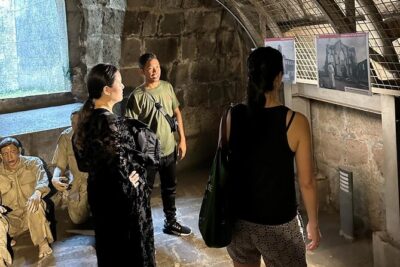 ★ 4.8Manila: Intramuros, Chinatown, and Old Manila Half-Day TourFrom $68475 reviews
 ★ 4.5Manila Old and New: Sightseeing Tour Including Intramuros and Fort SantiagoFrom $103377 reviews
 ★ 4.3Full-Day Manila City, Tagaytay Taal Volcano and Lake TourFrom $160139 reviews
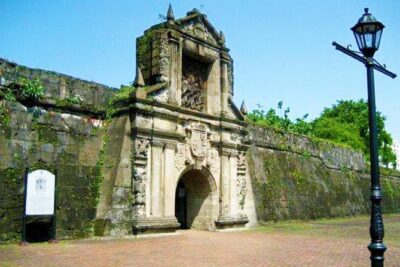 ★ 4.0Manila Super Saver: Manila Sightseeing plus Tagaytay Tour with Taal VolcanoFrom $16075 reviews
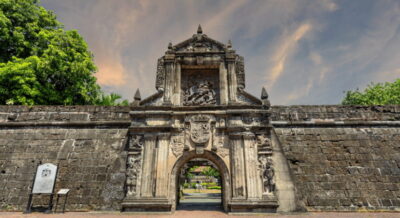 ★ 4.7MANILA HALF-DAY TOUR (4HRS)From $9043 reviews
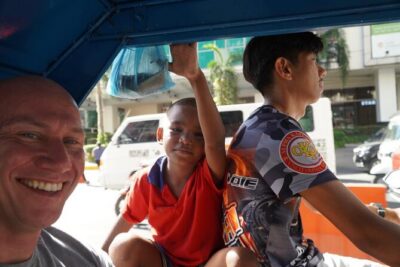 ★ 5.0The Hidden Gems of Manila Guided TourFrom $6042 reviews
★ 5.0Manila: Intramuros, Chinatown, and Old Manila Half-Day TourFrom $7537 reviews
★ 5.0The Hidden Gems of Manila Guided TourFrom $6042 reviews
★ 5.0Manila: Intramuros, Chinatown, and Old Manila Half-Day TourFrom $7537 reviews
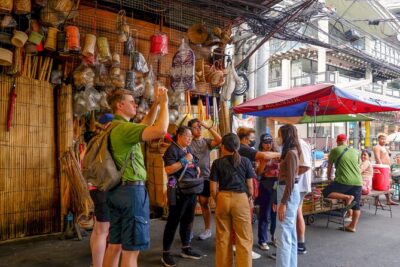 ★ 4.5Intramuros & Chinatown Manila Tour – Walking, Food & CultureFrom $6232 reviews
Where this one shows up