
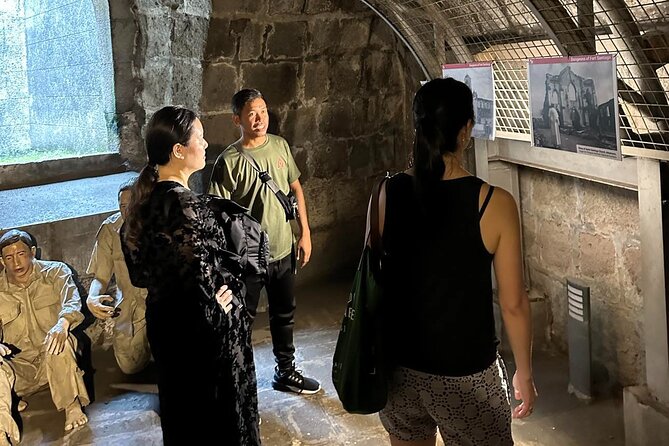
REVIEW · MANILA
Manila: Intramuros, Chinatown, and Old Manila Half-Day Tour
Manila’s old streets can feel overwhelming, fast. This short tour keeps it simple, walking you through Intramuros and Binondo while also showing everyday Manila at Divisoria. I especially like how the guides work the details into the route, with praised guides such as Floyd and Felix for clear English and stories that sound like they come from real life, not a script.
The other big win is the mix. You do Spanish-era landmarks on one side, Chinese neighborhood streets on the other, and then you finish where locals actually shop and eat. If you’re short on time, this combination helps you get your bearings fast without hopping around the city on your own. One thing to consider: you’ll do enough walking that moderate physical fitness helps, and Chinatown has at least one admission ticket not included, so you may need a little cash depending on what you choose to enter.
In This Review
- Key highlights
- Start in Tondo, where Divisoria shows Manila at street level
- Binondo and Ongpin Street, the oldest Chinatown route
- Intramuros and Fort Santiago, history you can touch
- The guide experience, why Floyd and Felix make a difference
- Price and value, what $75 buys you
- How to prepare, so the day feels fun not tiring
- Who should book this Old Manila half-day tour
- Should you book this Intramuros, Binondo, and Divisoria tour?
- FAQ
- How long is the Manila Intramuros, Chinatown, and Old Manila half-day tour?
- Where does the tour start?
- Where does the tour end?
- What are the main stops on the itinerary?
- Is admission included for all stops?
- What is the maximum group size?
- Do I need a mobile ticket?
- Is this tour near public transportation?
- What fitness level do I need?
- What is the cancellation policy?
Key highlights
- Small group size (up to 15), so you get questions answered instead of just following a crowd
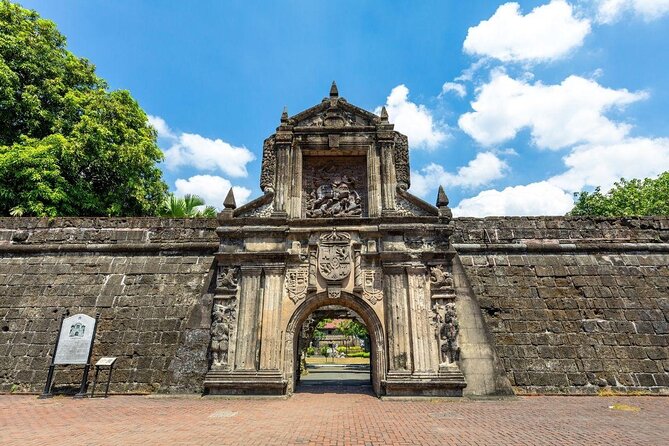
- Intramuros and Fort Santiago area as a true end-point, so you can keep exploring right after
- Divisoria Market start in Tondo to see Manila’s street-level food and shopping habits from the get-go
- Binondo, founded in 1594, with time on Ongpin Street and key church sights
- A mix of transport and walking, often including short rides on local vehicles (think tuk-tuks and jeepneys)
- Guides named Floyd and Felix are specifically praised for being friendly, engaging, and fluent in English
More ways to take Manila in a day
- Manila Old and New: Sightseeing Tour Including Intramuros and Fort Santiago★ 4.5 · 377 reviews
- Manila Super Saver: Manila Sightseeing plus Tagaytay Tour with Taal Volcano★ 4.0 · 75 reviews
- The Hidden Gems of Manila Guided Tour★ 5.0 · 42 reviews
- Manila: Intramuros, Chinatown, and Old Manila Half-Day Tour★ 5.0 · 37 reviews
Start in Tondo, where Divisoria shows Manila at street level
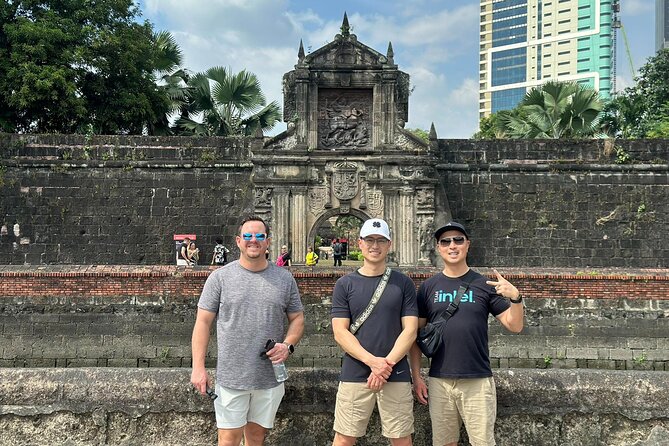
Divisoria Market is a smart first stop because it sets the tone for the whole half-day. You start in Tondo, and your guide leads you through narrow aisles with colorful stalls selling everyday basics like produce and seafood, plus local snacks and ready-to-eat items. It’s not a museum start. It’s the kind of place where you quickly learn how Manila moves, what people buy, and how food and shopping blend together.
What I like here is that you’re not just looking. You’re given context. A good guide helps you spot what’s worth pausing for, what to avoid if you’re sensitive to crowds or strong smells, and how to read the rhythm of the market so it feels like a living neighborhood instead of chaos. This is also where you can pick up small tastes for the day, which can help if you’re hungry later during the walking portion.
Possible drawback: markets can be loud and crowded, and the streets can be uneven. If you’re the kind of traveler who wants quiet and wide sidewalks, you’ll need to be mentally ready for sensory overload. The upside is that it’s also where you get the most real connection to current Manila life, not just postcard history.
Tip: if you plan to snack, keep it simple and light at the market start, so you’re not stuck with a heavy stomach during the next two neighborhoods.
Binondo and Ongpin Street, the oldest Chinatown route
Next comes Binondo, the world’s oldest Chinatown, established in 1594. This part matters because the neighborhood isn’t just a theme. It’s a working community with shops, churches, and constant movement along Ongpin Street. You’ll get guided time through the main streets, with stops tied to well-known landmarks such as Binondo Church and other sights along the way.
One practical detail to know: the tour lists that this stop includes something with admission not included. That doesn’t mean you won’t enjoy the area. It just means you should be prepared for a small extra cost if your guide brings you to a specific place that charges entry. When I plan a day like this, I like having a few extra pesos or cash on hand, even if the overall tour is prepaid.
The Binondo section also has a payoff for first-time visitors. It bridges cultures in a way that’s easy to see on foot: signage, food smells, shopfront styles, and the overall street energy shift as you walk. If you’re the type who likes connecting food to history, this stop can be a big moment.
Possible drawback: Chinatown streets can be busy, and you may feel like you’re walking through a dense commercial zone. If you’re hoping for wide views and quiet photos, you might have to work for it. But if you want to understand how Manila actually feels, this is one of the best choices on a short schedule.
Tip: wear shoes you trust. You’ll be on pavement that can be slick and uneven, and you’ll do enough walking to make “cute but uncomfortable” a bad strategy.
Intramuros and Fort Santiago, history you can touch
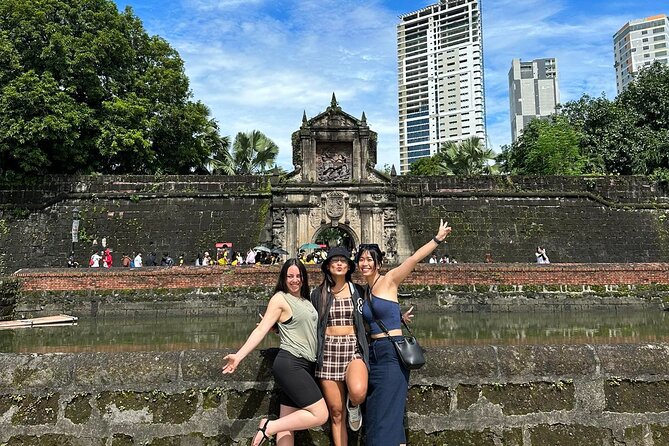
Finally, you move into Intramuros, Manila’s old walled city. This is the stop with the clearest Spanish-era visual punch, including views tied to major sites such as Fort Santiago and the Manila Cathedral area. It’s the part of the route that helps you see why people call Manila historic, because the stonework, layout, and architectural style give you a strong sense of place.
Your tour ends near Fort Santiago in Intramuros, which is convenient. After the half-day finishes, you’re already in a great position to keep exploring on your own, whether that means walking more of the walls, searching out a café, or finding another landmark nearby.
What I like about wrapping with Intramuros is that it gives closure to the story. Divisoria starts with modern daily life, Binondo shows cultural layers and trade-era roots, and Intramuros is where you see colonial-era structures and the city’s defensive past made visible.
A realistic consideration: Intramuros is historic, which often means stairs, stone surfaces, and spots where the pace slows. The tour is listed as requiring moderate physical fitness, so if your knees or feet are sensitive, take it slow during the transitions and build in a short rest when you can.
Tip: save your best photo time for the edges of the walls and church-front areas, when light is kinder and crowds tend to shift around.
The guide experience, why Floyd and Felix make a difference
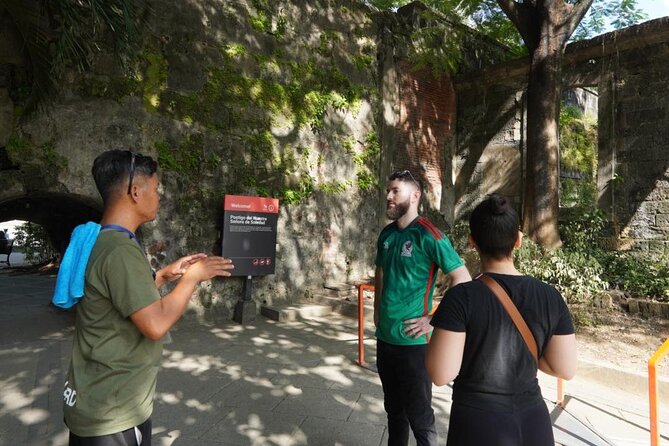
This kind of tour lives and dies by the guide. The route works because you’re not just moving between places, you’re getting stories and explanations that help the sights click together.
Guides such as Floyd and Felix are praised for being kind, easy to talk to, and clear in English. That matters in Manila, where it’s easy to feel lost if you can’t connect what you’re seeing to why it matters. A good guide also helps you move efficiently through crowded streets and keeps you on track so the half-day doesn’t turn into wasted time.
You might also notice variety in the experience depending on your group size. One review highlights a solo traveler scenario that turned into a more one-on-one style pace. The tour is capped at 15 travelers, which naturally helps keep things personal, even if you’re not the only person on your date.
What you should expect from the human side:
- frequent small explanations, not one big lecture
- practical guidance on where to pause and where to keep going
- a friendly tone that helps you ask questions without feeling rushed
If you’re traveling solo or you want a structured introduction that still feels human, this tour is a strong match.
Other walks inside the old walls


Price and value, what $75 buys you
At $75 per person for about 3 hours, this is priced like a guided city experience, not a self-guided walk. You’re paying for a guide, a plan that connects three major areas, and a route that likely includes some local transport alongside walking.
Here’s the value logic I see:
- Time saved: Instead of planning how to connect Intramuros, Binondo, and Divisoria efficiently, you get a ready route.
- Context added: Market areas and Chinatown streets are more meaningful when someone explains what you’re looking at and how the neighborhood works.
- Small-group attention: With a max of 15 travelers, you’re less likely to get ignored in the busy parts.
Where you might spend a little more:
- Binondo includes an attraction where admission is not included. You’ll want to keep some flexibility in your budget for that.
- Food is never fully guaranteed in any market tour unless it’s explicitly included, so think of purchases as optional.
Overall, if you want a first-pass “old Manila plus local daily life” tour that doesn’t swallow your entire day, $75 feels reasonable. The main reason to buy is not the three names on the itinerary. It’s having someone translate the neighborhoods into something you understand quickly.
How to prepare, so the day feels fun not tiring
This is a short day, but it can still feel long if you’re underprepared. Here’s what helps you enjoy it more:
Wear:
- closed shoes with grip
- breathable clothing for street heat
- a light layer if evenings cool down in your travel window
Bring:
- a bit of cash for anything with admission not included (especially at the Binondo stop)
- water, since markets and walking add up fast
- a small bag you can keep secure in crowded streets
Expect:
- a moderate amount of walking across different street types
- a mix of local transport and walking, including options like tuk-tuks and jeepneys
- a guide who keeps you moving, with frequent stops for explanations
Also, the tour uses a mobile ticket, so have your phone ready. The route is listed as near public transportation, which is reassuring if you need to adjust plans last minute.
One more practical note: the experience is weather dependent. If conditions are poor, it may be rescheduled or refunded, so check your day-of plans.
Who should book this Old Manila half-day tour
I’d book this if:
- you’re here for a first visit and you want a fast orientation across Manila’s key old-city areas
- you love history, but you also want to see how people live now
- you want food and shopping street energy, not just monuments
- you’d rather have a guide than try to string together three neighborhoods by taxi
You might skip it if:
- you want a very relaxed pace with minimal walking
- you’re only interested in one specific area, like Intramuros alone
- you dislike crowded market environments and dense streets
This is ideal for couples, solo travelers, and small groups who want structure, stories, and value without committing to a full day.
Should you book this Intramuros, Binondo, and Divisoria tour?
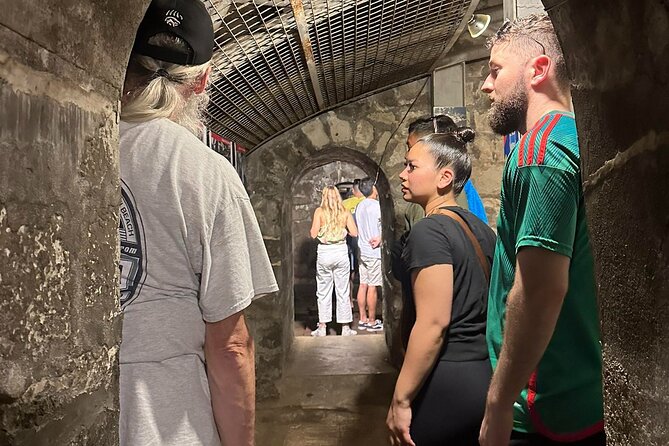
If your time in Manila is tight, this tour is a strong way to make it count. You get the big iconic payoff of Intramuros, the cultural and street-level energy of Binondo, and the grounded reality of Divisoria Market in Tondo. The small-group format and the emphasis on guide storytelling, especially with praised guides like Floyd and Felix, are the main reasons this works.
Book it if you want a guided route that helps you understand what you’re seeing within a few hours, with the added bonus of local transport and neighborhood texture. Use the main caution points as your planning checklist: bring comfortable shoes, expect market-style crowds, and keep a little extra budget for any admission not included stop in Chinatown.
If that sounds like your style, you’ll likely find this is one of the most practical ways to get the feel of Old Manila without burning your whole day.
FAQ
How long is the Manila Intramuros, Chinatown, and Old Manila half-day tour?
The tour lasts about 3 hours.
Where does the tour start?
It starts in Tondo, Manila, Metro Manila, Philippines.
Where does the tour end?
It ends at Fort Santiago, Intramuros, Manila, 1002 Metro Manila, Philippines.
What are the main stops on the itinerary?
The tour includes Divisoria Market (Tondo), Binondo (Chinatown), and Intramuros (including Fort Santiago and the Manila Cathedral area).
Is admission included for all stops?
Divisoria Market and Intramuros are listed as admission ticket free. The Binondo stop lists an admission ticket as not included.
What is the maximum group size?
The tour has a maximum of 15 travelers.
Do I need a mobile ticket?
Yes, the tour uses a mobile ticket.
Is this tour near public transportation?
The tour is listed as near public transportation.
What fitness level do I need?
It’s recommended for travelers with a moderate physical fitness level.
What is the cancellation policy?
You can cancel for a full refund up to 24 hours in advance. If you cancel less than 24 hours before the start time, the amount you paid will not be refunded. The experience is also dependent on good weather, and you’ll be offered a different date or a full refund if it’s canceled due to poor weather.
Manila by the Plate
- Manila Filipino Cooking Class: Meryenda Favorites★ 5.0 · 80 reviews
- Makati Street Food Experience end with a Rooftop Bar★ 5.0 · 33 reviews
- Intramuros & Chinatown Manila Tour – Walking, Food & Culture★ 4.5 · 32 reviews
- Manila: Binondo Walking Tour ( Oldest Chinatown )★ 5.0 · 30 reviews
Inside the Old Walls
- Manila Old and New: Sightseeing Tour Including Intramuros and Fort Santiago★ 4.5 · 377 reviews
- Manila’s Walled City: Intramuros Walking Tour★ 5.0 · 82 reviews
- Express Bamboo Bike Tour inside Intramuros★ 4.5 · 66 reviews
- Intramuros Sunset Tours by Bambike★ 5.0 · 33 reviews
Manila in a Day
- Manila Old and New: Sightseeing Tour Including Intramuros and Fort Santiago★ 4.5 · 377 reviews
- Manila Super Saver: Manila Sightseeing plus Tagaytay Tour with Taal Volcano★ 4.0 · 75 reviews
- The Hidden Gems of Manila Guided Tour★ 5.0 · 42 reviews
- Intramuros & Chinatown Manila Tour – Walking, Food & Culture★ 4.5 · 32 reviews
More of Luzon, reviewed
- Private Airport Transfer Manila to Hotel in Manila or vice versa
★ 5.0 · 3 reviews - Angeles City / Clark Airport to La Union (Bauang, San Fernando, San Juan)
★ 3.5 · 4 reviews - The Jeepney & Tuk Tuk Adventure ride with Local Guide
★ 4.5 · 4 reviews - The Oldest Chinatown in Manila with Local Guide
★ 5.0 · 4 reviews - Manila Social and Political Walk
★ 5.0 · 4 reviews
Intramuros and Old Manila Walking Tours, start to finish.
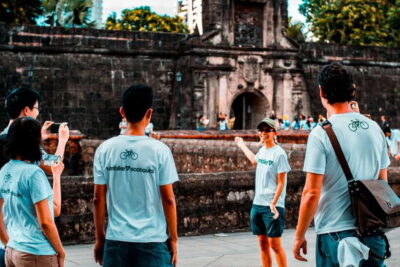 ★ 4.8Intramuros, Manila: Historical Bamboo Bike TourFrom $27583 reviews
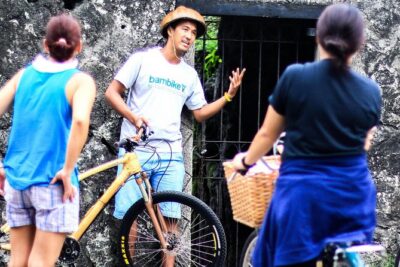 ★ 5.0Experience Intramuros with Bamboo Bicycle – EcotoursFrom $39508 reviews
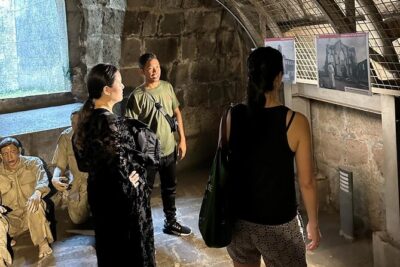 ★ 4.8Manila: Intramuros, Chinatown, and Old Manila Half-Day TourFrom $68475 reviews
 ★ 4.5Manila Old and New: Sightseeing Tour Including Intramuros and Fort SantiagoFrom $103377 reviews
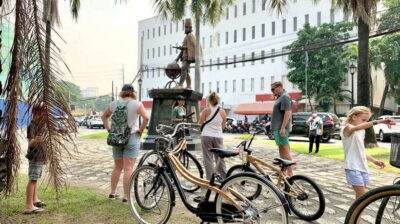 ★ 4.8Manila: Guided Sunset Bamboo Bike Tour in IntramurosFrom $40119 reviews
 ★ 4.9Viva Old Manila: Intramuros Walking TourFrom $27104 reviews
 ★ 5.0Manila’s Walled City: Intramuros Walking TourFrom $3582 reviews
 ★ 5.0Explore Intramuros: Introduction to Philippine HistoryFrom $5580 reviews