
REVIEW · WALKING TOURS
Manila Social and Political Walk
Manila has two faces, and this walk explains both. This interactive evening stroll links recognizable landmarks to the social and political forces that shaped the Philippines, from how the state formed to what you see now. I love the documentary-style storytelling approach, where the facts feel connected instead of random. I also like that you get a mix of money, power, culture, and civic stress, so the city reads like a real place, not a postcard.
The route also helps you notice contrasts fast. You’ll stand in areas tied to upscale living, luxury towers, nightlife streets, and a river that shows how neglect can scar a city. One possible drawback: this is not a neutral “sightseeing loop,” it leans into politics and current events, so if you want quiet monuments with minimal context, you may find it a lot.
You’ll meet in Makati at Starbucks One Rockwell, and the walk runs about 2 hours 30 minutes (approx.). The group is capped at 30, and you’ll have a mobile ticket.
In This Review
- Key takeaways before you go
- Manila After Dark: Why This Social and Political Walk Works
- Ticket Value at About $45: What You Really Get
- Your 2.5-Hour Route Through Makati and Beyond
- Rockwell Center: Upscale Space and the Politics of “Normal”
- Trump Tower at Century City: Luxury as a Public Message
- P Burgos Street: Food, Bars, and the City’s Social Pressure
- Poblacion: Street Art, Cafes, and Everyday Identity
- Pasig River: A Trade Route, Then a Warning
- Mandaluyong: Business Districts and the Future Manila Builds
- The Documentary-Style Storytelling and the Balance Goal
- What to Bring, How to Pace Yourself, and How to Get the Most
- Who Should Book This Walk (and Who Might Skip It)
- Should You Book This Social and Political Walk?
- FAQ
- What is the duration of the Manila Social and Political Walk?
- How much does the tour cost?
- What time does the tour start, and where does it meet?
- Where does the tour end?
- Is the ticket mobile?
- How many people are in the group?
- Does the tour run in any weather?
- What is the cancellation window for a full refund?
Key takeaways before you go
- Documentary-style flow: the guide connects history to today with an interactive, information-heavy pace.
- Six focused stops: Rockwell Center, Trump Tower area, Burgos Street, Poblacion, Pasig River, and Mandaluyong each carry a different theme.
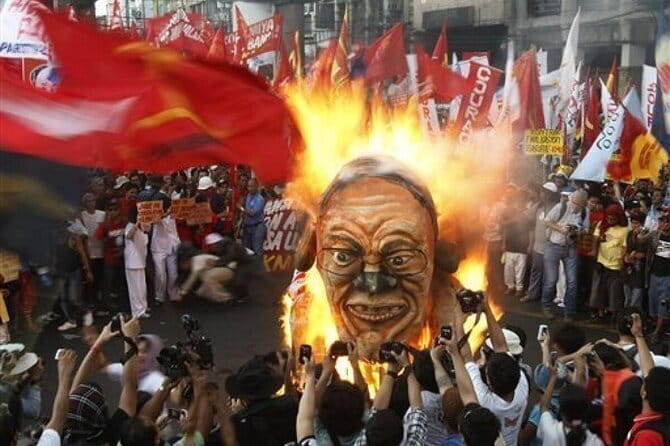
- Politics with a balance goal: the framing aims to be balanced and non-biased so you can form your own view.
- Urban contrasts, on foot: you’ll walk through areas of privilege and areas shaped by everyday struggle and environmental problems.
- Evening timing: a 6:00 pm start fits Manila’s after-work energy and night light.
- Smallish group size: up to 30 travelers keeps the vibe social without turning into a marching crowd.
Other Luzon outings that kept coming up while we researched this one
- Manila’s Walled City: Intramuros Walking Tour★ 5.0 · 82 reviews
- Manila Intramuros Walking tour with Local Tour Guide★ 5.0 · 33 reviews
- Intramuros & Chinatown Manila Tour – Walking, Food & Culture★ 4.5 · 32 reviews
- Manila: Binondo Walking Tour ( Oldest Chinatown )★ 5.0 · 30 reviews
Manila After Dark: Why This Social and Political Walk Works
Manila is not one story. It’s a stack of stories, overlapping and arguing with each other. This walk is built for that reality, using social and political themes as your map.
What makes it work is the way the information lands. Instead of a lecture, you get an interactive storytelling format with the feel of a documentary. You’ll hear how decisions, institutions, and economics show up in city space, whether that space is polished and expensive or strained and imperfect.
You can also expect surprises. The point is not just to repeat headlines. It’s to give you surprising answers about why certain patterns keep returning, and how ordinary people navigate them.
Ticket Value at About $45: What You Really Get
At $45.75 per person for about 2.5 hours, this is priced like a mid-range guided experience. For Manila, you’re paying for narrative design: someone has turned a set of places into a coherent explanation of social and political life.
Here’s what you get for that price:
- A guided route that covers multiple districts in a short time.
- A documentary-style thread that tries to keep the story moving.
- A chance to do first-hand thinking, not just photo taking.
Also, admission isn’t the point here. Each stop lists free admission, so your money goes toward interpretation, timing, and connecting dots between locations. If you’ve ever felt like Manila tours skim surfaces, this format is designed to push past that.
Your 2.5-Hour Route Through Makati and Beyond
This experience runs from 6:00 pm and finishes back at the meeting point. The walk is organized into six stops, with about 15 minutes at each stop, so you won’t spend half the night stuck in one place.
That rhythm matters. Short time per stop keeps you alert, and it prevents the “wait, we’re still here?” feeling. It also means you’re hearing multiple themes in one evening, which is perfect if Manila is new to you and you want quick context.
Weather does matter. The tour notes it requires good weather, so if the evening looks stormy, plan on flexibility. The good news is that the experience provider offers a different date or a full refund if canceled due to poor weather.
Rockwell Center: Upscale Space and the Politics of “Normal”
Your evening begins in Rockwell Center, an upscale urban enclave in Makati. On the street, Rockwell is the kind of place many visitors notice first because it looks organized, comfortable, and modern.
But the guide’s job here is to use that contrast productively. You’ll talk about what “normal life” means when the city is organized around different levels of access and opportunity. Even without getting technical, you can see how design and location shape who feels safe, who feels included, and who doesn’t.
A practical reason this stop is a strong opener: it gives you a visual baseline. From here, the rest of the route makes more sense because you’re training your eyes to compare.
Possible drawback to keep in mind: if you only came for iconic sights and Instagram angles, this first stop might feel too “city-like” compared to monuments. The value is in what you learn to read in ordinary spaces.

Trump Tower at Century City: Luxury as a Public Message
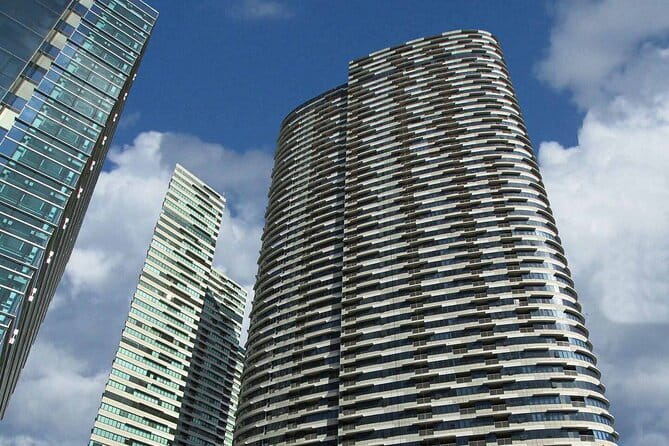
Next you’ll head to the Trump Tower at Century City, a striking skyscraper with luxury residences. Buildings like this do more than house people. They communicate status, ambition, and global branding in a very visible way.
This is where the walk gets into social and political meaning. The focus isn’t on architecture trivia. It’s on how wealth and power become symbolic, and how that symbolism influences everyday life, from business expectations to what gets prioritized in the city.
You’ll likely find it interesting to think about how international image-making overlaps with local realities. Manila has deep history, but it also has modern markets, modern desires, and modern conflicts about who benefits.
P Burgos Street: Food, Bars, and the City’s Social Pressure
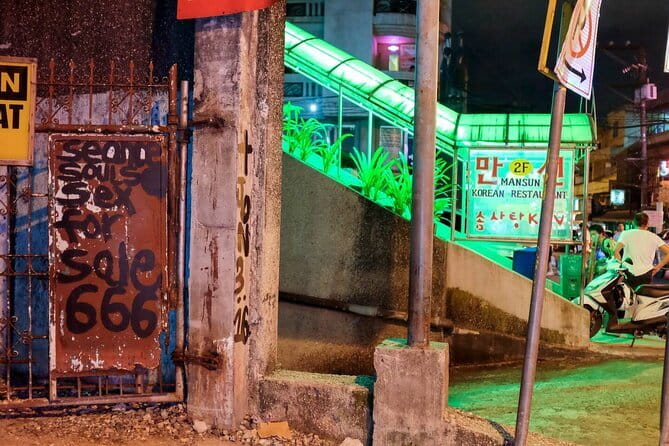
Then it’s time for a different kind of energy at P. Burgos Street in Makati. This is known for restaurants, bars, and nightlife. By itself, it’s a classic area where people go to relax, meet friends, and pass time.
The storytelling here shifts from “power buildings” to social behavior. You’ll connect how nightlife districts reflect economics, youth culture, leisure choices, and the daily rhythms of people who don’t work in office towers.
This stop can also help you understand how Manila’s social life sits alongside the tensions of inequality. When you’re walking through a nightlife street with a guide explaining context, you stop seeing it as only entertainment. You see it as a social system with its own rules and incentives.
Tip for enjoying this stop: keep your senses open. Even when you’re not listening, you’ll be looking at how people move through the space, what feels permitted, and what feels negotiated.
Poblacion: Street Art, Cafes, and Everyday Identity
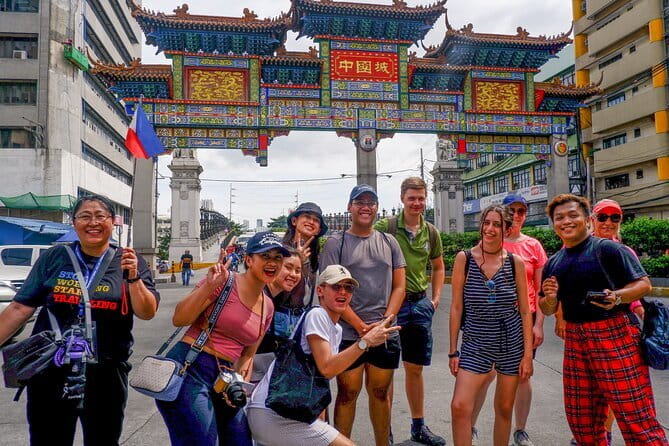
After Burgos, you’ll reach Poblacion, a neighborhood where historic charm meets newer cafe culture and street art, plus a lively nightlife scene. This is the kind of place where you can sense ongoing change, not just tourism.
The walk’s value is how it frames that change. Rather than treating style and street art as decoration, you’ll hear how culture and identity develop under real pressures: economic shifts, political narratives, and generational attitudes.
If you like people-watching, this stop will reward you. You’ll notice how different groups use the same streets for different reasons. That observation becomes part of the larger social story the guide is building.
One more reason I like Poblacion in this route: it’s a bridge. You’re moving from nightlife and commerce into the next stop that’s less about people’s evenings and more about the city’s environmental consequences.
Pasig River: A Trade Route, Then a Warning

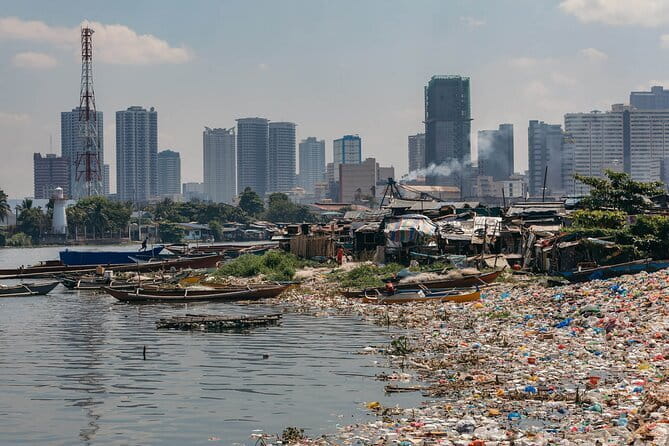
One of the most meaningful stops is the Pasig River. It flows through the heart of Manila and was once a vital artery for trade and transportation. Today, the story is harder: pollution and neglect have damaged it, even though traces of historical significance still show through.
This is where the tour shifts from social style to civic stakes. A river is infrastructure, history, and public health. When it declines, it doesn’t stay “someone else’s problem.” It affects how a city functions, and it shapes what residents expect from their leaders and institutions.
If you care about urban planning, this stop is a reality check without feeling like a guilt trip. The guide can help you see how environmental neglect ties back to governance, investment decisions, and public priorities.
Practical note: this is also a stop where you might want to pay attention to how you dress and how long you stand. Riversides can be damp or breezy, depending on the evening. Bring layers if you’re unsure.
Mandaluyong: Business Districts and the Future Manila Builds
The final stop is Mandaluyong City, within Metro Manila, known for skyscrapers and a thriving business district. Ending here makes sense. It’s one more contrast, but it’s also a clue: Manila is always building toward a version of the future.
The guide’s storytelling helps you think about what business growth means in real terms. Who gets jobs, who gets contracts, and what kind of public investments tend to follow when economic activity is concentrated.
Ending in Mandaluyong also gives you a sense of the city’s scale. Manila is compact in some areas and enormous in others. After a night of comparisons, the skyline energy can feel like a closing argument, not just a final photo spot.
The Documentary-Style Storytelling and the Balance Goal
A big reason this walk earns strong marks is the way it teaches. The format is described as interactive storytelling with a documentary flow and lots of information. The intent is to give surprising answers and connect historical events to modern life.
You should also expect the guide to frame topics as balanced and non-biased. That doesn’t mean the guide avoids tension. It means the goal is to help you judge for yourself rather than hand you one predetermined viewpoint.
In my view, the best part of this approach is that it turns walking into research. You’re not just passing time between attractions. You’re building a mental model of Manila’s social and political life, one stop at a time.
That said, the “information-heavy” style is not for everyone. If your ideal tour is relaxed and light, you may want to pair this with some free time afterward so your brain can cool down.
What to Bring, How to Pace Yourself, and How to Get the Most
This is a walking experience at night, so comfort matters. I’d treat it like an evening stroll you plan to pay attention during. Wear shoes you can stand in and walk in without thinking about it.
Because the stops are spaced and themed, a small trick helps: decide what you want to understand before you start. For example:
- Are you more curious about politics and institutions, or social behavior and culture?
- Do you care more about economic inequality, or environmental management?
- Are you trying to understand the present, or how the past shaped it?
Once you have that focus, the route will feel less like “six stops” and more like “six chapters.”
Also, the group size cap of 30 keeps things manageable. Still, if you’re shy about questions, you can still get value just by listening closely and taking quick notes between stops.
Who Should Book This Walk (and Who Might Skip It)
This tour is a strong fit if you:
- Enjoy politics and want to understand Manila through social and political context.
- Like walking tours but feel tired of surface-level facts.
- Want to see contrasts in the same evening, from upscale areas to environmental stress zones.
You might skip it if you:
- Prefer purely scenic viewpoints with minimal discussion.
- Feel uncomfortable when a tour discusses current events and social tensions.
- Want a slow pace with long photo stops at every location.
If you’re in Manila for only a short time, this can be a smart orientation move. It gives you language and structure for what you’ll notice later on your own.
Should You Book This Social and Political Walk?
Yes, if you want a guide to help you read Manila instead of just view it. This is good value because the price covers more than time. It covers interpretation, a coherent storyline, and a route that moves through major themes quickly.
Book it especially if you like documentary-style explanations and you’re curious about how history, politics, and city life connect. The stop choices are deliberate, and the evening timing makes the contrasts easier to feel.
Skip it if you’re after a relaxed sightseeing evening with zero politics. This one asks you to think.
FAQ
What is the duration of the Manila Social and Political Walk?
The experience lasts about 2 hours 30 minutes (approx.).
How much does the tour cost?
It costs $45.75 per person.
What time does the tour start, and where does it meet?
It starts at 6:00 pm and meets at Starbucks One Rockwell, Rockwell Dr, Makati City, Metro Manila, Philippines.
Where does the tour end?
The activity ends back at the meeting point.
Is the ticket mobile?
Yes, the experience uses a mobile ticket.
How many people are in the group?
The maximum group size is 30 travelers.
Does the tour run in any weather?
The tour requires good weather. If it’s canceled due to poor weather, you’ll be offered a different date or a full refund.
What is the cancellation window for a full refund?
You can cancel up to 24 hours in advance for a full refund. To get a full refund, you must cancel at least 24 hours before the experience’s start time.
More Walking Tours in Luzon
- Manila’s Walled City: Intramuros Walking Tour★ 5.0 · 82 reviews
- Manila Intramuros Walking tour with Local Tour Guide★ 5.0 · 33 reviews
- Intramuros & Chinatown Manila Tour – Walking, Food & Culture★ 4.5 · 32 reviews
- Manila: Binondo Walking Tour ( Oldest Chinatown )★ 5.0 · 30 reviews
More Tour Reviews in Luzon
- Manila Old and New: Sightseeing Tour Including Intramuros and Fort Santiago★ 4.5 · 377 reviews
- Manila’s Walled City: Intramuros Walking Tour★ 5.0 · 82 reviews
- Manila Filipino Cooking Class: Meryenda Favorites★ 5.0 · 80 reviews
- Batad Guided Tour★ 5.0 · 78 reviews
More of Luzon, reviewed
- Private Airport Transfer Manila to Hotel in Manila or vice versa
★ 5.0 · 3 reviews - Angeles City / Clark Airport to La Union (Bauang, San Fernando, San Juan)
★ 3.5 · 4 reviews - The Jeepney & Tuk Tuk Adventure ride with Local Guide
★ 4.5 · 4 reviews - The Oldest Chinatown in Manila with Local Guide
★ 5.0 · 4 reviews - Manila Social and Political Walk
★ 5.0 · 4 reviews
Walking Tours, start to finish.
 ★ 4.8Manila: Street Food and Drinks Walking Tour with TastingsFrom $68114 reviews
 ★ 4.9Viva Old Manila: Intramuros Walking TourFrom $27104 reviews
 ★ 5.0Manila’s Walled City: Intramuros Walking TourFrom $3582 reviews
 ★ 4.5The Original Cebu City Historical and Food Walking TourFrom $6981 reviews
 ★ 4.7Manila: Sightseeing and Food Walking Tour with TastingsFrom $5868 reviews
 ★ 4.9Manila: Intramuros Walking Tour.From $5463 reviews
 ★ 5.0Intramuros Walking Tour with Transportation by Don’t Skip ManilaFrom $8346 reviews
 ★ 5.0Manila Intramuros Walking tour with Local Tour GuideFrom $5533 reviews
Where this one shows up